First Time in Phuket: Tips for Travellers
The things first-timers wish they'd known — money, transport, etiquette and safety.
Updated 2026-08-04
For a first trip to Phuket, get five things right: check your entry rules with Thai Immigration before booking, buy a local SIM at the airport, use metered or app-based cars rather than negotiating tuk-tuks, choose your beach area by travel style (Patong for nightlife, Karon or Kata for families, Nai Harn or Kamala for quiet), and carry cash for markets and boats. Phuket is safe and easy for newcomers, but it is a large island where beaches, food and transport differ a lot by area — so a little planning turns a good holiday into a great one.
First impressions of Phuket
Phuket surprises many first-timers because it is a full-sized tropical island rather than a single resort strip. It has its own international airport, hospitals, malls, dozens of beaches and a historic town, all spread across roughly 543 km² of hilly, forested land in the Andaman Sea. That scale is its biggest appeal and its main challenge: you get huge variety, but you also need to pick the right base and plan how you will move around. Arrive with a rough plan of which beaches and day trips you want, and the island opens up quickly.
How Phuket differs from Turkey or Egypt
If your previous beach holidays were in Turkey or Egypt, expect a different rhythm. Phuket is less about all-inclusive resorts and more about exploring — eating at street stalls and night markets, taking boat trips to other islands, and hopping between distinct beaches. The sea is warm and clear in the dry season, the food is a highlight rather than an afterthought, and the culture is Buddhist, with temples and etiquette to respect. Prices for food and transport are generally low, but organised excursions and alcohol can add up.
The main pros and cons
- Pros: warm clear sea in season, superb and affordable food, huge variety of beaches, excellent island day trips, and good medical facilities.
- Cons: it is spread out so transport needs planning, scooter accidents are common, the wet season (May–October) brings rough seas, and tourist-area prices for taxis and tours can be inflated.
Preparing for the trip
Good preparation removes most first-trip stress. Sort out documents, packing and insurance before you fly.
Visa and documents
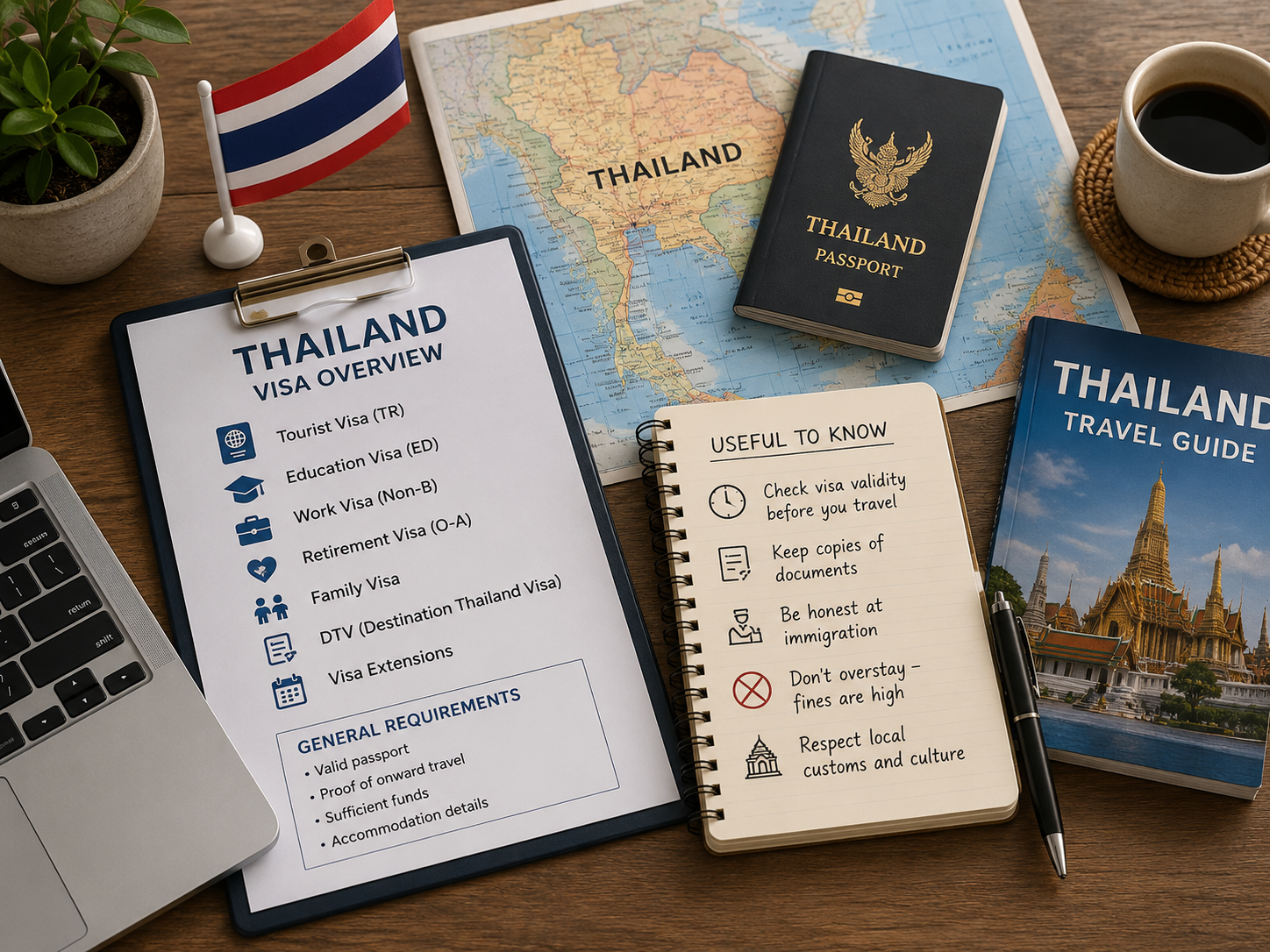
Most nationalities can enter Thailand visa-exempt for tourism for a set number of days, but the rules and durations change, so confirm your current entitlement with the Thai Immigration Bureau before booking. Carry a passport valid for at least six months, and be ready to show proof of onward travel and accommodation, which airlines and immigration officers may ask for. Keep digital and paper copies of your passport, insurance and bookings.
What to pack: clothes, medicine and accessories
Pack light and tropical. Bring high-SPF reef-safe sunscreen, sunglasses and a hat, quick-dry clothing, a rash vest and water shoes for rocky shores, and one modest outfit (shoulders and knees covered) for temple visits. A basic medical kit with insect repellent, rehydration salts and any personal prescriptions is worth having, as is a power bank, a universal adapter (Thailand uses 220V, sockets types A/B/C) and a waterproof phone pouch for boat trips.
Insurance and safety
Take out comprehensive travel insurance that explicitly covers water activities and, if you plan to ride, scooter use — many standard policies exclude it, and medical care in Phuket is good but not free. Note the location of a reputable hospital near your beach, and save the tourist police number. Sensible precautions cover most risks: watch beach warning flags, avoid leaving valuables unattended, and be wary of overly cheap tour or rental deals.
The airport and arriving in Phuket
Phuket International Airport is in the north of the island, some way from the main beaches, so plan your first transfer before you land.
Terminals and buying a SIM card
The airport has separate international and domestic terminals. On arrival, buy a local prepaid SIM or eSIM from one of the operator counters in the arrivals hall — a tourist data package is inexpensive and makes maps, ride-hailing and translation apps work immediately, which is invaluable on your first day. Have your passport ready, as SIM registration requires it.
Taxis, transfers and reaching your hotel
From the airport to Patong is roughly 45 minutes; to Karon or Kata a little longer. Options include a pre-booked hotel transfer (easiest for a first arrival), the official airport taxi counter, or an app-based ride if available. Agree the fare or use the meter before setting off, and be aware that the drive south crosses hilly roads. A pre-arranged transfer costs a little more but removes the hassle of negotiating after a long flight.
Where to stay on Phuket
Choosing the right area matters more than the specific hotel, because Phuket's beaches have distinct characters and are far apart.
Popular areas and beaches
Patong is the busiest, most developed beach, with the fullest infrastructure and the island's nightlife on Bangla Road. Karon and Kata, just south, are quieter, family-friendly beaches with wide sand and calmer evenings. Bangtao and Surin in the north-west hold many upmarket resorts. Nai Harn in the far south is a peaceful, scenic bay. Phuket Town, inland on the south-east, has authentic character and better-value hotels but is away from the beaches.
Choosing a beach for your style
- Nightlife and convenience: base yourself in or near Patong.
- Families with children: choose Karon or Kata for their wide, gentle beaches and calmer atmosphere.
- Peace and scenery: pick Nai Harn, Kamala or Bangtao.
- Value and local life: stay in Phuket Town and travel to the beaches by taxi or car.
Eating in Phuket
Food is one of the great pleasures of a Phuket trip, and it need not be expensive or intimidating.
Thai cuisine: where beginners should start
Ease in with approachable classics: pad thai (fried noodles), fried rice, chicken with cashew nuts, green or massaman curry, tom yum soup and mango sticky rice for dessert. Phuket also has its own Hokkien-influenced dishes worth trying, such as mee hokkien noodles. Tell vendors 'mai phet' (not spicy) or 'phet nit noi' (a little spicy) to control the heat, which can be fierce.
Where to eat: restaurants, street food and markets
You can eat at every level, from beachfront restaurants to family-run shophouse eateries and street stalls. Night markets are a highlight for first-timers — the Phuket Town Sunday walking street and weekly markets pack huge variety into low prices. The Rawai seafood market, where you choose fresh fish and have a nearby restaurant cook it, is a memorable experience.
Eating safely and well
Street food in Phuket is generally safe if you use common sense: choose busy stalls with high turnover, eat food that is cooked fresh and hot in front of you, and be a little cautious with raw seafood, unpeeled fruit washed in tap water, and ice from unclear sources (sealed, tube-shaped ice is fine). Drink bottled or filtered water. Following these simple rules lets you enjoy the best of the island's food with little risk.
What to see on Phuket
Between beach days, Phuket has plenty of sights that are easy to reach.
- Temples and culture: the 45-metre Big Buddha on its hilltop, and Wat Chalong, the island's most important temple.
- Viewpoints and Old Town: Promthep Cape and Karon viewpoint for sunsets, and Phuket Town's colourful Sino-Portuguese Old Town for architecture, cafés and street art.
- Beaches for walking and swimming: Karon and Kata for easy days, and quieter Nai Harn or Nai Thon for calmer water.
Excursions and entertainment
Day trips and shows are central to a Phuket holiday, and many of the best sights are only reachable by organised boat trip.
Sea excursions
The classic trips are to the Phi Phi islands and Maya Bay, James Bond Island in Phang Nga Bay, and — in the dry season only — the Similan Islands for the clearest snorkelling and diving. Choose smaller-group tours with early departures to beat the crowds, and check that operators follow marine-park rules. Some islands, including the Similans, have national-park fees set by the Department of National Parks.
Shows and evening entertainment
For evenings beyond the beach bars, large-scale shows such as Phuket FantaSea combine a cultural spectacle with dinner, and are popular with families. Patong's Bangla Road is the centre of the island's nightlife, ranging from relaxed beer bars to clubs.
Activities: diving, surfing and more
Active travellers can dive or snorkel, take a beginner surfing lesson at Kata in the wet season, try sea-kayaking in Phang Nga Bay, or head inland for ziplining, ATV rides and ethical elephant sanctuaries. Book activities with reputable operators and check safety standards, especially for water sports and adventure parks with age or height limits.
Money and currency exchange
The currency is the Thai baht. Managing money well saves both hassle and fees.
- Where to change money: dedicated exchange booths (such as the well-known chains) usually offer better rates than airports or hotels; compare rates and avoid changing large sums at the airport beyond what you need for the first day.
- Cards versus cash: cards work in hotels, malls and larger restaurants, but markets, street food, longtail boats and small cafés are cash-only, so always carry some baht; note that ATMs charge a per-withdrawal fee.
- Average prices: as of 2026, a simple local meal runs about ฿60–150, a coffee ฿60–100, a beer ฿80–150, a day-long island tour roughly ฿1,200–2,500, and a scooter rental ฿200–350 a day.
Useful tips and local etiquette
A little cultural awareness and caution go a long way in Thailand.
Beach safety
Always obey beach warning flags: a red flag means dangerous conditions, and you should never swim past it, especially during the May–October monsoon when rip currents are strong. Watch children closely, and be cautious with jet-skis and parasailing, which occasionally involve disputes over damage charges — photograph any rental equipment before use.
Thai laws: what is prohibited
Thailand enforces its laws firmly. Never disrespect the monarchy or Buddha images (do not use Buddha imagery as decoration or tattoos in a disrespectful way), drugs carry severe penalties, and vaping/e-cigarettes are restricted. Smoking is banned on many Phuket beaches, with fines enforced. Only ride a scooter with a valid motorcycle licence and helmet, as police checks and fines are common.
Cultural etiquette
Dress modestly at temples, covering shoulders and knees, and remove your shoes where required. The head is considered sacred and feet are the opposite, so avoid touching people's heads or pointing your feet at people or Buddha images. A slight bow with palms together (the 'wai') is a polite greeting, and keeping calm and smiling rather than showing anger is valued.
What to bring home from Phuket
Phuket is a good place to pick up gifts, but a few items have rules attached.
- Fruit and souvenirs: tropical fruit (mango, mangosteen), dried fruit and snacks, Thai silk, spices, soaps and handicrafts make popular, affordable gifts.
- Jewellery and local goods: Thailand is known for silver and gemstones, but buy only from reputable shops and be wary of gem-scam 'special deals'.
- What you cannot take: durian is banned on flights due to its smell, taking Buddha images out of the country can be restricted, and many countries limit fresh-fruit imports — check your destination's customs rules.
Sources: Tourism Authority of Thailand (tourismthailand.org); Phuket International Airport (phuketairportthai.com) and Airports of Thailand (airportthai.co.th); Department of National Parks, Wildlife and Plant Conservation (dnp.go.th); Thai Immigration Bureau (immigration.go.th).