Longtail Boats in Phuket: Prices & Best Routes
Thailand's iconic boat — typical prices, best short hops and how to negotiate fairly.
Updated 2026-08-04
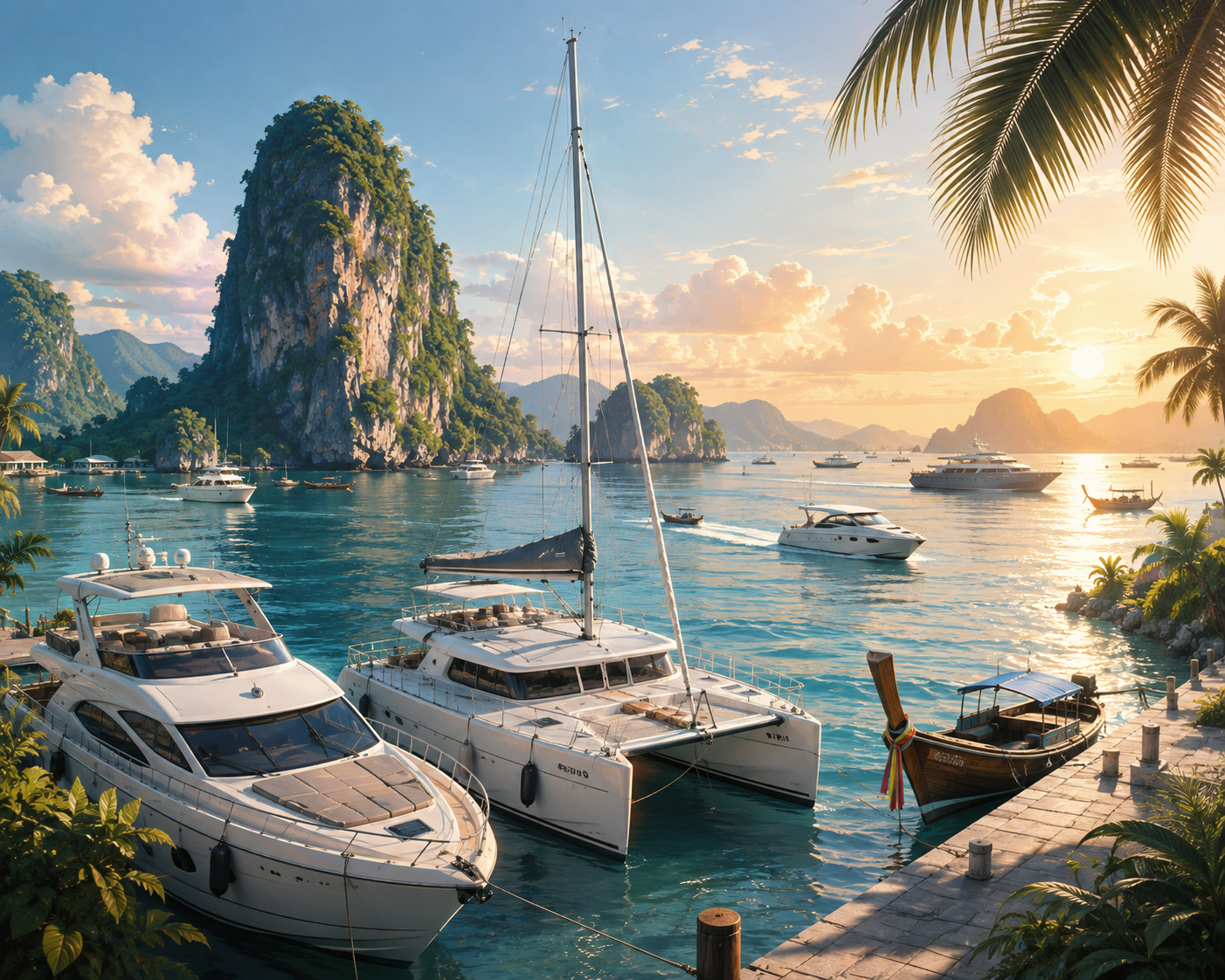
The longtail (rua hang yao) is Thailand's traditional wooden boat, named for the long propeller shaft that extends from a car or truck engine mounted on a pivot at the stern. On Phuket, these colourful, shallow-draft boats are both working craft and the classic way for visitors to reach nearby beaches and islands. Short hops cost roughly ฿500–600, while a half- or full-day private hire runs around ฿1,500–3,000, usually negotiated directly with the captain.
What is a longtail boat?
A longtail boat is a traditional Thai vessel, known locally as rua hang yao, easily recognised by the long shaft that trails behind it — the feature that gives the boat its name. On Phuket, these slim, brightly painted wooden boats are everywhere, working as fishing craft and as the simplest way for travellers to cross to beaches and islands. Beyond transport, the longtail is part of Thailand's coastal identity, tied to the fishing communities that built and still use them.
- Type: traditional Thai wooden boat, also called a long-tail boat.
- Signature feature: a long, exposed propeller shaft off the stern.
- Hull: narrow, shallow draft, usually painted in bright colours.
- Capacity: commonly a handful of passengers up to around 8–10.
- Main use on Phuket: short island transfers, snorkelling and sightseeing.
Longtail versus other water transport on Phuket
Phuket offers several ways to get out on the Andaman Sea, and the longtail fills a specific niche. Speedboats are far quicker over distance and better for reaching far islands fast; ferries carry many passengers on fixed routes; but neither can slip into narrow channels or nose onto a shallow beach the way a longtail can. That shallow-draft manoeuvrability, plus low cost and easy availability, is the longtail's real advantage for short trips and tucked-away coves.
History and cultural significance
The longtail evolved from Thailand's long maritime tradition, an ingenious local solution: mounting a surplus car or truck engine on a pivot so a single shaft could both drive and steer the boat. Building these boats is a craft passed down through families, and the designs vary along the coast. Many longtails carry colourful ribbons and garlands at the bow — offerings tied to Thai spiritual beliefs, blending animist and Buddhist customs, meant to honour the spirits and keep boat and crew safe at sea.
How a longtail is built
The longtail's genius is its drivetrain. A standard automotive or small truck engine sits on a gimbal at the stern, with the propeller on the end of a long steel shaft; the whole engine pivots, so the captain aims the shaft to steer — no rudder needed. The hull is a long, narrow wooden shell, traditionally hand-built, shallow enough to run right up to the sand. This simple, repairable design is exactly why the boats have endured.
From stern to bow
At the stern is the exposed engine and its long shaft, which the captain swings by hand to steer and can lift clear of the water in the shallows — the key to navigating over reefs and sandbars. The narrow wooden hull runs forward to a raised, often decorated bow. Driving one takes real skill, as the pivoting engine demands constant balance and control.
Family boatyards and ritual decoration
Longtails are still built and maintained in small, family-run boatyards where the techniques are handed from one generation to the next. Once launched, a boat is often blessed and dressed with ritual ribbons and flower garlands at the bow — a living expression of Thai spiritual beliefs offering protection and good fortune to the vessel and everyone aboard.
Using a longtail on Phuket
Hiring a longtail on Phuket is informal: you find a captain at a beach or pier, agree a destination and price, and go. It is the easiest way to reach nearby islands, snorkelling spots and beaches you cannot get to by road, and it suits travellers who want a short, flexible trip rather than a packaged tour. Because they are open boats with no shade, bring sun protection and water, and keep valuables in a dry bag.
Routes and popular destinations
From Phuket's beaches and piers, longtails run to a string of nearby spots: Coral Island (Ko Hae) and Ko Bon from Rawai and Chalong, the beaches near Ao Yon and Panwa, and snorkelling coves reachable only by water. The little islands scattered across the Andaman Sea, with their clear shallows, are the natural playground for these boats, whether for a couple of hours or a whole day of island-hopping.
Prices and negotiating with captains
Longtail prices are set by negotiation, not a fixed tariff. As a rough guide, a short one-way hop is often ฿500–600, while a half- or full-day private hire runs around ฿1,500–3,000, depending on route, duration and season. Agree the full price, the exact stops and the return arrangement before you step aboard, and settle up at the end. A polite, friendly approach usually gets a fairer rate than hard bargaining.
Sources: Tourism Authority of Thailand (tourismthailand.org); Marine Department of Thailand (md.go.th) for passenger-boat and life-jacket rules; Department of National Parks, Wildlife and Plant Conservation (dnp.go.th) for island and reef access.