Yacht or Catamaran in Phuket: What to Choose
How the two compare on stability, space, speed and cost — and which fits your trip.
Updated 2026-08-04
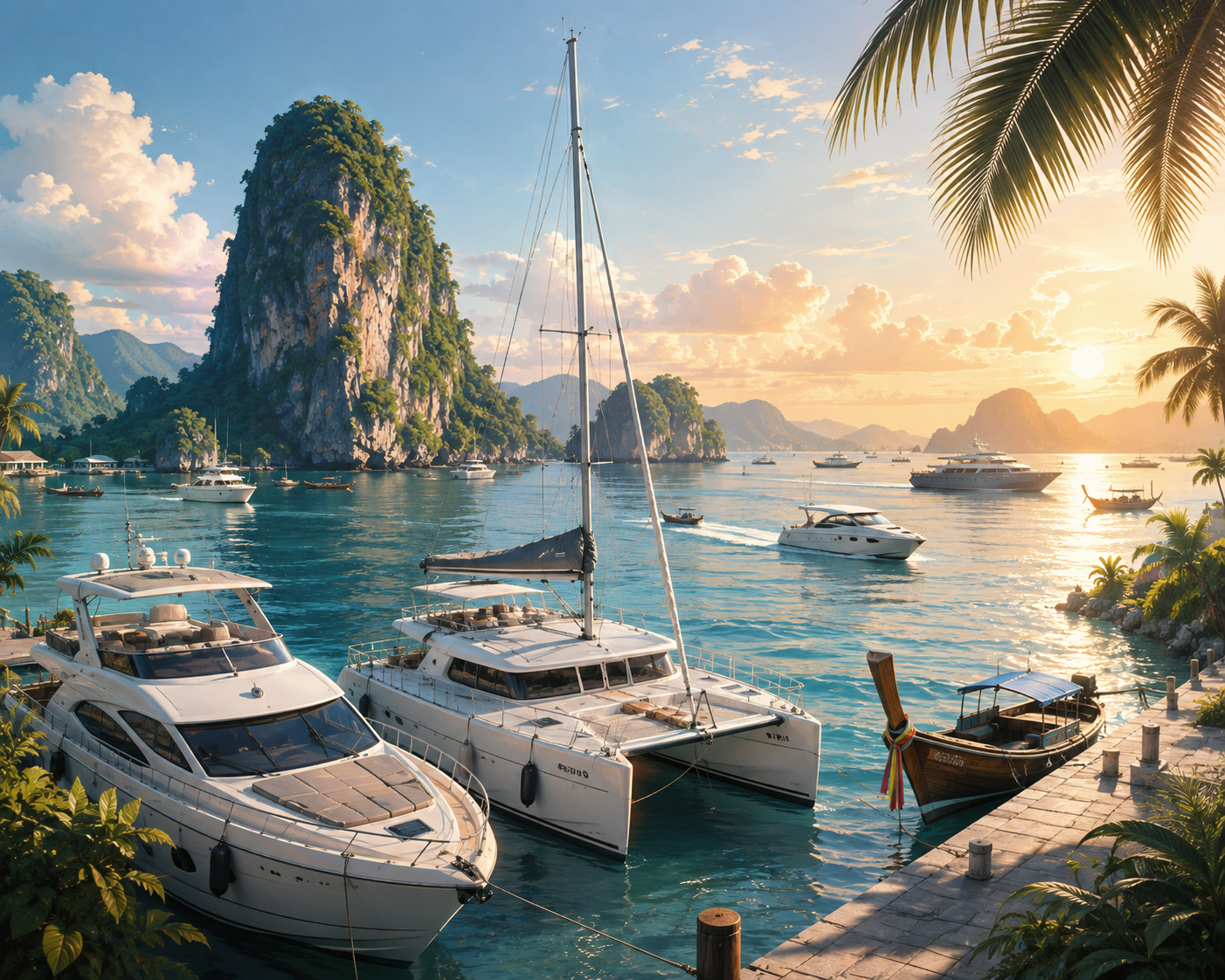
On Phuket, a yacht is a single-hull boat with a keel that leans (heels) under sail and offers a classic, refined sea experience; a catamaran is a twin-hull boat that stays almost level, with far more deck and saloon space. Tourists often choose on price or looks alone and get it wrong. Pick a catamaran for stability, space, families and groups — especially first-timers prone to seasickness — and a yacht for romantic outings, small parties and an authentic sailing feel.
Yacht or catamaran: the choice tourists get wrong
Plan a sea day on Phuket and it often comes down to a yacht or a catamaran. The common mistake is choosing on price or on how the boat looks in a photo, without weighing how the Andaman Sea behaves or what kind of day you actually want. That choice shapes your comfort, your safety and your memories of the trip. This guide explains when a yacht is the better pick and when a catamaran wins.
Sea conditions around Phuket
Phuket sits on the Andaman Sea, which changes with the seasons. The northeast-monsoon window (roughly November–April) brings the calmest water and is the main season for boating; the southwest monsoon (roughly May–October) can bring stronger wind, waves and swell. These conditions affect how comfortable and controllable each boat type feels, and they can shape which routes — the Phi Phi Islands, the Similan Islands, Phang Nga Bay — make sense on the day.
The key differences between a yacht and a catamaran
The difference starts with the hull. A yacht is a monohull — one hull with a keel — while a catamaran is a twin-hull boat with a much wider beam. That single design choice drives everything downstream: stability, space and how each boat behaves on the water.
Stability and comfort on the water
On a wave, the two boats behave very differently. A catamaran is far more stable and barely heels, so the deck stays level; a yacht leans with the wind and swell. For anyone stepping onto a boat for the first time, or prone to seasickness, a catamaran is usually the more comfortable choice.
- Choose the calm Nov–Apr season if you are sensitive to motion.
- Stay in the fresh air on deck and watch the horizon.
- A catamaran's level deck minimises the roll that triggers seasickness.
- Sit low and central on a yacht, where movement is least.
Space and seating for guests
Layout is the other big divide. A catamaran generally offers more room on deck and in the saloon, spread across its two hulls, while a yacht is more compact — cabins, cockpit and saloon packed into a single hull. For large groups, families and day cruises, that extra catamaran space matters.
When to choose a yacht
A yacht comes into its own when the day is about atmosphere. It suits romantic outings for two, small parties, and anyone who wants the authentic feel of classic sailing — the lean of the hull and the sound of the water are part of the experience, not a drawback.
- A romantic getaway or a proposal for two.
- A small group who value intimacy over deck space.
- Guests who want a genuine sailing experience under a sailing yacht.
When a catamaran beats a yacht
A catamaran wins whenever stability and space are the priority. It is the standard pick for family days, larger groups and relaxed cruising, and its shallow draught lets it reach quiet, shallow bays that a deeper-keeled yacht cannot.
- Family trips with children who need room and a level deck.
- Larger groups and day cruises with lots of guests.
- Calm, relaxed days at anchor rather than a sailing workout.
- Reaching shallow bays and beaches close in.
How to choose between a yacht and a catamaran
It comes down to the format of your trip, your headcount and what you expect from a day at sea. Choose a catamaran for stable comfort, space and groups; choose a yacht for romance, intimacy and an authentic sailing feel. Phuket offers plenty of both — decide what the day is for first, and the boat follows.
Sources: Tourism Authority of Thailand (tourismthailand.org); Marine Department, Thailand (md.go.th); Department of National Parks, Wildlife and Plant Conservation (dnp.go.th).