Bali or Phuket: Which Island to Choose
A clear-eyed comparison across beaches, cost, culture and getting around.
Updated 2026-08-04
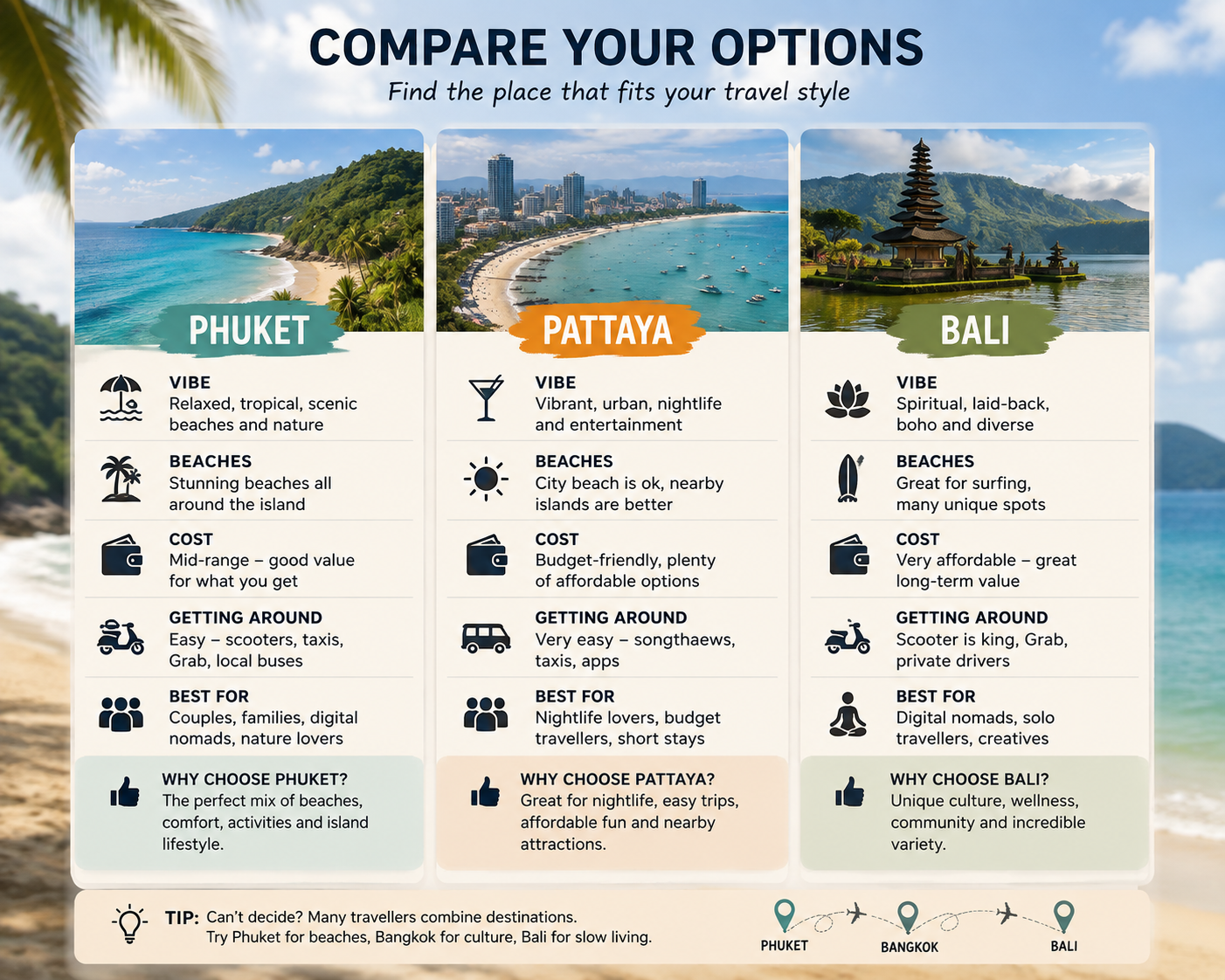
Bali and Phuket are Southeast Asia's two headline island destinations, and neither is simply 'better' — they suit different travellers. Phuket (Thailand) wins on easy beach swimming, calm shallow bays, island-hopping, smooth infrastructure and generally lower everyday costs. Bali (Indonesia) wins on scenery and culture — rice terraces, temples, volcanoes and a famous surf, wellness and café scene — but has rougher swimming beaches, heavy traffic and a more spread-out layout. Choose Phuket for a relaxed, convenient beach holiday; choose Bali for landscapes, culture and atmosphere.
Geography and climate: where it's more comfortable
Choosing between Bali or Phuket often starts with geography. Phuket is Thailand's largest island, on the Andaman Sea, compact and easy to cross in under an hour, with most beaches along a developed west coast. Bali is larger and more varied, rising from surf beaches in the south to volcanic mountains, jungle and rice terraces inland around Ubud, which means longer transfers between areas. Both are tropical, around 26–32°C year-round. Phuket's dry high season runs roughly November to April; Bali's drier season runs roughly April to October — so the two islands' best months are partly offset, which is useful if you're choosing by date.
Flights and visa rules
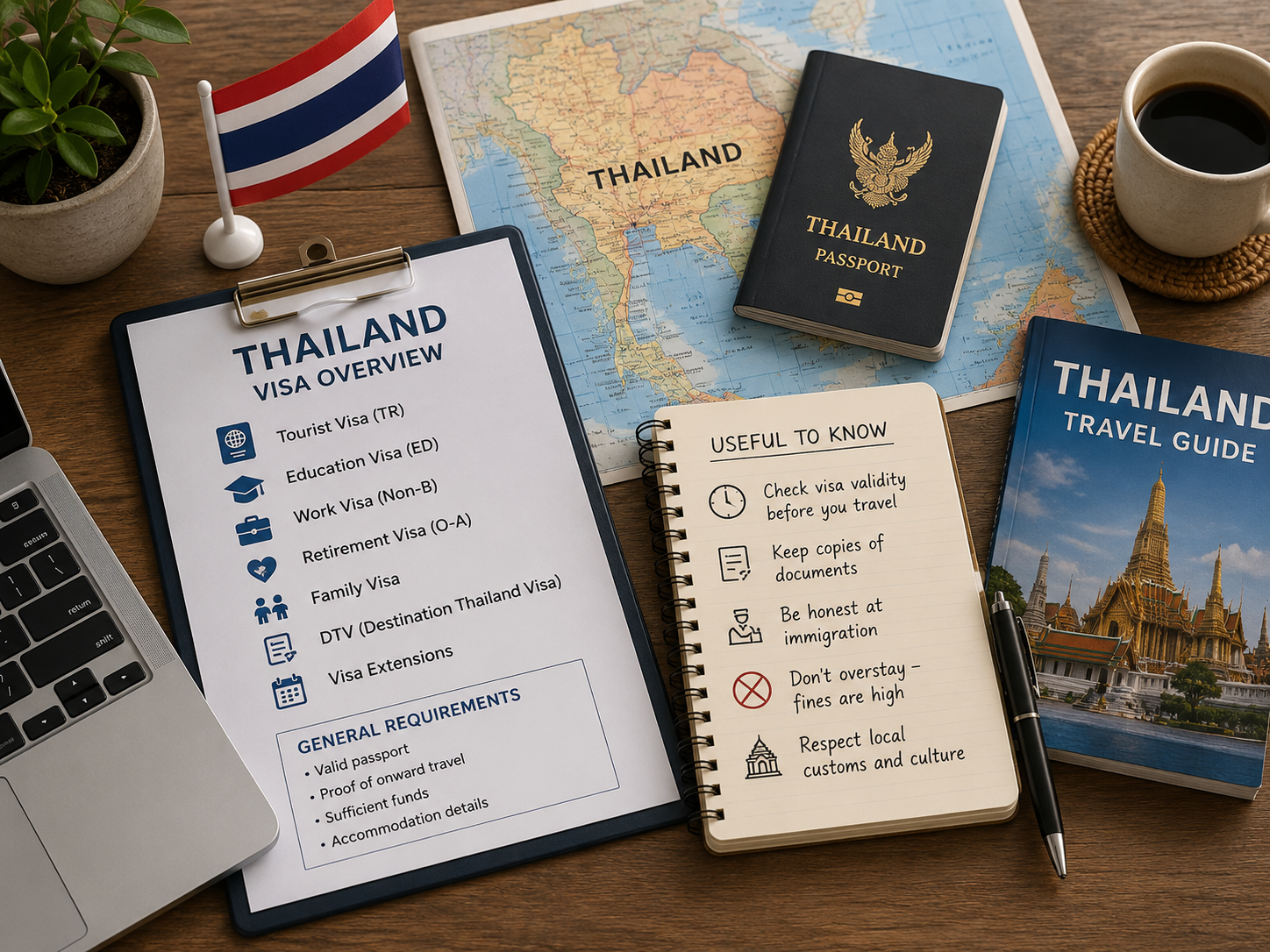
Phuket International Airport receives many direct and one-stop routes and is a short hop from Bangkok. Bali's Ngurah Rai Airport in Denpasar is also well connected but often involves a longer journey from Russia and Europe. Both Thailand and Indonesia offer visa-free entry or visa-on-arrival for many nationalities, including short stays for Russian travellers, but the exact length, cost and any Indonesian visa-on-arrival fee change periodically — always confirm the current rules with the official immigration authorities before booking.
Transport, taxis and traffic
Getting around is a clear practical difference. Phuket is compact, and ride-hailing via Grab, along with metered taxis and rentals, makes short hops straightforward. Bali is more spread out and famous for congestion, especially in the south around Canggu, Seminyak and Kuta, where a short distance can take a long time in traffic. On both islands many visitors rent scooters, but roads can be chaotic and an International Driving Permit plus insurance is essential — riding without a proper licence risks fines and voided insurance.
Cost of living and accommodation
Both islands are affordable by Western standards, and prices overlap heavily, but Phuket is often slightly cheaper for everyday spending, while Bali draws budget backpackers and long-stay digital nomads with many guesthouses and villas. On Phuket, expect simple rooms from roughly ฿800–1,500 a night and comfortable mid-range hotels around ฿2,000–4,000; Bali offers similar tiers, with famously good-value private-pool villas inland. For long stays, Bali's monthly villa scene is a big draw; for convenience and beachfront resorts, Phuket delivers.
Comfort and infrastructure
Phuket generally feels more polished and convenient: reliable utilities, large international hospitals, big shopping malls and a mature resort industry. Bali's infrastructure has improved fast but is more variable — power cuts, patchier roads and drainage issues in the rains are more common, though the trade-off is a creative, design-led café, co-working and wellness culture that Phuket doesn't match in the same concentration. If seamless convenience matters most, Phuket edges it; if atmosphere and a bohemian scene appeal, Bali leads.
Food and dining
Both islands eat brilliantly. Thai cuisine on Phuket — from ฿50–80 street pad thai and som tam to fresh seafood at Rawai — is punchy, cheap and everywhere, and Phuket Town has a celebrated food scene rooted in its Peranakan heritage. Bali's Indonesian food (nasi goreng, satay, babi guling) is excellent and equally affordable, and the island has an outsized number of international, vegan and health-focused restaurants, particularly in Ubud, Canggu and Seminyak. Foodies will be happy on either; Phuket leans traditional and local, Bali leans cosmopolitan and health-conscious.
Beaches and swimming
This is where Phuket has a real edge for a classic beach holiday. Its west-coast bays — Kata, Karon, Nai Harn, Kamala — offer white sand and calm, shallow water for much of the high season, ideal for families and easy swimming. Bali's southern beaches (Kuta, Seminyak, Canggu) are dramatic and great for surfing, but the water is often rougher with stronger currents and darker volcanic sand in places; the calmest swimming is on Bali's east coast and the nearby Nusa islands. For dependable, gentle swimming, Phuket wins; for surf and dramatic coastline, Bali appeals.
Nature, activities and sights
Bali is the stronger destination for landscapes and inland adventure: the Tegalalang and Jatiluwih rice terraces, volcano treks up Mount Batur for sunrise, waterfalls, and temples such as Uluwatu and Tanah Lot. Phuket counters with the sea: some of Asia's best island-hopping to the Phi Phi Islands, Phang Nga Bay's limestone karsts and the Similan Islands for diving, plus viewpoints, the Big Buddha and jungle ziplines. Simplifying it: Bali is the better land destination, Phuket the better sea destination.
Nightlife, entertainment and atmosphere
Phuket's nightlife concentrates in Patong around Bangla Road — loud, brash and unmissable if that's your scene — with quieter bar areas elsewhere. Bali's scene is more style-led, centred on the beach clubs and cocktail bars of Seminyak and Canggu, with a mellower yoga-and-sunset vibe in Ubud. Phuket suits classic party nightlife; Bali suits beach clubs, live music and a trendier, more spread-out social scene.
Safety and level of service
Both islands are generally safe for tourists, with the usual advice to watch belongings, use reputable operators and take care on scooters — road accidents are the biggest real risk on either island. Thailand's tourism service standards on Phuket are consistently smooth and hotel service is a strong suit. Bali is warm and hospitable too; service can be more relaxed and 'island-time'. Neither has a safety issue that should sway a normal holiday, but sensible precautions apply on both.
Shopping
Phuket offers big air-conditioned malls (Central Festival, Jungceylon), a premium outlet, and lively night and local markets for cheap clothing, souvenirs and street food. Bali is the place for boutiques, homeware, surf brands, handicrafts and design — especially around Seminyak, Ubud and Canggu — with markets for wood carving, textiles and art. For mall convenience and bargain markets, Phuket; for design, craft and boutique shopping, Bali.
The verdict: which island should you choose?
There is no universal winner — it depends on the holiday you want. Choose Phuket if your priorities are easy beach swimming, family convenience, island-hopping, smooth infrastructure and slightly lower costs, or if you're travelling in the November–April window. Choose Bali if you're drawn to dramatic scenery, temples and culture, surfing, a creative café-and-wellness scene, or long stays inland, and if you're travelling roughly April–October. Many seasoned travellers end up visiting both and simply pick by season.
Sources: Tourism Authority of Thailand (tourismthailand.org); Thai Immigration Bureau (immigration.go.th); Airports of Thailand (airportthai.co.th). Verify current Indonesian entry rules with official Indonesian government sources.