Where Is Phuket and What Country Is It In?
Phuket's location in Thailand, the sea around it and the island-vs-town confusion, cleared up.
Updated 2026-08-04
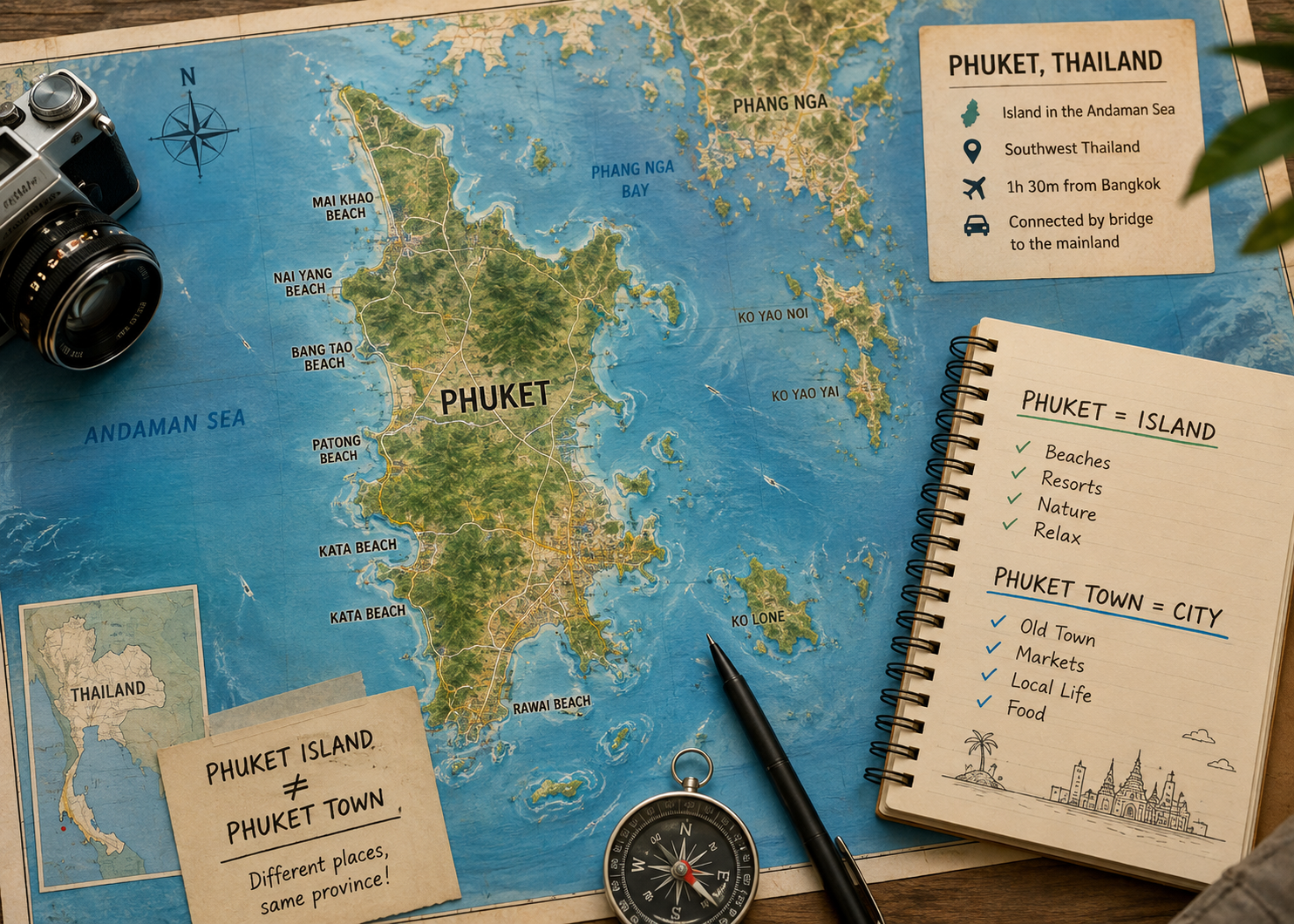
Phuket is an island and province in southern Thailand, in Southeast Asia. It lies on the west coast of the Thai peninsula in the Andaman Sea — which is part of the Indian Ocean — and is connected to the mainland by the Sarasin Bridge. At about 543 km² it is Thailand's largest island, roughly 860 km south of the capital, Bangkok. So the short answer to 'where is Phuket and what country is it in' is: Phuket is in Thailand, on the Andaman coast.
Phuket: Thailand's flagship island and where to find it
Phuket is the best-known island destination in Thailand and, for many travellers, the country's flagship beach resort. It sits in the Andaman Sea off the west coast of southern Thailand and combines long sandy beaches, warm tropical water, forested hills and developed tourist infrastructure. Because it is both an island and a province, and shares its name with its main town, Phuket can be confusing at first — so this guide starts with exactly where it is and what country it belongs to, then builds out the practical detail you need before a trip.
Geographical location: where Phuket is and in which country
Phuket is in Thailand, a country in Southeast Asia, and lies on the western side of the Thai peninsula in the Andaman Sea. The Andaman Sea is a north-eastern arm of the Indian Ocean, so Phuket faces the ocean rather than the Gulf of Thailand on the country's eastern side. The island is roughly 860 km south of Bangkok, the Thai capital, and is close to the provinces of Phang Nga to the north and Krabi to the east across the bay. Despite being an island, Phuket is joined to the mainland by the Sarasin Bridge, so it can be reached by road as well as by air and sea.
Phuket on the world map
On a world map, Phuket sits at approximately 7.9° north latitude and 98.4° east longitude, placing it firmly in the tropics not far north of the Equator. It is the largest of a cluster of islands in the Andaman Sea, with smaller neighbours such as the Phi Phi islands, Koh Yao and the Similan Islands nearby. This nested geography — the island within the Andaman Sea, the Andaman Sea within the Indian Ocean — explains both the warm water and the classic tropical scenery of limestone karsts and clear bays that the region is famous for.
Administrative status: island, province and town
The name 'Phuket' refers to three overlapping things, which is the source of most confusion. First, it is the island itself. Second, it is a province of Thailand, one of the country's 77 provinces, which includes the main island and several small surrounding islands. Third, it is the provincial capital, Phuket Town (Mueang Phuket), the administrative and historic centre on the south-east of the island. Phuket Town — not Patong, the famous beach resort — is the island's true capital, known for its Sino-Portuguese Old Town architecture. So if you are asked what the 'capital' of Phuket is, the answer is Phuket Town.
Which sea or ocean surrounds Phuket
Phuket is washed by the Andaman Sea, which is part of the Indian Ocean — so both 'sea' and 'ocean' answers are correct, nested one inside the other. The Andaman Sea gives Phuket its clear, warm water (typically 28–30°C year-round), coral reefs and the dramatic limestone islands seen on boat trips. This west-coast setting differs from Thailand's eastern resorts such as Pattaya, which sit on the Gulf of Thailand: the Andaman side generally has clearer water and more striking scenery, but also a more pronounced monsoon season. The sea's condition changes with that monsoon, so calm, glassy water in the dry months gives way to bigger swells and rip currents from May to October.
Climate and the best time to visit
Phuket has a tropical monsoon climate with warm temperatures all year (usually 25–33°C) and two main seasons driven by the Andaman monsoon. The dry high season runs from November to April, with sunny days, calm seas and clear water — the best time for beaches, swimming and island trips. The wet season runs from May to October, bringing higher humidity, more rain and rougher seas, peaking in September and October. Rain in the wet season often comes as short heavy downpours rather than all-day drizzle, so travel is still possible, and prices are lower.
Phuket overview: key facts about the island
Phuket covers about 543 km², making it Thailand's largest island — roughly the size of Singapore — and it has a population of around 400,000 permanent residents, swelling far higher with tourists in high season. The island is hilly and forested inland, with most beaches strung along the west coast and the main town and port on the south-east. Its economy today is dominated by tourism, but it grew wealthy earlier on tin mining and rubber, which shaped the Sino-Portuguese architecture of the Old Town. Culturally, Phuket blends Thai, Chinese and Malay influences, reflected in its food, temples and festivals such as the annual Vegetarian Festival.
How Phuket differs from other Thai resorts
Compared with Pattaya, Thailand's other big-name resort, Phuket sits on the Andaman Sea while Pattaya sits on the Gulf of Thailand. Phuket generally has clearer water, better beaches and more dramatic scenery, and it is a large island rather than a mainland city. Pattaya is closer to Bangkok (about two hours by road) and cheaper to reach, but its city beach is average. Phuket suits travellers who want beaches, island-hopping and a mix of relaxation and nightlife; Pattaya suits short breaks and easy access from the capital.
Phuket's beaches: an overview of the best spots
Beaches are the heart of Phuket, and most line the island's west coast facing the Andaman Sea. Each has a distinct character, so choosing the right one shapes your whole trip.
The most popular beaches
- Patong: the busiest and most developed beach, with the fullest infrastructure, water sports and the island's main nightlife on Bangla Road.
- Karon: a long, wide beach with famously squeaky white sand, quieter than Patong and good for families.
- Kata: a scenic, moderately busy beach popular for its calm swimming and, in the wet season, gentle surfing.
- Surin: an upmarket beach with a concentration of luxury resorts and a more refined atmosphere.
- Nai Harn: a peaceful bay in the south, favoured for its clear water and relaxed feel.
Which beach suits which traveller
Match the beach to your priorities. Families lean toward Karon and Kata for their gentle, shallow entries and calm water. Couples and those seeking scenery prefer Nai Harn and Surin. Nightlife-focused travellers stay near Patong for its bars and clubs. Water-sports enthusiasts head for Kata for surfing in the wet season, while those wanting quiet choose the low-key Kamala or Nai Thon further north.
Transport: getting around Phuket
Phuket is large and hilly, and its beaches are spread out, so getting around needs planning. The main options are tuk-tuks (convenient for short hops but relatively expensive and priced by negotiation), metered or app-based taxis and ride-hailing cars, rented scooters (cheap and flexible but risky on the island's busy roads and mountain bends), and rented cars (comfortable but with challenging navigation and parking). There are also some local songthaew (shared pick-up) routes linking Phuket Town with the beaches. A rented scooter should only be used with a valid motorcycle licence and helmet.
Culture and cuisine of Phuket
Phuket's culture reflects its Thai, Chinese and Malay heritage. Buddhist temples such as Wat Chalong sit alongside Chinese shrines, and the annual Vegetarian Festival (Phuket's most famous event) fills the streets with processions each autumn. The food is a highlight: alongside Thai staples like pad thai and green curry, Phuket has its own dishes influenced by its Hokkien Chinese roots, and fresh seafood. You can eat well at every level, from street stalls and night markets to beachfront restaurants; the Rawai seafood market, where you buy fish and have it cooked, is a local institution.
Attractions and things to do
Beyond the beaches, Phuket has plenty to see. The Big Buddha, a 45-metre marble statue on a hilltop, gives panoramic views and is one of the island's landmarks. Wat Chalong is its most important and most visited temple. Phuket Town's Old Town is a photogenic district of colourful Sino-Portuguese shophouses, cafés and street art. Viewpoints such as Karon and Promthep Cape are famous for sunsets, and inland there are waterfalls and elephant sanctuaries.
Activities and day trips
Phuket is an excellent base for the water: diving and snorkelling in the Similan Islands, boat trips to the Phi Phi islands and James Bond Island in Phang Nga Bay, and surfing at Kata in the wet season. On land you can visit temples, take a Thai cooking class, or try ziplining and ATV adventures in the hills. Many of the best beaches and reefs on nearby islands are only reachable by organised boat trip, so day trips are central to a Phuket holiday.
Family-friendly entertainment
Families are well catered for. Splash Jungle Water Park has slides and a wave pool; Phuket FantaSea is a large cultural show with dinner; and adventure parks such as Flying Hanuman offer supervised ziplining (with minimum age and height rules). Calm, shallow beaches like Karon suit young children, and snorkelling trips to nearby islands appeal to older kids. Check age and height limits before booking activity parks.
Accommodation: where to stay on Phuket
Phuket has everything from hostels and guesthouses to mid-range hotels, private villas and luxury resorts. Location is the key trade-off. Patong puts you next to the beach and nightlife but is busy and pricier; Karon and Kata are quieter and family-friendly; Bangtao and Surin hold many upmarket resorts; and Phuket Town offers authentic character and better value but is away from the beaches. As of 2026, expect budget rooms from around ฿600–1,200 a night, comfortable mid-range hotels ฿1,500–3,500, and resorts well above that in peak weeks.
Practical tips for travellers
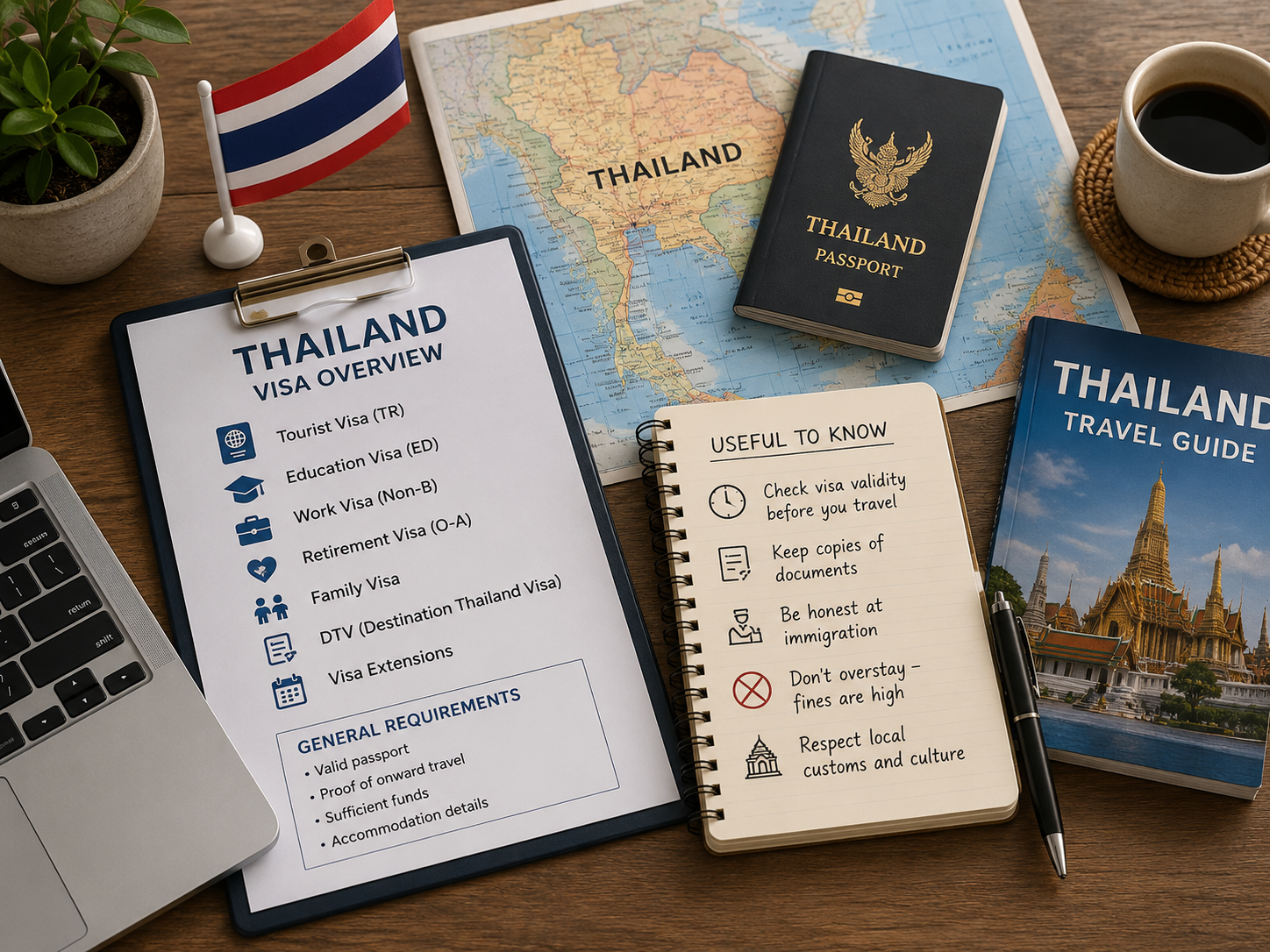
A few basics make a Phuket trip smoother. Most nationalities can enter Thailand visa-exempt for tourism for a set period, but the rules change, so confirm your current entitlement with the Thai Immigration Bureau before you fly. The currency is the Thai baht; carry some cash, as small vendors and boats rarely take cards. Respect beach safety flags — never swim past a red flag in the monsoon — and take normal precautions against scams around transport and tours. Dress modestly at temples, remove shoes where required, and note that smoking is banned on many Phuket beaches, with fines enforced.
- Check visa rules with the Thai Immigration Bureau before booking flights, as durations and conditions change.
- Use the Thai baht and carry cash for markets, boats and small cafés.
- Obey red-flag warnings on beaches during the May–October monsoon.
- Only ride a scooter with a valid motorcycle licence, a helmet and travel insurance that covers it.
- Dress respectfully at temples and remove shoes where signs require it.
- Do not smoke on beaches where it is prohibited; fines are enforced.
Why Phuket is worth visiting
Phuket earns its reputation as Thailand's leading island because it combines so much in one place: Andaman-Sea beaches, warm clear water, dramatic island scenery on its doorstep, a rich Thai-Chinese-Malay culture, good food and complete tourist infrastructure. It works equally for a family beach holiday, a couple's escape, diving and adventure, or nightlife — and, as an island in southern Thailand connected to the mainland by bridge, it is easy to reach. That blend of natural beauty and convenience is exactly why it remains one of Asia's most popular destinations.
Sources: Tourism Authority of Thailand (tourismthailand.org); Phuket International Airport (phuketairportthai.com) and Airports of Thailand (airportthai.co.th); Department of National Parks, Wildlife and Plant Conservation (dnp.go.th); Thai Immigration Bureau (immigration.go.th).