Markets in Phuket: Night & Local Markets
The best night markets and local markets for food, souvenirs and atmosphere.
Updated 2026-08-05
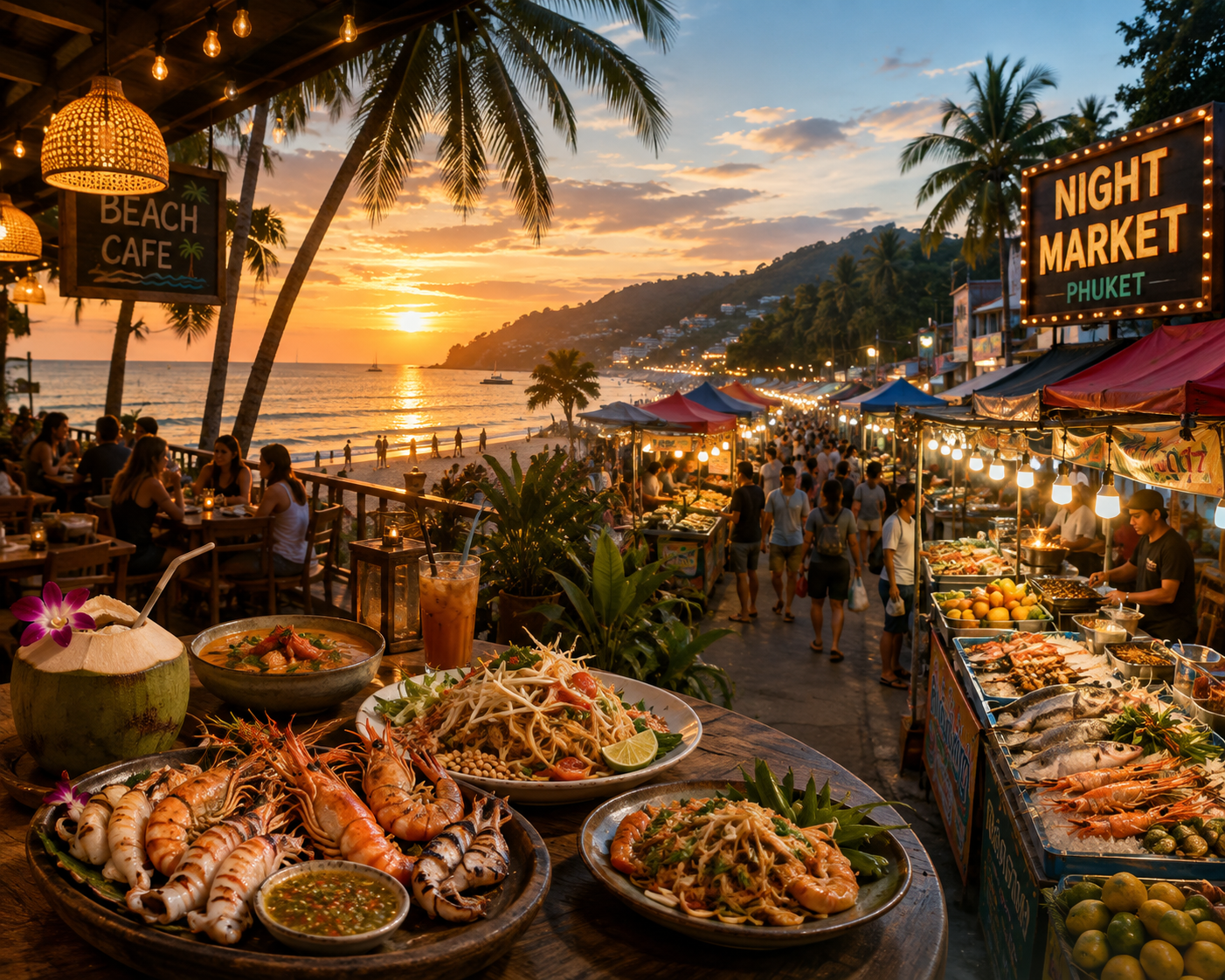
Phuket's markets fall into a few clear types: lively night markets and weekend walking streets for street food, souvenirs and atmosphere; local produce and fish markets where residents and restaurants shop each morning; and modern hipster-style food markets. The biggest is the Naka Weekend Market near Phuket Town; the most atmospheric is the Sunday Walking Street (Lard Yai) in the Old Town; and the freshest seafood is at Rawai. Most night markets run late afternoon to around 22:00–23:00, deal in cash baht, and are where you eat, shop and browse most cheaply on the island.
Types of market on Phuket and what sets them apart
Phuket's markets are easiest to understand by type rather than by name. Night markets and weekend walking streets are the tourist favourites — open in the evening, heavy on street food, clothes and souvenirs, and long on atmosphere. Local produce and fresh markets, including fruit and fish markets, run mainly in the morning and are where Thai families and restaurant cooks buy the freshest ingredients. A newer breed of hipster food market blends container-style shops, live music and craft food for a younger crowd. Knowing which type you want saves a wasted trip.
Night markets: atmosphere, entertainment and shopping
Phuket's night markets are the classic evening out: rows of food stalls sizzling with satay, grilled seafood and mango sticky rice, aisles of cheap clothing, phone cases and Thai souvenirs, and often a stage with live music or performances. They are the most accessible markets for visitors — easy to reach, easy to browse, and cheap. Patong has its own busy night market off the main entertainment strip, while the larger weekend markets near Phuket Town draw the biggest crowds. Come hungry, carry small notes, and treat it as much as an evening's entertainment as a shopping trip.
Produce and fish markets: where the locals shop
Away from the tourist circuit, Phuket's fresh markets are where the island actually feeds itself. Morning produce markets pile high with tropical fruit — mangosteen, rambutan, dragon fruit, durian in season — alongside vegetables, herbs and curry pastes. Fish markets, above all the one at Rawai, sell the day's catch by weight straight from the boats. These markets are less polished but far more authentic, and a walk through one is the quickest way to understand everyday Thai life and to buy fruit at a fraction of resort prices.
The best markets on Phuket to visit
These are the standout markets across the island, chosen for atmosphere, food and range rather than for shopping bargains alone. Between them they cover every type above and most parts of Phuket, from the Old Town to Patong and the southern coast.
Naka Weekend Market: the island's biggest
The Naka Weekend Market, on the edge of Phuket Town, is the largest on the island and runs Saturday and Sunday evenings. It is a sprawling maze of thousands of stalls: a vast street-food section, clothing and accessories, homeware, electronics, plants and even second-hand goods. Go hungry and graze your way through the food zone, then explore the retail aisles — but wear comfortable shoes and set a meeting point, because it is easy to get lost. Haggling is expected on non-food items.
Sunday Walking Street (Lard Yai): the Old Town at its best
Every Sunday evening, Thalang Road in Phuket Town's Old Town closes to traffic for Lard Yai, the Walking Street market. Set among beautifully restored Sino-Portuguese (Peranakan) shophouses, it is the island's most atmospheric market — handmade crafts, local artists, live music and street performers, and food stalls serving the Old Town's distinctive Peranakan dishes. It is more about culture and setting than bargains, and it is the one market worth planning your week around.
Chillva Market: the hipster favourite
Chillva Market, also near Phuket Town, is the island's trendy option — a night market built from converted shipping containers, with young Thai fashion designers, craft drinks, live music and Instagram-friendly corners. It draws a local student and young-professional crowd and shows a modern, creative side of Thai culture that the traditional markets do not. Best in the evening for food, drinks and people-watching.
Rawai fish market: the freshest seafood
On the southern seafront at Rawai, the fish market sells prawns, crab, lobster, squid, oysters and reef fish by weight, straight from the fishing boats. The system is the draw: buy your seafood raw, then hand it to one of the adjacent restaurants to grill or steam for a small per-dish fee. Confirm the price per kilo before it is weighed and the cooking fee before it is cooked, and you will eat some of the best-value seafood on Phuket.
Seven more markets worth knowing
- Banzaan Fresh Market, Patong: a covered fresh and seafood market beside Jungceylon, with cook-it-upstairs restaurants — the handiest option on the west coast.
- Karon Temple Market: a twice-weekly market beside Karon's temple, strong on street food and souvenirs for the beach crowd.
- Indy Market, Phuket Town: a smaller creative night market with handmade goods, art and food, popular midweek.
- Downtown / Expo Market, Phuket Town: a large weekend market for clothes, gadgets and cheap eats.
- Super Cheap, near Phuket Town: a huge warehouse-style store rather than a market, famous for low-priced snacks, souvenirs and household goods.
- Bangla Night Market, Patong: a compact tourist market right by the nightlife strip, open late.
- Kata food market: a small evening street-food cluster convenient for anyone staying around Kata and Karon.
What to buy at Phuket's markets, from souvenirs to food
Markets are the cheapest place on Phuket for food, gifts and everyday extras — but knowing what is worth buying (and what to skip) saves both money and disappointment.
Worth buying
- Street food: pad thai, grilled satay, fresh seafood, mango sticky rice and fruit shakes for a few baht each.
- Tropical fruit: mangosteen, rambutan, dragon fruit and mango, far cheaper than at resorts.
- Thai snacks and spices: dried fruit, curry pastes, cashews and coconut treats to take home.
- Souvenirs: elephant-print clothing, handmade soap, wood carvings and Peranakan-style crafts in the Old Town.
- Cheap clothing and accessories: beachwear, sunglasses and bags at the big weekend markets.
Tourist traps to avoid
- Branded goods that are obvious fakes — quality is poor and they may be confiscated at customs.
- Overpriced 'antiques' and gemstones, which are rarely genuine at a market stall.
- Anything without a marked price where the first quote seems steep — always ask and compare before buying.
Practical tips for visiting Phuket's markets
A little preparation makes market visits more comfortable, especially in the hot, humid climate and busy November-to-April high season.
- Bring a hat, water and sun protection for daytime markets, and mosquito repellent for evening ones.
- Carry small-denomination baht notes; ATMs are not always nearby and stalls rarely take cards.
- Go in the evening to escape the heat at the night markets; go early morning for the freshest produce.
- Check opening days — the biggest markets (Naka, Lard Yai) run only on weekends or a single evening.
- In the green season (May–October) sudden downpours are common, so a light rain layer is useful.
Sources: Tourism Authority of Thailand (tourismthailand.org); Ministry of Public Health, Thailand, for food and water-safety guidance (moph.go.th).