Rawai Seafood Market: A Guide
How to buy fresh seafood at Rawai and have it cooked on the spot — without overpaying.
Updated 2026-08-05
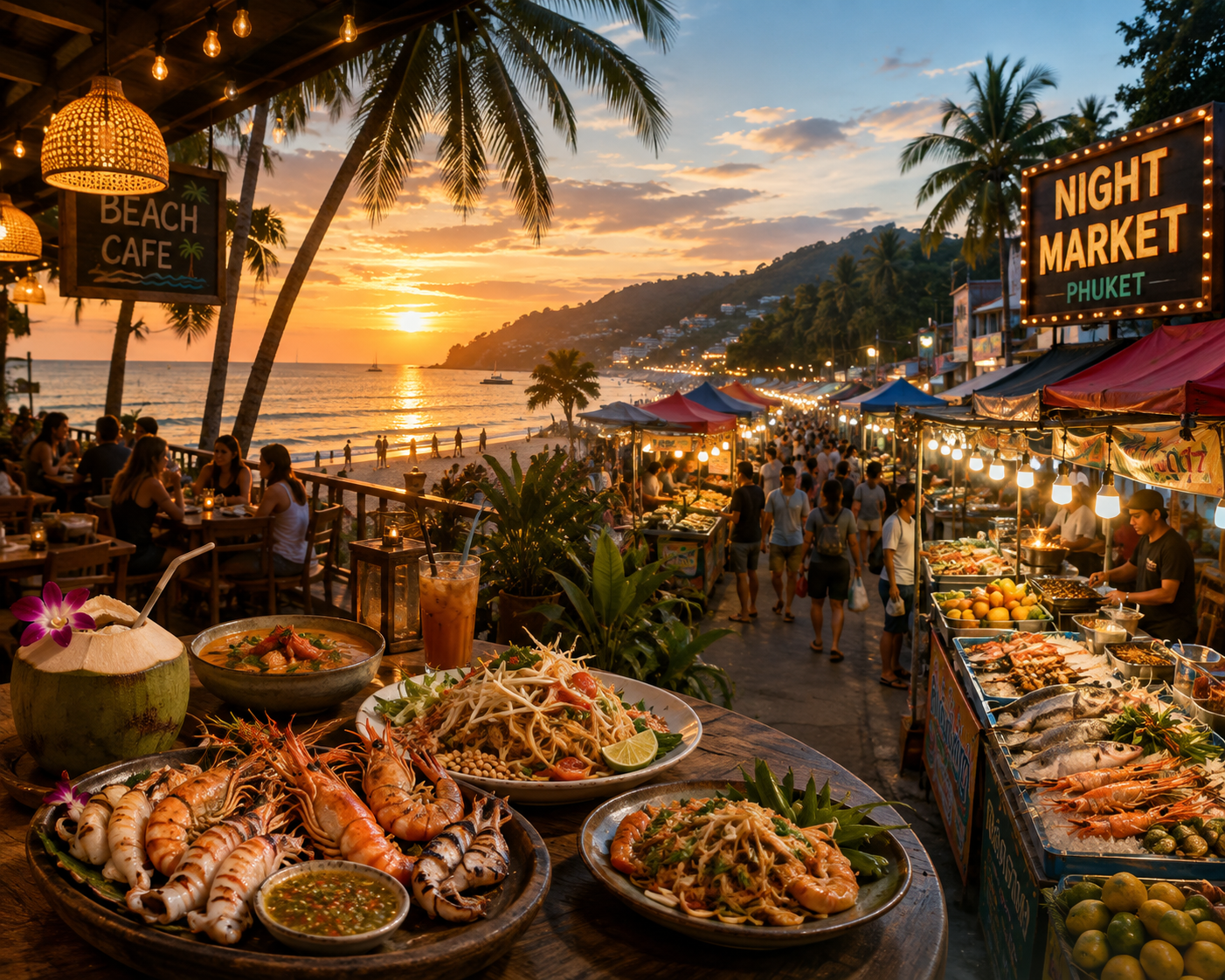
Rawai Seafood Market, on the seafront at Rawai in southern Phuket, is where you buy the day's catch straight from the fishing boats — prawns, crab, snapper, squid, lobster, oysters and more — priced by weight, then carry it to one of the small restaurants lining the same road to be cooked for a modest per-dish fee. It is some of the freshest, best-value seafood on the island, but the price is negotiated at the stall, so confirming the rate per kilo before anything is weighed is the key to a fair bill.
Why Rawai is the best place to buy seafood on Phuket
Rawai sits at Phuket's southern tip, a working fishing community long before tourism reached the island. That heritage is why the seafood market here beats the tourist-strip alternatives: the produce comes off the boats moored a few metres away, turnover is high, and the prices — once you have agreed them — are among the lowest on the island for seafood this fresh. You buy close to the source, then have it cooked on the spot.
A direct link to the fishermen
The fishing families and the Chao Le (sea-gypsy) community who land the catch run many of the stalls, so the chain between boat and plate is short. Ask what came in that morning and staff will often point you to the freshest tray. This directness is the market's advantage over a supermarket or a restaurant that buys through wholesalers.
A guarantee of freshness
Freshness is easy to check for yourself, which is the whole point of buying here. Look for clear, bright eyes on fish, firm flesh that springs back, a clean sea smell rather than a fishy one, and lively lobsters and crabs in the tanks. Because the market restocks daily from the boats, seafood rarely sits long — but you are always in control, choosing each piece before it is weighed.
What you can buy at Rawai Seafood Market
The range is broad and changes with the season and the day's landings. Typical offerings include tiger prawns, mud crab and flower crab, rock and spiny lobsters, squid and cuttlefish, octopus, oysters, scallops, mussels, and reef fish such as snapper, grouper and the colourful parrotfish. Prices vary widely by type and size — modest for squid, mussels and small fish, high for large lobster — so it pays to ask a few stalls before committing.
How the buy-and-cook system works
The routine at Rawai is simple once you know it, and following it in order avoids the two most common bill surprises — an unclear price per kilo and an unclear cooking fee.
- 1Choose your seafood
Walk the stalls, compare what is freshest, and pick your pieces. Prices are negotiable, so a polite haggle is expected and normal.
- 2Confirm the price per kilo, then weigh
Agree the rate per kilo before anything goes on the scale, and watch it weighed. Live lobster and crab should be weighed in front of you.
- 3Take it to a restaurant
Carry your bag to one of the small restaurants along the same road and hand it to the kitchen to cook.
- 4Agree the cooking fee and method
Confirm the per-dish cooking fee — typically ฿100–200 — and how you want each item prepared before they start.
The cost of cooking
The restaurants around the market charge a cooking fee per dish rather than the full restaurant price, since you have already bought the seafood. Expect roughly ฿100–200 per dish depending on the preparation, plus the cost of rice, drinks and any extra sides you order there. This fee is set by each restaurant, not the market, so it varies — always confirm it up front.
Ways to have it cooked
The kitchens will grill over charcoal, steam with lime and chilli, stir-fry with garlic or Thai basil, deep-fry, or cook prawns and crab in curry. Grilling suits prawns, fish and lobster; steaming with lime and garlic is the classic Thai treatment for delicate fish; and squid takes well to a quick stir-fry with holy basil. Tell the kitchen your spice tolerance clearly.
Practical tips for visiting Rawai Seafood Market
A few habits make the visit smoother and cheaper, on your first market meal or your tenth.
The best time to go
The market runs through the day into the evening, but the widest choice and freshest trays are usually earlier, when the boats have just landed. Evenings are livelier and better for a relaxed dinner as the sun sets over the bay, though the top picks may already be gone. Weekdays are quieter than weekends.
How to pick fresh seafood
- Check that fish have clear, bulging eyes and bright red gills, not sunken or grey ones.
- Press the flesh — it should be firm and spring back rather than leave a dent.
- Choose lobsters, crabs and shellfish that are visibly alive and moving in the tanks.
- Trust your nose: fresh seafood smells of the sea, never strongly fishy or of ammonia.
Haggling and paying
Bargaining is part of the experience and expected, but stay friendly — a small discount is realistic, a huge one is not. Compare a couple of stalls first, bring cash in small baht notes, and be wary of any 'special price' that is quoted without a clear price per kilo. Confirming weight and rate before purchase is your best protection.
What to bring
- Enough cash in small notes, as stalls are cash-only and change can be limited.
- Sun protection and water for daytime visits — the seafront has little shade.
- A relaxed, patient attitude for choosing, weighing and waiting for the cooking.
Other seafood markets on Phuket
Rawai is the classic choice, but a few alternatives suit different bases on the island.
- Banzaan Fresh Market in Patong: a covered market near Jungceylon with a fresh-seafood floor and cook-it-upstairs restaurants, convenient if you are staying on the west coast.
- Chillva Market in Phuket Town: a trendy container-style night market with seafood among its food stalls, better for atmosphere and street food than raw buying.
- The island's night markets (such as Naka Weekend Market) also sell cooked seafood, though not the buy-raw-and-cook model that defines Rawai.
How to get to Rawai Seafood Market
The market is on the Rawai seafront, about 45–55 km south of Phuket International Airport — roughly an hour by road. A metered airport taxi or a ride-hailing app such as Grab or Bolt is the simplest option; from Patong, Kata or Karon it is a 30–45 minute drive. If you ride a scooter, carry a valid motorcycle licence and helmet, as checkpoints on the southern roads do issue fines. There is parking along the seafront road.
Important cautions
Enjoy the market with clear eyes: it is a working market, not a polished tourist attraction, so hygiene and presentation vary from stall to stall. Choose busy stalls with high turnover, make sure shellfish are alive before cooking, eat seafood freshly cooked and hot, and drink only bottled water. If you have a shellfish allergy, be specific with the kitchen. Handled sensibly, Rawai is one of Phuket's best food experiences.
Sources: Tourism Authority of Thailand (tourismthailand.org); Ministry of Public Health, Thailand, for food-safety guidance (moph.go.th); Airports of Thailand — Phuket International Airport (phuketairportthai.com).