Life in Thailand for Expats: Pros & Realities
The honest upsides and trade-offs of daily life as a foreign resident.
Updated 2026-08-05
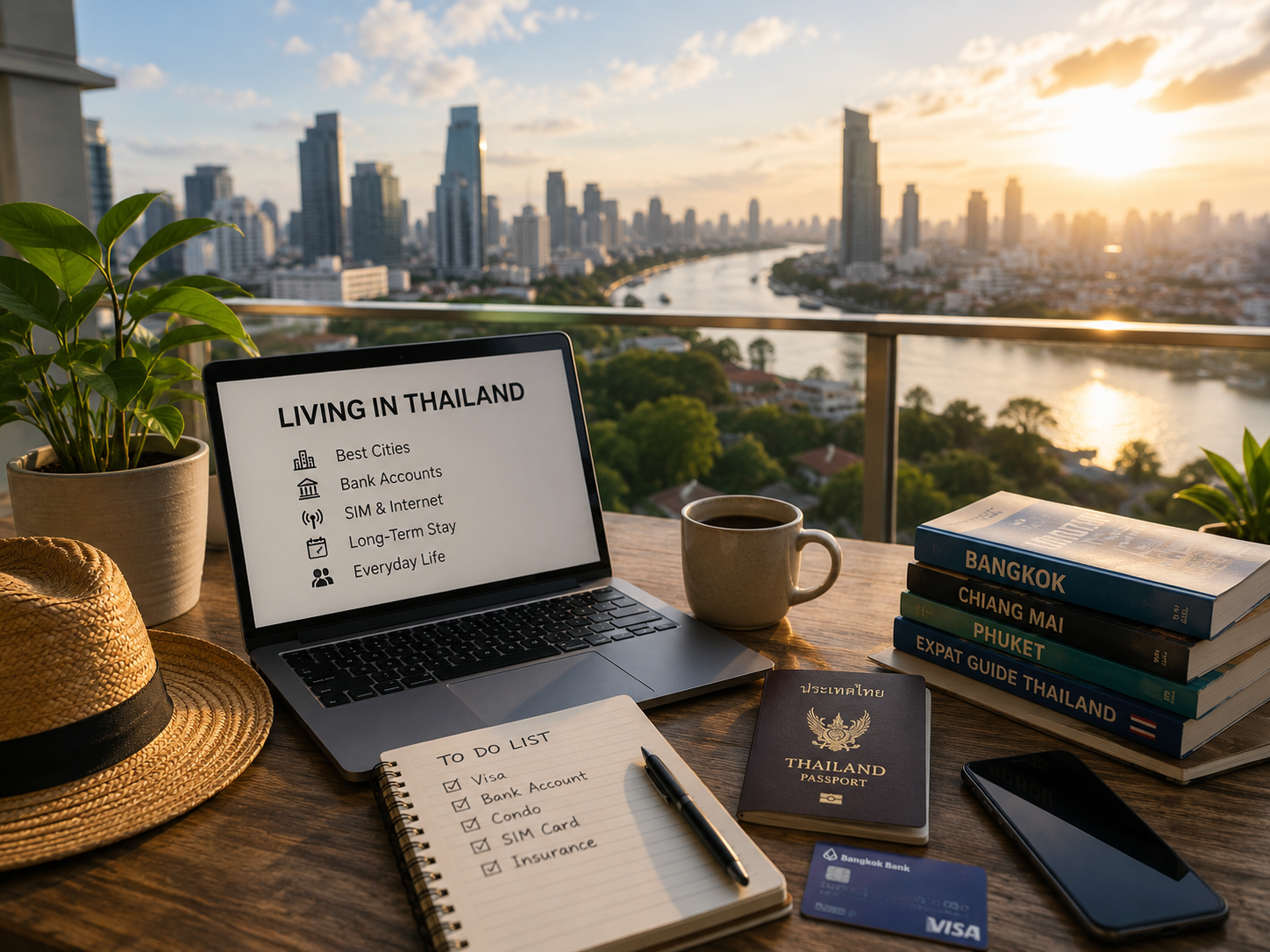
Living in Thailand appeals to a growing international community for three reasons: a warm tropical climate, a low cost of living, and mature infrastructure for foreign residents in cities like Bangkok, Chiang Mai, Phuket and Pattaya. A single person can live comfortably on roughly ฿40,000–60,000 a month, and a range of visas — from the five-year Destination Thailand Visa for remote workers to retirement and long-term resident options — makes an extended stay realistic. The trade-offs are real too: the visa and reporting routine, the language barrier, the rainy-season heat, and firm limits on foreign land ownership and employment. Here is how everyday life works.
Why people choose Thailand
Thailand has become one of the world's most popular bases for expats, retirees and remote workers, and the reasons are consistent across nationalities. It offers a tropical lifestyle at a fraction of Western living costs, a welcoming culture used to foreign residents, and enough modern infrastructure — international hospitals, fast internet, global brands — that daily life rarely feels like a hardship posting. For many, the appeal is that a comfortable, sunny life is affordable here in a way it no longer is at home.
Climate and nature
The climate is the first draw: warm year-round, with three broad seasons — cool and dry (roughly November to February), hot (March to May), and rainy (June to October, varying by region). Winter as newcomers know it disappears. Beyond the weather, Thailand packs in beaches, islands, jungle-covered mountains and national parks, so weekends can mean diving off Phuket, trekking near Chiang Mai, or island-hopping in the south.
Affordable cost of living
Cost is the second draw, and it's substantial. Street food is delicious and costs a few tens of baht a plate; domestic transport, mobile data and local services are cheap; and private healthcare is modern yet far below US or European prices. A lifestyle that would strain a budget in a Western city — eating out often, a condo with a pool, regular travel — is comfortably within reach for many on a middle-income remote salary or a decent pension.
Established infrastructure for expats
Thailand isn't a frontier posting. The major hubs have international hospitals with English-speaking staff, international schools spanning British, American and IB curricula, co-working spaces, and large, organised expat communities. English is widely spoken in tourist and business settings. That maturity is why families, retirees and digital nomads alike land softly here compared with less-developed destinations.
Visas and staying legally
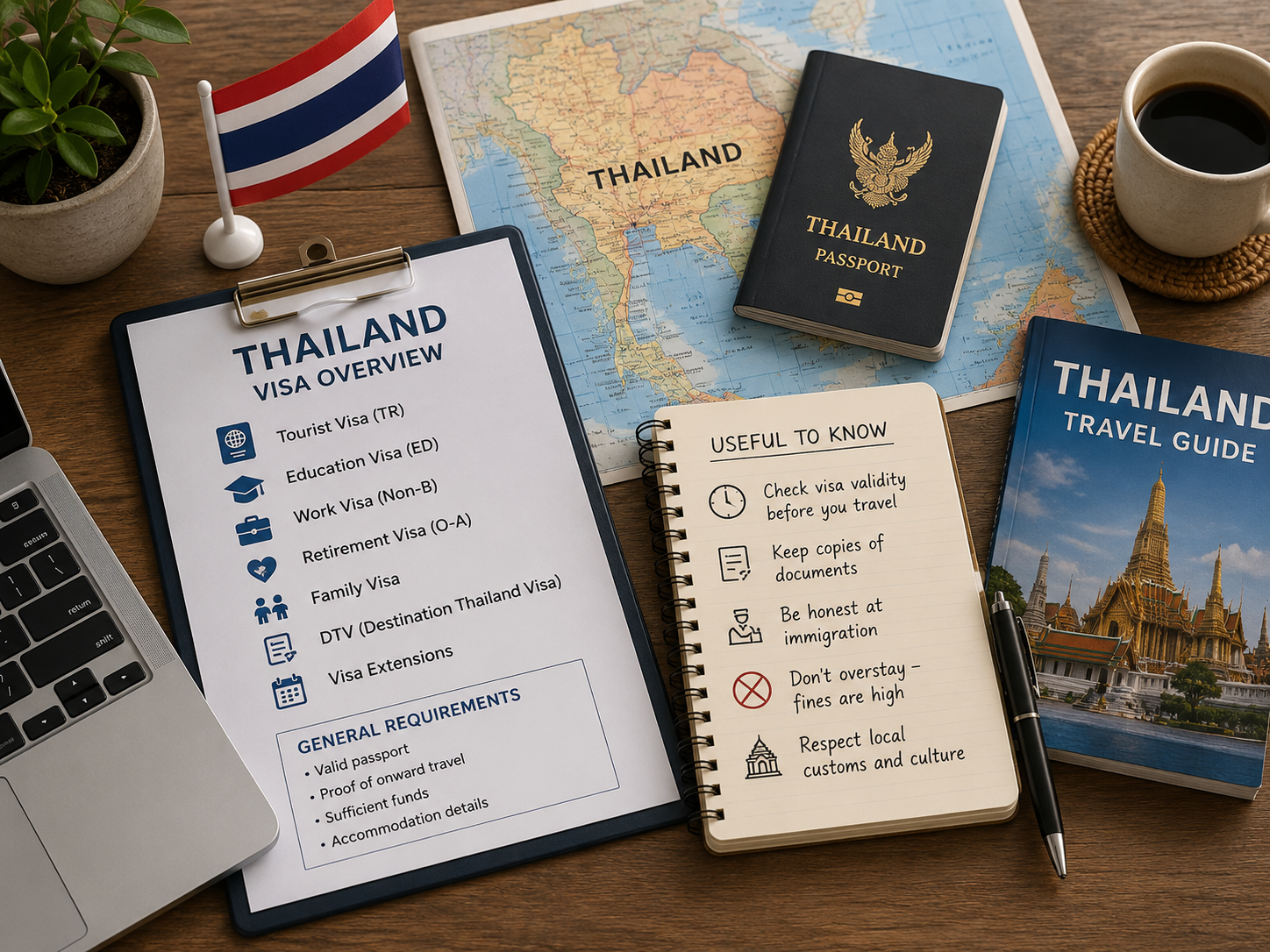
There is no single "immigrant" visa; you build a long stay by choosing the category that fits your situation and renewing it. Many nationalities can enter visa-exempt for up to 60 days to look around before committing. Fees and financial thresholds are set by the Thai Immigration Bureau and change, so confirm current figures before you rely on them.
Long-term and premium options
For remote workers, the Destination Thailand Visa (DTV), introduced in 2024, is the standout: a five-year multiple-entry visa allowing stays of up to 180 days each entry, typically needing proof of around ฿500,000 in funds. Higher-budget movers can consider the Long-Term Resident (LTR) visa, a 10-year visa run by the Board of Investment, or the Thailand Privilege (formerly Elite) programme, which sells 5–20 years of residence for a membership fee. Retirees over 50 use the retirement visa, evidenced by a bank balance or qualifying pension.
Extensions, reporting and fines
Where to live: top cities and resorts
Bangkok — for work and business
The capital is the country's economic engine and the natural base if you want a career, a business or big-city amenities. It has the best mass transit (the BTS Skytrain and MRT metro), the widest job market, leading hospitals and endless dining, at the cost of traffic, heat and higher rents than the provinces. It suits professionals, entrepreneurs and anyone who wants a global city with a tropical price tag.
Pattaya — community and entertainment
A short drive from Bangkok, Pattaya offers beach living, the lowest condo prices in the resort markets, and one of the largest, most organised expat communities in Thailand. It has a lively — sometimes raucous — entertainment scene, but also quiet family suburbs like Jomtien and Pratumnak. Good value and easy logistics make it popular with retirees and budget-minded long-stayers.
Phuket and Koh Samui — the beach life
Phuket is Thailand's largest island and its most complete resort base: international schools, an international airport, hospitals, and beaches strung along the west coast, with upscale clusters around Bang Tao and Laguna and cheaper living inland. Koh Samui offers a smaller, calmer island alternative at a step up in logistics cost. Both suit families and remote workers who want the ocean on their doorstep and don't mind paying a beach premium.
Chiang Mai — calm and low cost
In the northern mountains, Chiang Mai is the digital-nomad and long-stay favourite for its low cost of living, relaxed pace, strong café and co-working scene, and cool-season climate. Rents are among the cheapest of the major hubs. The main drawback is the annual burning season (roughly February to April), when agricultural fires push air quality down sharply — a real consideration for anyone with respiratory concerns.
Cost of living: a monthly budget
A single person lives comfortably on roughly ฿40,000–60,000 a month in most cities, with Chiang Mai cheaper and central Bangkok or beachfront Phuket at the top of the range. Couples and families scale up but still gain on Western costs. The three big line items are rent, food and transport.
Housing, food and transport
Rent is the biggest variable: a modern one-bedroom condo runs about ฿10,000–20,000 a month in Bangkok, often ฿6,000–12,000 in Chiang Mai, and ฿12,000–30,000 on Phuket depending on season and distance to the beach. Eating Thai food keeps the food bill tiny; a Western-restaurant habit multiplies it. Transport ranges from cheap city transit and ride-hailing apps to owning a scooter (common, but ride carefully — road safety is a genuine concern).
Healthcare and schooling
Private hospitals are modern, fast and international-standard, at prices well below the US; most expats carry private health insurance rather than rely on the public system. Families have strong international-school options concentrated in Bangkok, Phuket and Chiang Mai, alongside cheaper bilingual schools — fees are the major cost of moving with children, so factor them in early.
Work and business
Working in Thailand as a foreigner is regulated. To be employed legally you need a Non-Immigrant B visa plus a separate work permit — the two are not the same, and working on a tourist entry is illegal. Certain occupations are reserved for Thai nationals. Remote work for clients or an employer abroad is the cleaner path for many, and the DTV was designed for exactly that.
Remote work and freelancing
Thailand is a leading base for digital nomads: fast internet, cheap living, abundant co-working spaces and a five-year DTV built around remote work. Freelancers and salaried remote workers typically keep their income and clients abroad, which sidesteps the local work-permit system. Confirm your own tax position, as spending significant time in Thailand can create Thai tax residency.
Starting a business
Foreigners can own and run companies, but the Foreign Business Act restricts foreign majority ownership in many sectors, so businesses are often structured with Thai partners or under Board of Investment promotion. Using Thai nationals as nominee shareholders purely to bypass ownership limits is illegal. Anyone setting up a company should take proper legal and accounting advice before committing capital.
Community and adaptation
One reason Thailand is an easy landing is the size and organisation of its foreign communities. In Bangkok, Chiang Mai, Phuket and Pattaya you'll find expat groups, international schools, sports clubs, faith communities and online forums for every nationality and interest — invaluable for finding housing, tradespeople and friends in the first months. Newcomers who join a co-working space, a gym or a hobby group settle far faster than those who stay isolated.
Culture, respect and a little language
Thai culture prizes politeness, patience and "saving face," so a calm, smiling manner opens far more doors than confrontation. Respect for the monarchy and Buddhist customs is important — dress modestly at temples and never disrespect royal imagery. You can function in the hubs with English, but learning even basic Thai transforms daily life and earns genuine goodwill. Remember, too, that foreigners remain guests under Thai law: you cannot own land, and your stay depends on keeping your visa and reporting in order.
The main downsides to weigh
- Bureaucracy and the recurring visa and 90-day reporting routine, which demands organisation and patience.
- The language barrier outside tourist areas, where forms, contracts and officialdom are in Thai.
- Heat and humidity in the hot season, plus heavy rain and rough seas during the western monsoon (roughly May to October).
- Air-quality drops in the north during the annual burning season, a real issue for anyone with respiratory problems.
- Firm limits for foreigners — no land ownership, restricted employment, and the sense of being a long-term guest rather than a citizen.
Sources: Thai Immigration Bureau (immigration.go.th); Board of Investment / LTR visa (boi.go.th); Ministry of Foreign Affairs of Thailand (mfa.go.th); Tourism Authority of Thailand (tourismthailand.org). Visa rules, fees and thresholds are set by Thai authorities and change over time — verify current details before you rely on them.