Moving to Thailand: The Complete Guide
A practical relocation roadmap — visas, money, housing and settling in.
Updated 2026-08-04
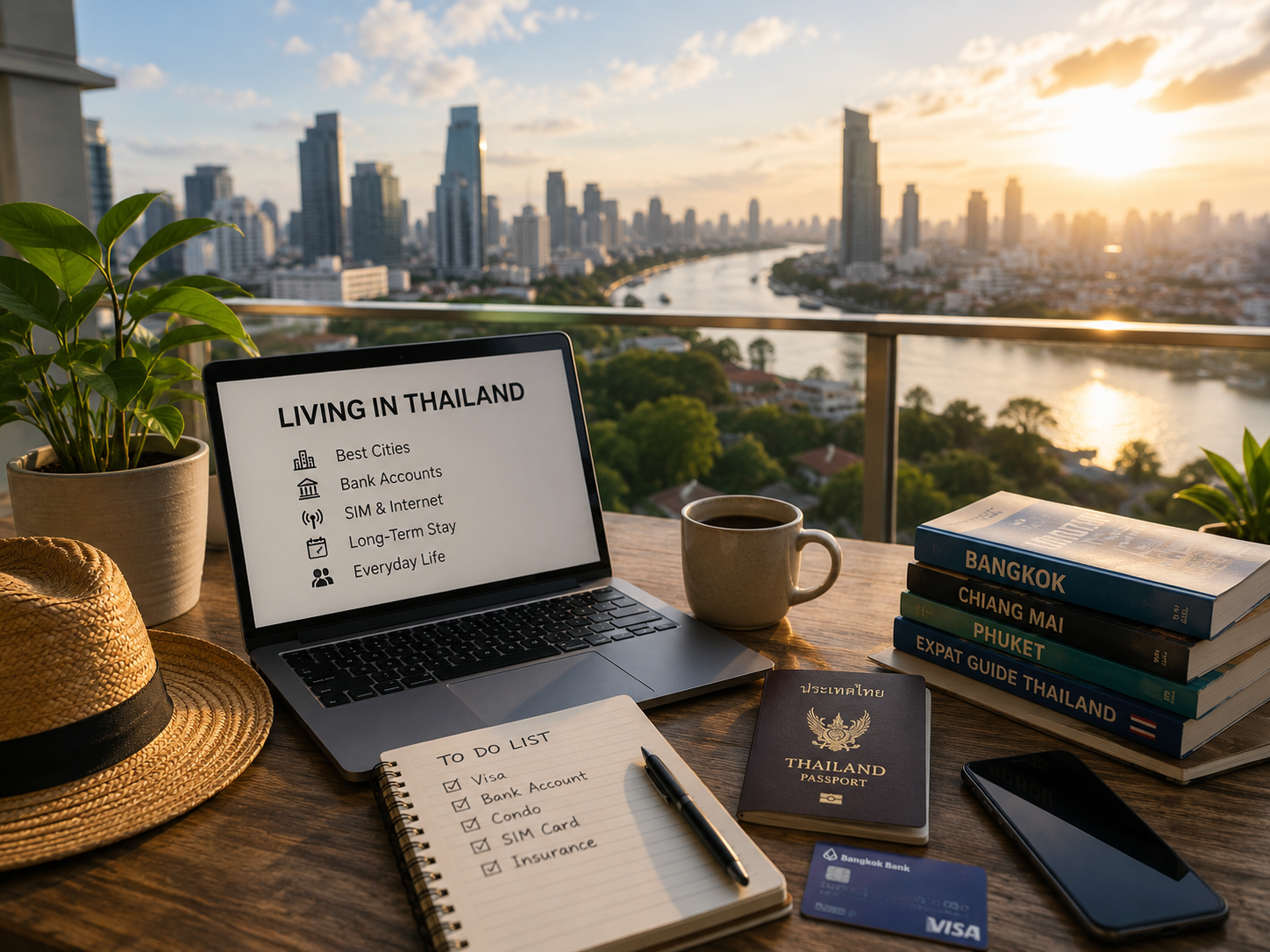
Moving to Thailand is realistic for most foreigners, but there is no single "immigrant" visa — you build a long stay from the right combination of visa, income and paperwork. The main routes are a work visa with a work permit, the five-year Destination Thailand Visa (DTV) for remote workers, marriage and family visas, education visas, and retirement or investment options such as the LTR and Thailand Privilege visas. Permanent residence and citizenship are possible but slow. Below is how the pieces fit together, with rough 2026 costs in Thai baht.
Why people choose Thailand
Thailand attracts long-stayers with a rare mix of tropical climate, low cost of living and a welcoming culture. The weather is warm year-round, split into a cool-dry, hot and rainy season, so winters as most newcomers know them disappear. The cost of living is the bigger draw: a single person can live comfortably in much of the country on roughly ฿40,000–60,000 a month, often well below what the same lifestyle costs in North America, Europe or Australia. Street food, domestic transport and healthcare are inexpensive, while private hospitals are modern and international-standard.
Everyday life and how locals treat foreigners
Thais are broadly friendly and used to foreign residents, especially in Bangkok, Phuket, Pattaya and Chiang Mai, where large expat communities already exist. English is widely spoken in tourist and business settings, though learning basic Thai smooths daily life and earns goodwill. Social integration is easiest where international schools, co-working spaces and expat networks are established. The trade-off is that foreigners remain guests under Thai law — you cannot own land outright, and every long stay depends on keeping your visa and reporting in order.
Legal routes to move to Thailand
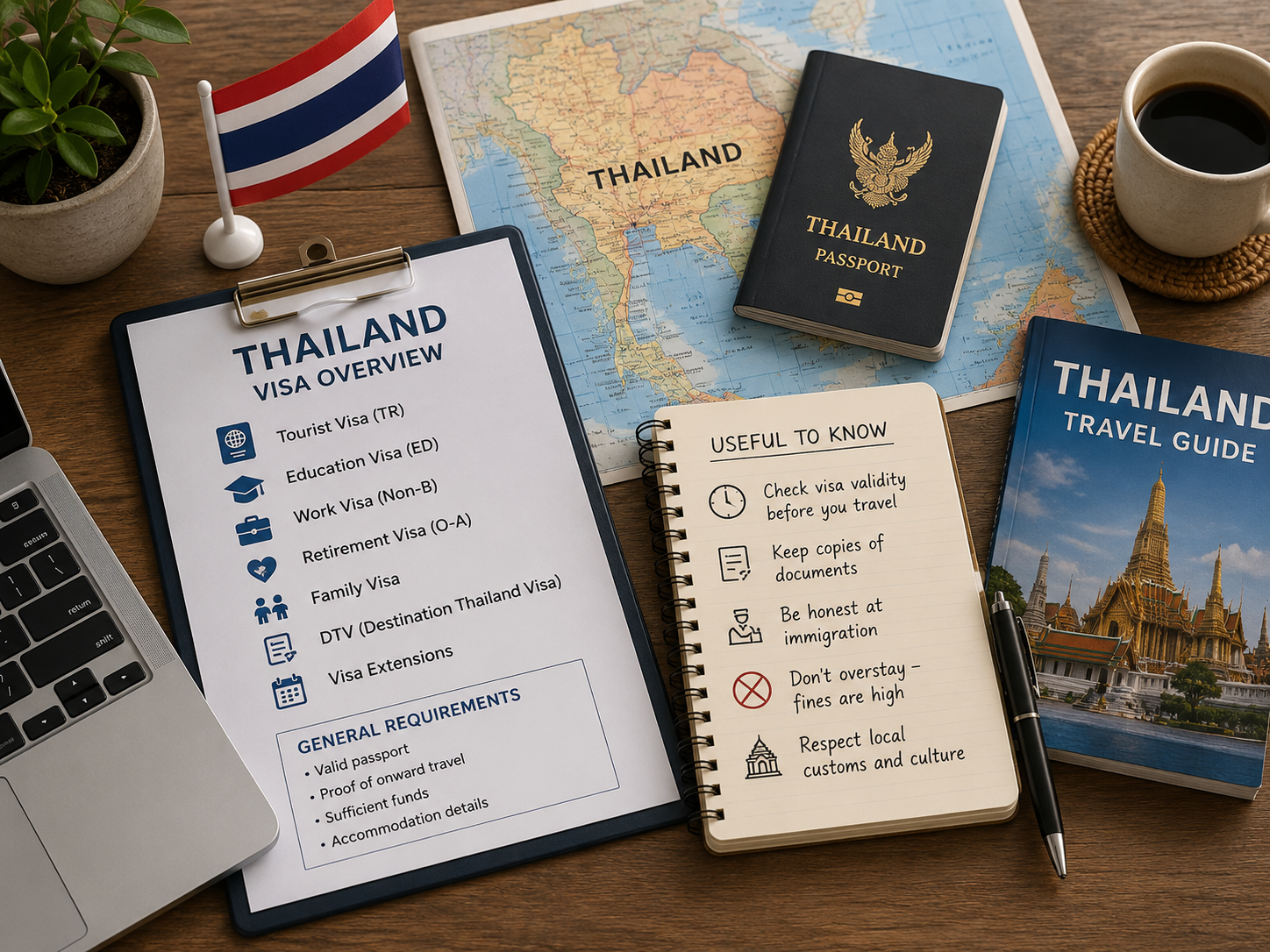
There is no lifetime "immigrant" status handed out at the border; instead you pick a visa category that matches your situation and renew it. The main long-stay routes are below. Fees and financial thresholds are set by the Thai Immigration Bureau and can change, so confirm the current figures before you commit.
Work, remote work and family visas
To work legally you need a Non-Immigrant B visa plus a separate work permit — the two are not the same, and working on a tourist entry is illegal. Remote workers now have a cleaner path: the Destination Thailand Visa (DTV), introduced in 2024, is a five-year multiple-entry visa that lets you stay up to 180 days per entry (extendable once) for a fee around ฿10,000, typically requiring proof of about ฿500,000 in savings. Marriage to a Thai citizen opens the Non-Immigrant O route, and enrolling in an accredited university or Thai-language course supports an education (ED) visa.
Investment and retirement visas
For those aged 50 and over, a retirement visa is the classic option, evidenced by roughly ฿800,000 held in a Thai bank or a qualifying monthly pension. Higher-budget movers can consider the Long-Term Resident (LTR) visa, a 10-year visa administered by the Board of Investment for wealthy global citizens, pensioners and skilled professionals, or the Thailand Privilege (formerly Elite) programme, which grants 5–20 years of residence for a membership fee ranging from around ฿900,000 into the millions of baht.
Entry rules and documents
Many nationalities can enter Thailand visa-exempt for up to 60 days — a useful window to arrive, look around and set things up before switching to a long-stay visa. For a longer initial stay, a Tourist Visa (TR) gives 60 days and is usually extendable by a further 30 days at an immigration office. Whatever route you choose, keep the essentials ready: a passport valid for at least six months, passport photos, proof of funds, accommodation details and, for specific visas, supporting documents such as a rental contract, marriage certificate or school enrolment letter.
Money, banking and transfers
Thailand has active currency-control rules administered by the Bank of Thailand, so large inflows should be documented — keep evidence that funds were transferred from abroad, which also helps when meeting bank-balance visa requirements. Opening a Thai bank account is straightforward once you hold a long-stay visa; some banks accept tourists case by case, but a Non-Immigrant visa, a work permit or a residence certificate makes it far easier. For moving money in, ordinary international bank transfers are the norm; many residents also use regulated remittance and multicurrency services. Cryptocurrency is legal to hold and trade through licensed Thai exchanges, but it is a transfer and investment tool, not legal tender for everyday payment.
Getting to Thailand
Thailand is one of Asia's best-connected destinations. Bangkok's Suvarnabhumi and Don Mueang airports are the main international gateways, with Phuket International Airport handling direct long-haul and regional flights straight to the island. Where direct flights are limited from your country, convenient one-stop routings run through hubs such as Dubai, Doha, Istanbul, Singapore, Kuala Lumpur and Hong Kong. For a permanent move, expect to arrive with luggage rather than a full container — shipping household goods is possible but slow and taxed, so most expats buy furnishings locally.
Finding and renting a home
Renting is how almost everyone starts, and it is cheap by Western standards. As a rough 2026 guide, a modern one-bedroom condo runs about ฿10,000–20,000 a month in Bangkok, often ฿6,000–12,000 in Chiang Mai, and ฿12,000–30,000 on Phuket depending on season and proximity to the beach. Foreigners can legally own a condominium unit (within the building's foreign-ownership quota) but not the land beneath a house, so long-term house living is usually on a lease.
- Search on major property portals and local Facebook rental groups, and view in person before paying.
- Expect a deposit of one to two months' rent plus the first month up front.
- Read the lease carefully: minimum term, notice period, and who pays for utilities and repairs.
- Confirm the landlord will provide the paperwork you need for 90-day reporting and any visa extension.
- Negotiate longer leases for lower monthly rates, especially outside the November–April high season.
Permanent residence, children and schooling
Permanent residence exists but is tightly limited: Thailand grants only around 100 places per nationality each year, and you generally need three consecutive years on a Non-Immigrant visa with extensions before applying. Citizenship can follow after roughly five years of permanent residence, subject to further conditions. Because these paths are slow, most long-term foreigners renew a long-stay visa indefinitely. Families moving with children have strong education options: Thailand hosts many international schools (British, American and IB curricula), concentrated in Bangkok, Phuket and Chiang Mai, alongside more affordable bilingual schools. Children usually adapt quickly, helped by the outdoor lifestyle and international peer groups.
The downsides to weigh
Thailand is not without caveats. The heat and humidity are relentless in the hot season, and the western monsoon brings heavy rain and rough seas from roughly May to October. Everyday friction includes bureaucracy, the recurring visa and 90-day reporting routine, occasional language barriers, and air-quality concerns in the north during the annual burning season. Distance from home, time-zone gaps and the inability to own land are real emotional and practical factors. Going in with clear expectations — and a visa plan you can sustain — is what separates a happy relocation from a stressful one.
Budgeting the move (2026)
Plan for two buckets: one-off setup costs and ongoing monthly living. Upfront, budget for flights, the visa fee for your chosen route, an apartment deposit plus first month, and buying basics on arrival. Monthly, a comfortable single-person budget in most cities is roughly ฿40,000–60,000, covering rent, food, transport, a local SIM and health cover; couples and families scale up accordingly.
Sources: Thai Immigration Bureau (immigration.go.th); Ministry of Foreign Affairs of Thailand (mfa.go.th); Board of Investment (LTR visa); Tourism Authority of Thailand (tourismthailand.org).