The Most Beautiful Beaches in Thailand
The country's standout beaches — where they are and how to reach them.
Updated 2026-08-04
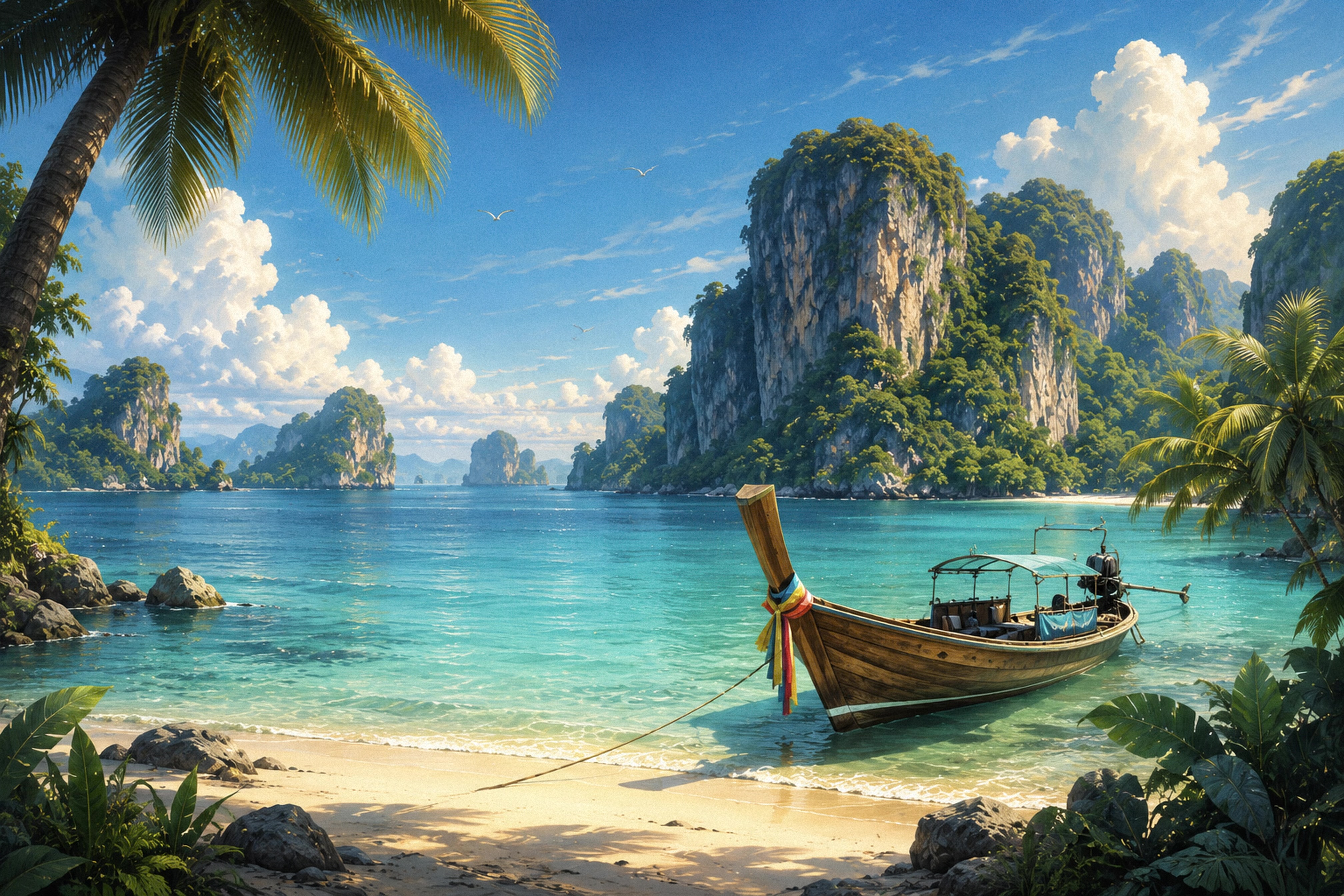
Thailand's most beautiful beaches are split across two coasts with opposite weather calendars. On the Andaman side, Phuket's Nai Thon and Karon, Krabi's Phra Nang and Railay, and the Similan Islands and Koh Lanta deliver the classic white sand and clear water from November to April. On the Gulf side, Koh Samui's Chaweng, Koh Phangan's Haad Rin and the diving hub of Koh Tao shine at a slightly different time of year. Pick the beach by the trip you want — family, diving, seclusion or nightlife — then let the season decide the coast.
Phuket and its surrounding beaches
Phuket, on the Andaman coast, is the easiest place to start because it packs many beach styles onto one island served by an international airport. Mai Khao is the island's longest and quietest strand — a protected stretch beside the national park where sea turtles occasionally nest, backed by casuarina trees rather than bars. Karon offers a wide, near-white beach with squeaky fine sand, gentle infrastructure and enough space to feel uncrowded even in high season. Nai Thon, in the north-west, stays low-key and green, with a calm bay that is good for swimming from November to April. Together they show Phuket's range, from developed to almost wild, within a 40-minute drive.
Krabi and the Railay peninsula
Krabi, on the mainland just east of Phuket, holds Thailand's most photographed scenery: sheer limestone karsts dropping straight into turquoise water. Phra Nang Beach (Ao Phra Nang) sits at the tip of the Railay peninsula, framed by cliffs and a cave shrine, and is reachable only by longtail boat. Railay itself is a cliff-ringed enclave with no road access, beloved by rock climbers. A short hop away, Klong Dao on Koh Lanta is a long, flat, family-friendly beach with a gentle shelving entry — a complete contrast to Railay's drama and proof of how varied the Krabi area is.
Koh Samui and Koh Phangan
On the Gulf of Thailand, Koh Samui and its neighbour Koh Phangan run on a different weather calendar to the Andaman coast, staying drier from roughly December to August. Chaweng is Samui's liveliest and most developed beach — long, palm-lined and busy with restaurants and resorts. Taling Ngam, on the quieter south-west coast, is a calmer, more secluded bay with sunset views toward the Ang Thong marine park. On Koh Phangan, Haad Rin Nok is famous as the site of the monthly Full Moon Party, though outside party nights it is simply a pretty, curving beach.
The Similan Islands and Koh Tao
For water clarity, two names stand out. The Similan Islands, a protected national park north-west of Phuket, are among Asia's best snorkelling and diving grounds, with granite boulders, powder-white sand and visibility often exceeding 20 metres. Note that the park closes each year during the monsoon (roughly mid-May to mid-October, dates set by the Department of National Parks), so it is a dry-season-only trip. On the Gulf side, Koh Tao is Thailand's diving-course capital; Sairee Beach is its long main strand, lined with dive schools and an easy base for learning to dive on coral reefs.
Best beaches for different types of holiday
The quickest way to choose is by the kind of trip you want, then match a beach to it.
For families with children
- Karon (Phuket): wide sand and space, with calm swimming conditions in the dry season.
- Klong Dao (Koh Lanta): a long, flat beach with a gentle, shallow entry that suits small children.
- Hua Hin Beach (mainland Gulf): shallow, easy-going and served by a family-friendly resort town.
For diving and snorkelling
- Similan Islands: exceptional visibility and reef life, best from November to April.
- Koh Tao: affordable dive courses and easy reefs, good for beginners.
- Maya Bay (Koh Phi Phi Leh): a cliff-ringed bay now managed with visitor limits to protect the reef.
For a secluded escape
- Taling Ngam (Samui): a quiet south-west bay with few crowds and fine sunsets.
- Sichon (mainland Nakhon Si Thammarat): a low-key local beach well off the tourist trail.
- Lo Bakao (Koh Phi Phi Don): a calm, resort-only bay away from the busy pier area.
For nightlife
- Haad Rin Nok (Phangan): home of the Full Moon Party.
- Patong (Phuket): the island's nightlife hub along Bangla Road.
- Chaweng (Samui): the Gulf's liveliest beach strip.
When to go: beach seasonality
Timing matters more in Thailand than in most beach destinations because the two coasts peak at different times. The Andaman side — Phuket, Krabi, the Similans and Koh Lanta — is at its best in the dry high season from November to April, with the calmest, clearest seas from December to March. The heaviest rain and roughest water arrive in September and October. The Gulf side — Koh Samui, Koh Phangan and Koh Tao — stays relatively dry from about December to August and takes its wettest spell in October and November. This mismatch is useful: if one coast is stormy, the other is usually fine.
How to reach the best beaches
Most Andaman beaches are reached via Phuket or Krabi airports, both served by frequent domestic flights from Bangkok (about 80–90 minutes). From Phuket, Krabi is a short road-and-ferry transfer, and the Similans are a day-trip speedboat run from the Khao Lak pier in season. Gulf islands are reached via Koh Samui airport or, more cheaply, by bus-and-ferry from Surat Thani; Koh Phangan and Koh Tao connect to Samui by regular ferries. On any island, a rented scooter (with a valid motorcycle licence and helmet) or a metered app-based car is the usual way to hop between beaches.
Practical tips before you travel
- Check entry rules before you fly: most nationalities receive visa-exempt entry, but conditions change — verify with the Thai Immigration Bureau.
- Book accommodation on or near your chosen beach in high season, as beachfront rooms sell out over Christmas, New Year and Chinese New Year.
- Pack high-SPF reef-safe sunscreen, a hat, a rash vest and water shoes for rocky shores and snorkelling.
- Carry cash: longtail boats, markets and small cafés rarely take cards.
- Respect lifeguard flags and never swim past a red flag during the monsoon, when rip currents are strong.
- Tipping is not obligatory but small tips (rounding up, or ฿20–100) are appreciated in restaurants and for massages and boat crews.
Quieter alternatives worth the trip
If you want the beauty without the crowds, three eastern Gulf islands stand out. Koh Kut (Ko Kood), near the Cambodian border, has some of Thailand's clearest water and barely developed white-sand bays. Koh Lipe, far south near the Malaysian border inside Tarutao National Marine Park, is often called Thailand's Maldives for its powder sand and snorkelling. Koh Chang, Thailand's second-largest island, mixes jungle-backed beaches with waterfalls and a relaxed pace. All three reward the extra travel time with a calmer, more natural beach experience.
Sources: Tourism Authority of Thailand (tourismthailand.org); Department of National Parks, Wildlife and Plant Conservation (dnp.go.th); Airports of Thailand (airportthai.co.th); Thai Immigration Bureau (immigration.go.th).