The Best Beaches in Phuket: Full Guide
The definitive list of Phuket beaches, from famous Patong to quiet southern coves.
Updated 2026-08-04
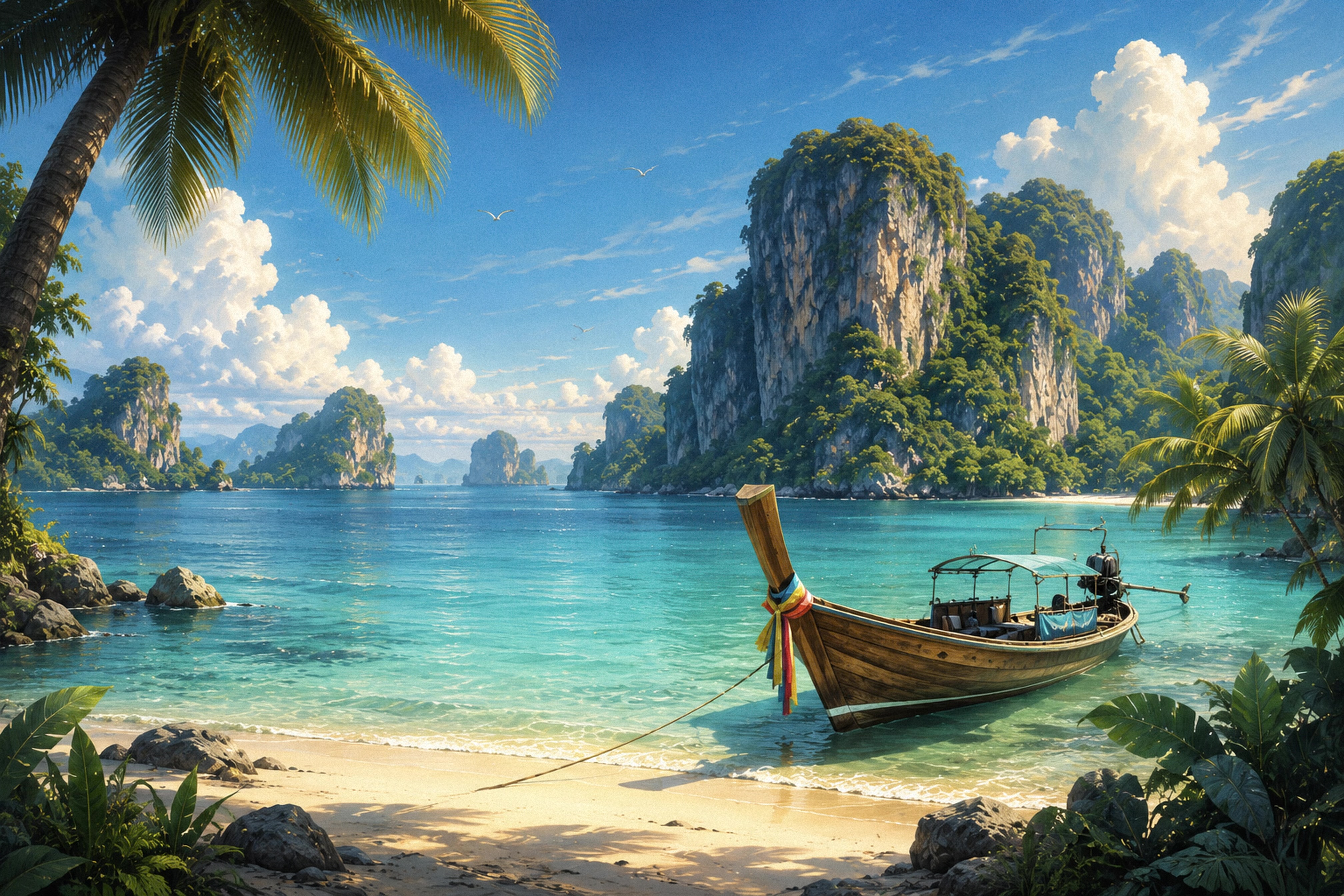
Phuket has more than 30 beaches along its west coast, and the best one depends on what you want. For nightlife and services choose Patong or Karon; for family swimming choose Kata, Kamala or Bang Tao; for scenery and calm choose Nai Harn, Surin or Naithon; and for wild, near-empty sand head to Nai Yang and Mai Khao by the airport. Whatever you pick, the sea is calmest and clearest in the November–April dry season.
What makes a Phuket beach holiday special
Phuket's beaches all line the island's west, Andaman-facing coast, running north to south from Mai Khao down to Nai Harn. That one fact shapes everything: the west coast catches the sunsets, the clear water and the swell. The beaches share a look — soft pale sand, warm 28–30°C water, casuarina and palm backing — but differ in atmosphere, from Patong's neon to Naithon's near-silence. Picking well comes down to matching a beach's character to your travel style and going in the right season.
The top beaches of Phuket, ranked by purpose
Rather than a single ranking, it helps to group Phuket's headline beaches by what they do best. The table below is a fast overview; the sections that follow give the detail, grouped by the kind of day you are after.
Beaches for activity and nightlife
Patong — the centre of the action
Patong is the busiest beach on the island and its entertainment centre. Its 3 km curve of sand is lined with loungers, parasols and water sports — jet-skis, parasailing, banana boats — while a few streets back, Bangla Road runs the island's densest concentration of bars and clubs. The beach swims well in high season and is fringed by malls, tattoo studios, massage shops and restaurants of every price. If you want everything walkable and the night to run late, choose Patong; if you want calm, avoid it.
Karon — a wide beach with squeaky sand
Karon, just south of Patong, is one of the longest beaches on Phuket at around 3 km, and noticeably wider and quieter than its neighbour. Its pale sand famously squeaks underfoot because of its fine quartz grain. There is enough room here that it rarely feels crowded even in peak weeks, and the resort strip behind it keeps a family, mid-range feel. In high season the water is excellent for swimming; in green season Karon develops a heavy shore break, so watch the flags. It is a strong pick if you want Patong's convenience a short taxi ride away without sleeping in the noise.
Family beaches for a holiday with children
Kata — the family favourite
Kata is a compact, palm-backed arc of clean sand with clear, gently shelving water in high season and a well-served strip of cafés and shops. It splits into Kata Yai (the main beach) and the smaller Kata Noi around the headland. In the green season Kata picks up rideable waves and becomes the island's main beginner-surf spot, with board rental and lessons on the sand. The viewpoint just south overlooks Kata, Karon and Nai Harn together.
Kamala — calm sand for all ages
Kamala, north of Patong, is a quieter, more local-feeling beach that suits families and older travellers who want to slow down. The northern end is peaceful and shaded, the sea is usually gentle in high season, and the village behind keeps things low-key and affordable, with a scattering of Thai restaurants and small hotels. It is close enough to Patong for a night out but far enough to sleep in peace.
Bang Tao — the upmarket long beach
Bang Tao is one of Phuket's longest beaches, stretching several kilometres and backed at its northern end by the Laguna complex of resorts, golf and lagoons, plus a growing line of beach clubs. The sand is broad and the water calm in high season, and there is space to walk for an hour without meeting a crowd. Casuarina pines give natural shade along parts of the shore. It is the beach to choose for a polished, resort-led stay with room to spread out.
Secluded and scenic beaches
Nai Harn — a sheltered bay in the south
Nai Harn, near Phuket's southern tip, is a sheltered bay backed by a freshwater lagoon and green hills. Because it is tucked into a bay, it often stays swimmable and clear, and the lack of a big commercial strip keeps it calm and popular with long-stay residents. Nearby Promthep Cape is Phuket's best-known sunset spot, and tiny Ya Nui beach next door is good for a snorkel.
Surin — small, chic and clear
Surin is a short, upscale beach with clear water and a boutique atmosphere, favoured by those who want somewhere refined without the scale of Bang Tao. It has a steep drop-off in places, so it is better for confident swimmers than toddlers, but the water clarity in high season is excellent. The surrounding area has some of Phuket's smarter restaurants and villas.
Naithon — one of the cleanest beaches
Naithon, in the north, is a quiet, natural beach with some of the clearest water on Phuket and very little development behind it — just a low-key village strip. There is fringing reef at each end worth a snorkel, and the overall feel is relaxed and uncrowded even in high season. It is an excellent choice if your priority is clean sea and calm over restaurants and nightlife.
Beaches near the airport
Nai Yang — a sheltered bay in a national park
Nai Yang sits just minutes from Phuket International Airport and inside Sirinat National Park, which has kept it green and low-rise. A reef curves across the bay, calming the water and creating a decent snorkelling spot, and a shady casuarina-lined promenade backs the sand with simple seafood cafés. It is a favourite for a first or last night on the island, or for travellers who want nature over neon. A national-park entry fee applies (set by the Department of National Parks).
Mai Khao — the longest, wildest beach
Mai Khao is Phuket's longest beach, an 11 km strip of sand also within Sirinat National Park. It is quiet, natural and often nearly empty, with sea turtles known to nest here in the cooler months — a protected activity, so keep your distance. Because it lies right off the runway approach, it has also become a well-known plane-spotting spot; note that standing on the runway wall for photos is prohibited and can be fined. Swimming needs care, as there are drop-offs and, in green season, strong currents.
Specialist beaches and hubs
Chalong — the boat-tour gateway
Chalong, on the calmer east side, is not a swimming beach but the island's main marine gateway: most full-day island-hopping and diving boats leave from Chalong Pier. It is also home to Wat Chalong, Phuket's most important temple. Base yourself here only if boat trips are your focus; otherwise visit for the day.
Tri Trang and Freedom — quiet coves near Patong
Just south of Patong, Tri Trang is a small, calm beach that lets you sleep near the action without the noise, with reef for snorkelling at its edges. Beyond it, Freedom Beach is a white-sand cove reachable by boat or a steep path — best kept for a half-day escape. Neither has much infrastructure, so bring what you need.
How to choose the ideal beach for your trip
Work backwards from your priority. If nightlife and services top the list, stay at Patong or Karon. If you are travelling with children, choose Kata, Karon, Kamala or Bang Tao for their gentle, well-serviced sand. If you want scenery and calm, aim for Nai Harn, Surin or Naithon. And if you want wild, near-empty beaches, head north to Nai Yang and Mai Khao. Because the island is compact, you can base in one area and day-trip to others.
Water sports and activities
High season is the time for anything on the water. Snorkelling is good off Kata, Nai Yang, Naithon and Ya Nui, and better still on day trips to the Phi Phi Islands, the Similans (open roughly mid-October to mid-May) or nearby Coral and Racha islands. Diving is centred on boats out of Chalong. Beginner surfers gather at Kata in the green season when the swell arrives. Jet-skis and parasailing operate on Patong, Karon and Kata — agree the price and inspect the equipment before you pay, as jet-ski damage disputes are a well-known tourist scam.
Practical tips for Phuket's beaches
- Watch the flags: a red flag means no swimming, and green-season rip currents are genuinely dangerous.
- Carry cash: loungers (about ฿100–200), beach cafés and longtail boats rarely take cards.
- Bring reef-safe sun protection and a rash vest; the tropical sun burns fast even under cloud.
- Rent a scooter only with a valid motorcycle licence and helmet; checkpoints fine unlicensed riders.
- Arrive early at the quiet beaches (Freedom, Ya Nui) for parking, shade and the clearest water.
- Keep valuables with you; leaving bags unattended on the sand invites opportunistic theft.
Mapping the beaches: a north-to-south run
Read the coast top to bottom and it makes sense. In the far north sit Mai Khao and Nai Yang (national-park beaches near the airport), then Naithon, Bang Tao and Surin (calm and upmarket), then Kamala and Patong (quiet then loud), then Karon and Kata (family beaches), and finally Nai Harn, Ya Nui and Promthep Cape at the southern tip, with Rawai and Chalong around on the south and east. A day driving south down this line takes you from wild to lively to scenic in a single stretch.
Where to stay near the best beaches
Beachfront rooms cost the most; step one street back and prices fall sharply for the same access. For nightlife stay in Patong; for families, inland Karon or Kata gives good value with the beach minutes away; for calm and long stays, Nai Harn, Kamala and Rawai are strong. Wherever you choose, rates roughly halve in the green season, and high-season stays over Christmas and Chinese New Year should be booked months ahead.
Sources: Tourism Authority of Thailand (tourismthailand.org); Department of National Parks, Wildlife and Plant Conservation (dnp.go.th) for Sirinat National Park; Airports of Thailand — Phuket International Airport (phuketairportthai.com); Marine Department of Thailand (md.go.th).