Koh Samet Beaches: The Best Spots
The closest fine-sand escape from Bangkok — beach by beach.
Updated 2026-08-04
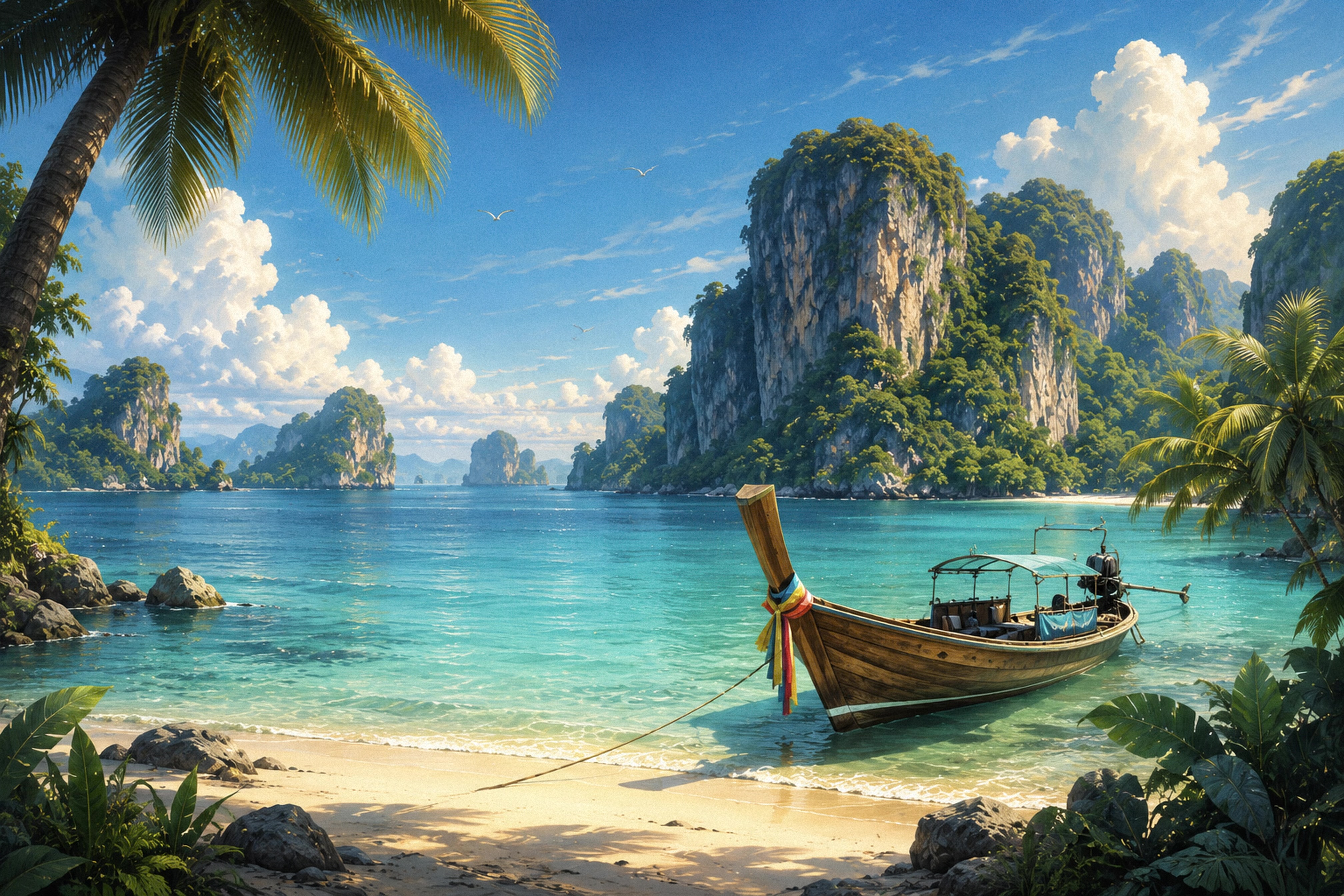
Koh Samet is a small island in Rayong province on the Gulf of Thailand, famous for fine white sand and clear water within easy reach of Bangkok and Pattaya. Most of its beaches line the east coast — busy Sai Kaew at the north, then a chain of quieter bays such as Ao Phai, Ao Tubtim, Ao Wong Duan, Ao Nuan and Ao Wai heading south. The west coast has one standout sunset beach, Ao Prao, while the north and south coasts stay quietest. Most of the island lies inside a national park, so a one-time entry fee applies.
About the beaches of Koh Samet
The beaches of Koh Samet are the island's main draw: bright, fine white sand, tropical greenery behind the shore and warm, clear turquoise water. All beaches are legally public, though the beachfront hotels keep the sand in front of them tidy. Most of the good beaches sit on the east coast, where a series of sandy bays face the sunrise. Outside the busy northern beach of Sai Kaew, the island rarely feels crowded, and it is easy to walk or take a songthaew (shared pick-up truck) between bays to find your own quiet stretch.
Best time to visit Koh Samet
Koh Samet sits on the Gulf coast and enjoys a drier microclimate than many Thai islands, but the most reliable weather runs from November to April, with calm seas and sunny days. May to October brings the south-west monsoon and heavier showers, though rain often comes in short bursts. Weekends and Thai public holidays are much busier as day-trippers arrive from Bangkok and Pattaya, so visit midweek for the calmest experience.
Khao Laem Ya National Park and the entry fee
Most of Koh Samet lies within Khao Laem Ya–Mu Ko Samet National Park, so all visitors pay a one-time national-park entry fee on arrival, typically collected at a checkpoint near Sai Kaew. As of 2026 the fee for foreign adults is around ฿200 (with lower rates for children and Thai nationals); the exact amount is set by the Department of National Parks and can change. Keep your ticket, as it may be checked, and note the fee funds beach cleaning and conservation.
Best beaches on the east coast
The east coast is the most popular side of Koh Samet, thanks to its run of sandy bays backed by restaurants, bars and hotels. Here are the beaches from north to south.
Hat Sai Kaew (Diamond Beach)
Hat Sai Kaew, meaning 'crystal sand beach', is Koh Samet's longest and liveliest strand, stretching for over a kilometre at the northern end of the east coast. It has the fullest infrastructure on the island — bars, restaurants, shops, a small market, massage salons and the widest choice of hotels, from budget rooms to comfortable resorts on the first line. The sand is soft and the water shallow, and in the evenings there are fire shows. It is the easiest beach to reach from the pier and the natural first stop, but also the busiest, especially at weekends.
Ao Hin Khok
Just south of Sai Kaew and separated from it by the island's landmark mermaid statue, Ao Hin Khok is smaller and more relaxed while staying within walking distance of the north's amenities. It suits travellers who want a quieter beach without giving up cafés and bars nearby. Accommodation ranges from backpacker bungalows to mid-range hotels, and you can walk over from Sai Kaew in a few minutes.
Ao Phai
Ao Phai mixes sand with a few rocks and has a modest but genuine nightlife, with beach bars, shops and massage salons. It is a good middle-ground beach — livelier than the far-south bays but calmer than Sai Kaew. There is a decent spread of guesthouses and small resorts, and it is an easy walk or short songthaew ride from the northern beaches.
Ao Tubtim (Ao Phutsa)
Ao Tubtim, also called Ao Phutsa, is a pretty bay with a wide beach, a gentle shelving entry and clean sand, making it a favourite for families. Hotels and restaurants sit right on the shore, and the calm, shallow water is easy for children. It lies a short walk south of Ao Phai and offers a more peaceful stay while remaining close to the busier beaches.
Ao Nuan
Ao Nuan is one of the island's most low-key bays: a tiny, jungle-fringed cove with only simple bungalows and no big restaurants or bars. It is reached by a short path over the headland from Ao Tubtim. Come here for quiet, natural surroundings and a genuine away-from-it-all feel; bring what you need, as facilities are minimal.
Ao Cho and Ao Wong Duan
Continuing south, Ao Cho is a calm, moderately priced bay with coconut palms and a small pier, good for a relaxed stay. Beyond it, Ao Wong Duan is one of Koh Samet's most popular beaches — a crescent bay with its own pier, a good range of hotels and restaurants, and enough facilities to suit families and couples. Ferries from Ban Phe serve Wong Duan directly, so it is an easy alternative to arriving via Sai Kaew.
Ao Thian (Candlelight Beach) and the Secret Beach
Ao Thian, also known as Sang Thian or Candlelight Beach, is a scenic string of small sandy stretches broken by rocks, with a mellow atmosphere and simple bungalows — a lovely spot to watch the sunrise. Hidden nearby is the so-called Secret Beach (Supparod, or Pineapple Beach), reached through a short jungle path and left off many maps, offering comfortable seclusion for those who seek it out.
The west coast of Koh Samet
The west coast is far more secluded and faces the sunset, so it draws a quieter, more upmarket crowd. It has only one beach worth staying on.
Ao Prao (Paradise Beach)
Ao Prao is the standout beach on the western side and the island's most polished: well-kept sand, comfortable cottages and resorts, and beautiful views over the water as the sun goes down. It is more expensive and more romantic than the east-coast bays, and being on the opposite side means sunsets rather than sunrises. It is reached by road or resort transfer from the pier area.
The north coast
The north coast is the quietest and calmest part of Koh Samet, close to the national park checkpoint and the main pier, yet with far fewer visitors than the east.
- Ao Luk Yai (Ao Pacha): a peaceful stretch near the national park, close to Sai Kaew's amenities but with few people; good for a calm base within easy reach of the busier beaches.
- Ao Klang: a central-north bay with shops and a small market nearby, though boat traffic can make the water less clear; convenient rather than pristine.
- Ao Noi Na: quiet and calm with easy access to facilities, a practical choice for travellers who want peace without being far from restaurants and transport.
The south coast
The southern tip of Koh Samet holds some of its most remote and unspoiled bays, best for travellers who want privacy and are happy to travel a little further from the pier.
- Ao Wai: a beautiful, secluded south-coast bay with clear water, served mainly by one long-standing resort; peaceful and scenic.
- Ao Pakarang: a quiet cove reached by songthaew or a short walk, with a well-known resort and a genuine getaway feel.
- Lung Dam: a rustic, laid-back beach at the south with simple bungalows and a natural setting, ideal for switching off.
Sources: Tourism Authority of Thailand (tourismthailand.org); Department of National Parks, Wildlife and Plant Conservation (dnp.go.th) — Khao Laem Ya–Mu Ko Samet National Park; Marine Department of Thailand (md.go.th) for ferry information.