How to Open a Bank Card in Thailand
What you need, which banks are realistic and the alternatives if you can't.
Updated 2026-08-05
A foreigner can open a bank account and get a debit card in Thailand, but it has become harder than it once was, and the rules vary by bank and branch. The smoothest route is to hold a long-stay visa (such as a work, retirement, education or DTV visa) and bring the paperwork a Thai bank expects: your passport, proof of your Thai address (usually a residence certificate from immigration), and often a Thai SIM card and a small opening deposit. Tourists on a visa exemption can sometimes open an account case by case, but should expect refusals. A local account unlocks a debit card, easy QR payments, cheap domestic transfers and simple bill payment.
Why a foreigner needs a Thai bank account
For anyone staying in Thailand beyond a short holiday, a local bank account changes daily life. It gives you a Thai debit card, access to the country's near-universal QR payment system, cheap or free domestic transfers, and an easy way to pay rent, utilities and bills. It also spares you the repeated foreign-ATM withdrawal fee (currently around ฿220 per transaction) that adds up fast for long-stayers. For those on long-stay visas, a Thai account is often part of meeting visa financial requirements too.
Cards, SWIFT transfers and cash abroad
A Thai debit card lets you pay in shops and online, withdraw from local ATMs without foreign fees, and receive incoming SWIFT transfers from abroad — useful for moving your own money into the country. Keeping evidence of those inbound foreign-currency transfers matters: it helps with visa balance requirements and, for property buyers, is essential for the Foreign Exchange Transaction paperwork.
QR payments, security and everyday convenience
Thailand runs largely on QR payments through the national PromptPay system: you scan a code with your bank's app to pay a market stall, a restaurant or a friend instantly and free. Carrying less cash improves security, and mobile banking apps handle transfers, bills and top-ups in a few taps. Once you have a local account and app, day-to-day payments become easy.
Who can open a personal account
There is no single national rule that guarantees a foreigner an account — each bank, and often each branch, sets its own practice, and requirements have tightened in recent years to combat fraud. In general, the stronger your ties to Thailand, the easier it is.
Long-stay visas and other grounds
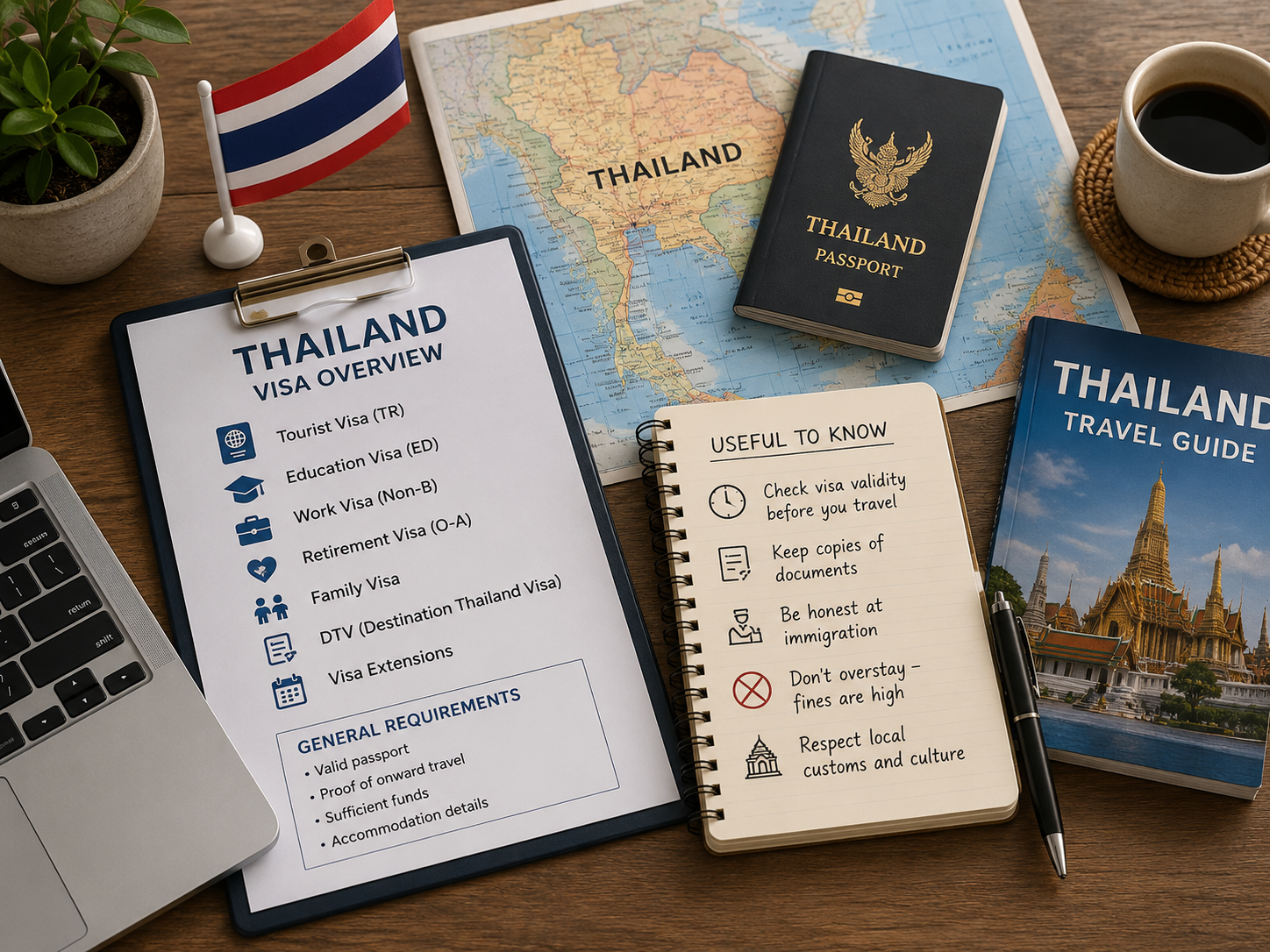
The clearest path is a long-stay visa: a Non-Immigrant B (work), retirement (O-A/O-X), education (ED), marriage (O), or the five-year Destination Thailand Visa (DTV) all signal you intend to stay and reassure banks. A work permit or residence certificate strengthens the case further. Tourists on a 60-day visa exemption can sometimes open an account, but many branches now decline, so don't count on it.
Banks that tend to be foreigner-friendly
Thailand's major banks — Bangkok Bank, Kasikornbank (KBank), Siam Commercial Bank (SCB) and Krungsri — all open accounts for qualifying foreigners, but branches differ widely in how willing and how demanding they are. Branches in tourist and expat areas (Phuket, Bangkok's central districts, Chiang Mai) tend to be more used to foreign customers. If one branch refuses, another often says yes, so ask around locally.
Types of account available to foreigners
For nearly all foreign residents, a savings account is the right pick: it's the easiest to open, carries the debit card and mobile app you'll use daily, and pays modest interest. A current account suits those needing cheque facilities or heavier transaction volumes. A foreign-currency deposit (FCD) account lets you hold major currencies in Thailand, useful if you're transferring large sums or timing a currency conversion, though it has its own conditions.
What you need to open an account
The residence certificate
The document that most often makes or breaks an application is proof of your Thai address. Many banks ask for a residence certificate (or certificate of residence), issued by the local immigration office (some embassies also issue their own address letters). Getting it usually means bringing your passport, visa, and proof of where you live (a rental contract or landlord's paperwork) to immigration; there may be a small fee and a short wait. Some branches also accept a Thai driving licence or a work permit as address proof.
Other requirements banks may ask for
- A passport valid well beyond the account opening, with your current visa or entry stamp.
- Proof of a Thai address — commonly a residence certificate, sometimes a rental contract, work permit or Thai driving licence.
- A small initial deposit, often around ฿500–2,000, to activate the account.
- A Thai mobile number for SMS verification and the banking app (see below).
- Occasionally a reference, a work permit, or a letter explaining why you need the account.
Do you need a Thai SIM card?
In practice, yes. Thai banking apps and one-time-password security are tied to a Thai mobile number, so a local SIM is effectively required to activate mobile banking and PromptPay. A prepaid tourist SIM is cheap and quick to buy at the airport or any phone shop with your passport, so get one before you visit the bank.
How to open an account, step by step
- 1Get a Thai SIM cardFirst
Buy a prepaid SIM with your passport at the airport or a phone shop. You'll need the Thai number for the banking app and OTP verification.
- 2Obtain proof of addressIf required
Get a residence certificate from your local immigration office (bring passport, visa and rental paperwork), or check whether your branch accepts a rental contract, work permit or driving licence instead.
- 3Choose a branchLocation matters
Pick a major bank branch in a tourist or expat area, where staff regularly handle foreign customers. Consider bringing a Thai speaker or relocation agent.
- 4Apply in personAt the branch
Present your passport, visa, proof of address and SIM number, complete the forms, and make the small opening deposit. Approval is usually same-day when the paperwork is in order.
- 5Activate card and appBefore you leave
Collect your debit card (often issued on the spot), and set up the mobile banking app and PromptPay while a staff member can help.
Fees, limits and servicing
Costs are modest but worth knowing. A debit card typically costs around ฿100–300 to issue plus roughly ฿200–400 a year, sometimes bundled with basic accident insurance. Domestic transfers between accounts via PromptPay are usually free or a few baht; branch and cross-bank services may carry small fees. Withdrawing at a Thai ATM with your own local card is free, while a foreign card is charged about ฿220 per withdrawal — the fee a local account saves you.
Mobile banking apps set default daily transfer and withdrawal limits (which you can often adjust in the app or at a branch), and larger or international transfers may need extra verification. If you don't keep your account active, some banks levy a small dormancy fee, so use it occasionally even if it's a backup.
Important points to keep in mind
- Requirements vary by bank and branch, and change over time — confirm the current list with your chosen branch before you go.
- A long-stay visa dramatically improves your chances; tourists should expect some branches to refuse.
- Keep records of any money you transfer in from abroad, which helps with visa balance rules and property paperwork.
- Understand your tax position: spending significant time in Thailand can create Thai tax residency, and your home country may require you to report foreign accounts.
- Opening credentials, deposits and card issuance are handled in person at the bank — this article is general information, not financial advice.
Sources: Bank of Thailand (bot.or.th); Thai Immigration Bureau (immigration.go.th) for residence certificates and visas. Bank requirements, fees and limits are set by individual banks and Thai authorities and change over time — confirm current details directly with your chosen bank before you rely on them.