Bangkok to Phuket: Every Way to Get There
Plane, bus, train-and-ferry — compared on time, cost and hassle.
Updated 2026-08-04
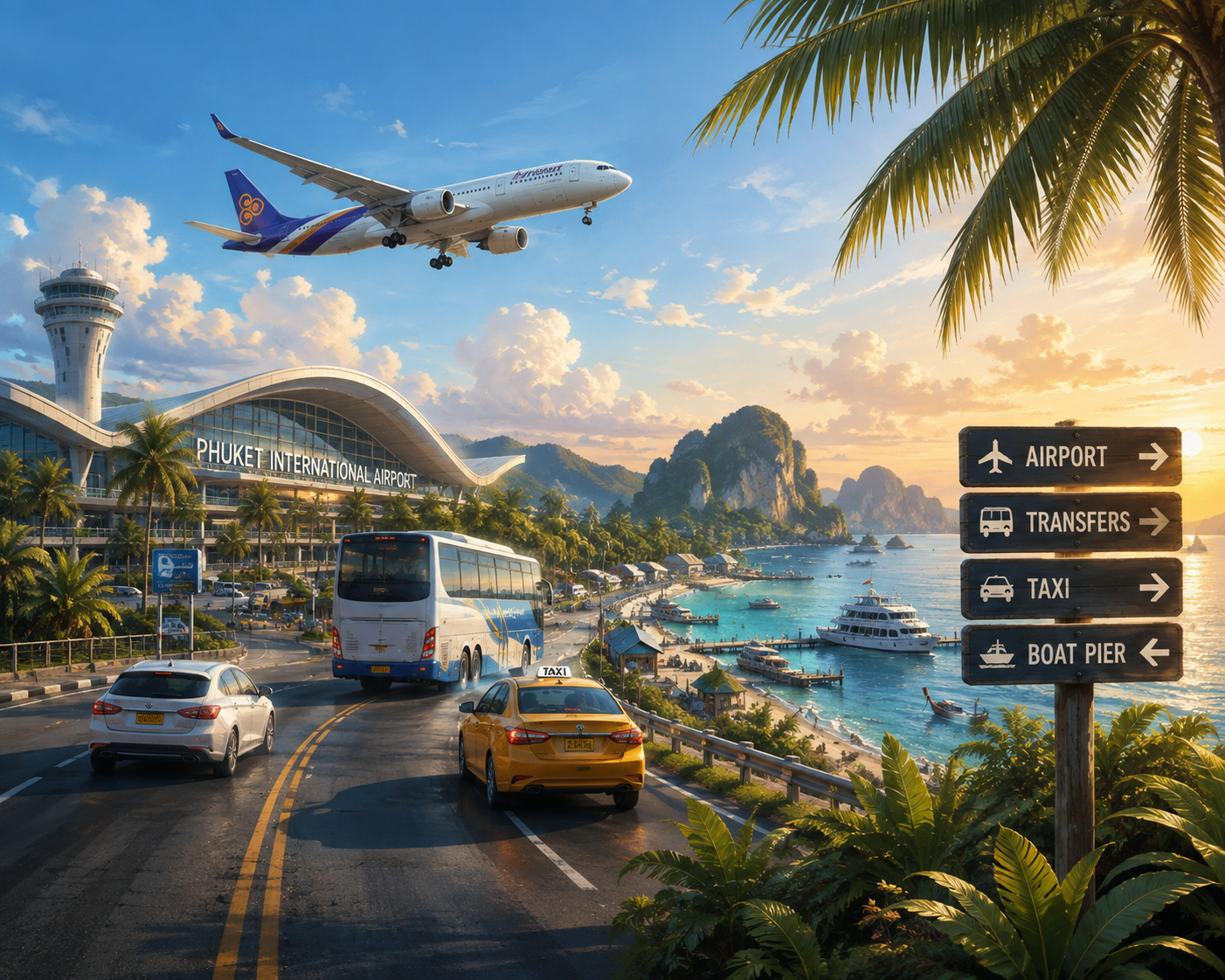
There are four main ways to travel from Bangkok to Phuket. Flying is fastest and usually cheapest for the time saved: a direct flight takes about 1 hour 20–30 minutes from either Suvarnabhumi (BKK) or Don Mueang (DMK). Overland options cover roughly 840 km: a direct VIP bus from the Southern Bus Terminal takes 12–14 hours; a train to Surat Thani plus a connecting bus/van totals 14–17 hours; and self-driving by rental car takes about 10–12 hours via Highway 4 (Phetkasem).
Bangkok to Phuket: route overview
Phuket lies about 840 km south of Bangkok on Thailand's Andaman coast. Because Phuket is an island connected to the mainland by the Sarasin Bridge, every overland route funnels down peninsular Highway 4 (Phetkasem) and crosses that bridge onto the island. The four practical ways to make the trip — plane, bus, train-plus-bus, and self-drive car — trade speed against cost and scenery. The table below compares them before we look at each in detail.
By plane — the fast and comfortable way
A flight from Bangkok to Phuket is the default choice for most travellers. Flight time is about 1 hour 20–30 minutes, and dozens of departures a day mean you can leave almost any hour, including night flights. Booked a few weeks ahead, a one-way budget fare often costs less than a long bus plus a night's lost time. Both of Bangkok's airports serve the route: Suvarnabhumi (BKK) for full-service carriers and Don Mueang (DMK) for low-cost airlines.
Airlines and airports
Full-service flights on the Bangkok–Phuket route are operated by carriers such as Thai Airways and Bangkok Airways from Suvarnabhumi. Low-cost options — Thai AirAsia, Thai Lion Air, Nok Air and Thai Vietjet — mostly fly from Don Mueang. When comparing fares, factor in which Bangkok airport suits your onward or connecting plans, since the two are on opposite sides of the city.
Ticket prices
As of 2026, expect roughly ฿1,000–3,500 one way, with the lowest fares on budget carriers booked well ahead and off-peak. Prices climb during Thai holidays and the November–April high season. Watch for baggage fees on low-cost tickets: the headline fare may exclude checked luggage, which can erase the saving over a full-service airline once you add a bag.
Getting from Phuket airport to your hotel
Phuket International Airport (HKT) sits in the north of the island, so you still need a transfer to the beaches. Options include official airport taxis, shared minibuses, ride-hailing apps and the Phuket Smart Bus. For the specifics — including how long it takes to reach Patong and what each option costs — see our dedicated airport-to-Patong guide and the full Phuket airport guide.
By train plus bus — the scenic route
There is no railway onto Phuket itself, so the classic rail route runs Bangkok to Surat Thani, then a connecting bus or minivan west to the island. It is the slowest option but rewards you with peninsular scenery and a genuine overnight-train experience.
The route via Surat Thani
Trains depart Bangkok's Krung Thep Aphiwat Central Terminal bound for the south and stop at Surat Thani (the station is at Phun Phin, a little outside the city). From there, buses and shared vans run the remaining stretch to Phuket, crossing the Sarasin Bridge onto the island. Connecting transport is easy to arrange at the station, often bundled with your train ticket.
Time and cost
The train to Surat Thani takes roughly 9–12 hours depending on the service, and the onward bus or van adds about 5 hours, for a total of 14–17 hours. Fares vary widely by class — from cheap fan seats to air-conditioned sleeper berths — so the combined cost typically lands around ฿700–1,500. An overnight sleeper saves a hotel night, which softens the time penalty.
By bus — the economical option
A direct long-distance bus is the cheapest single-ticket way from Bangkok to Phuket and needs no changes. It is a long haul, but modern VIP coaches make it more comfortable than newcomers expect.
Direct services from Bangkok
Most Phuket buses leave from Bangkok's Southern Bus Terminal (Sai Tai Mai). The journey covers the full length of Highway 4 and takes about 12–14 hours. Government and private operators run the route; buying at the terminal or through an official operator avoids resale mark-ups.
Bus companies and service classes
Coaches come in tiers — standard air-conditioned, first class, and VIP (24- or 32-seat) with wider reclining seats, more legroom, a restroom, blankets and a snack or meal stop. For an overnight run, the extra baht for VIP is money well spent. As of 2026, fares sit around ฿800–1,300 depending on class.
Night and day departures
Overnight departures are the most popular: you board in the evening, sleep through the drive and arrive in Phuket in the morning, saving a night's accommodation. Daytime services exist too and let you see the peninsula, though the heat and length make the night bus the more comfortable choice for most.
By car — freedom to roam
Self-driving suits groups and travellers who want to stop along the way — at Hua Hin, Chumphon or the Andaman coast — rather than rush straight through.
Renting a car in Thailand
Cars can be rented in Bangkok and dropped in Phuket (one-way fees usually apply). To drive legally, foreign visitors need a valid International Driving Permit alongside their home licence; police checkpoints do ask for it. Drive on the left, and factor in tolls on the expressways leaving Bangkok.
Popular route and stops
The drive follows Highway 4 (Phetkasem) south through Phetchaburi, Hua Hin, Prachuap Khiri Khan and Chumphon before crossing the Sarasin Bridge onto Phuket. Total driving time is about 10–12 hours without stops — realistically a two-day trip if you actually want to enjoy the coast. Rest regularly; fatigue on the long southern stretch is the main risk.
Comparing all the options
There is no single 'best' way — only the best for your priorities. Flying wins on time and, once you count a lost night and meals, often on real cost too. The bus is unbeatable on ticket price. The train-plus-bus combo is for those who value the journey itself, and self-driving is for groups who want to explore the peninsula.
- Flight — pros: fastest, frequent, competitive fares; cons: airport transfers at both ends, baggage fees on budget tickets.
- Bus — pros: cheapest single ticket, direct, overnight saves a hotel night; cons: 12–14 hours seated.
- Train + bus — pros: scenic, sleeper option, no flying; cons: longest total time, requires a change at Surat Thani.
- Car — pros: total freedom and stops en route; cons: 10–12 hours of driving, IDP required, tolls and one-way fees.
How to choose your transport
Short on time or travelling far inland first? Fly. On a tight budget with time to spare? Take the overnight VIP bus. Want the ride to be part of the holiday? Choose the train through the south or a self-drive with coastal stops.
Practical tips for travellers
- 1Book ahead in high seasonNov–Apr & holidays
Flights, VIP bus seats and sleeper berths all sell out around Thai holidays and peak months — reserve early for the best price.
- 2Pack for the journeyLong overland legs
Bring a light layer (buses and trains run cold), water, snacks, a neck pillow and a portable charger for the 12-hour-plus rides.
- 3Time your arrivalTransfers at the end
If you fly, remember Phuket airport is an hour from most beaches; aim to land before late evening so onward transport is easy.