Budget Real Estate in Thailand
Where the affordable options are and what to check before buying cheap.
Updated 2026-08-05
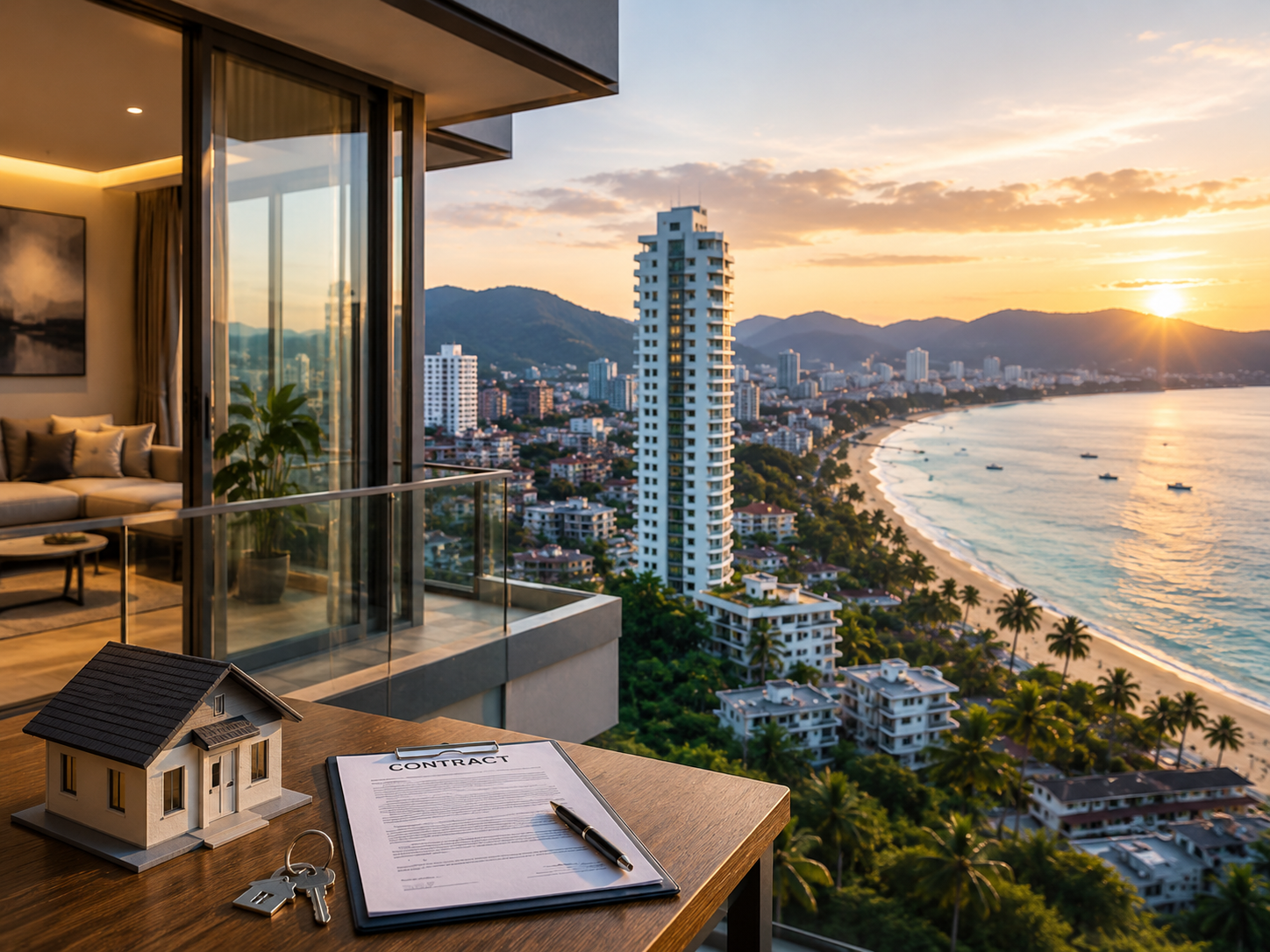
Budget property in Thailand is real: with a working ceiling of around US$100,000 (roughly ฿3.5 million) you can buy a modern studio or one-bedroom condo, most often in Pattaya, on parts of Phuket, or on Koh Samui. At that price you are almost always buying a condominium unit, which is also the only property a foreigner can own freehold. Villas and houses sit well above the budget band and, because foreigners cannot own land, come with leasehold or company complications. This guide covers what your money actually buys, the best-value regions, and how to keep a low-cost purchase safe.
Budget property in Thailand: the overview
"Budget" in the Thai foreign-buyer market usually means condominiums up to around ฿3.5 million (about US$100,000). At that level you are buying a unit in a mid-market building, and almost never a house — because a standalone home needs land, and foreigners cannot own land freehold. The good news is that a condo is precisely the asset a foreigner can own outright, so the budget band and the legally simplest purchase happen to overlap.
Price ranges by type of home
Recent price trends
Prices in the popular resort markets have generally trended upward over recent years, pushed by tourism recovery and foreign demand, though the pace varies sharply by area and building. Budget stock tends to hold value better where rental demand is genuine year-round; the cheapest units in weak locations can be hard to resell. Treat any promise of guaranteed appreciation with caution and focus on real, current rental demand instead.
The most popular budget locations
Three markets dominate the budget end: Pattaya for the lowest prices and highest liquidity, Phuket for beach lifestyle at the affordable fringes of its west coast, and Koh Samui for island living at a step up in logistics cost. Bangkok has budget condos too, but they are city studios rather than holiday homes.
What US$100,000 actually buys
Studios and one-bedroom units
Around the ฿3–3.5 million mark you are looking at a compact studio of roughly 24–35 m² or a small one-bedroom of 30–45 m². Layouts are efficient: an open-plan living and sleeping area, a kitchenette, a bathroom, and often a small balcony. In tourist-focused buildings units are commonly sold furnished or with a furniture package, ready to live in or let. A pool, gym, security and shared gardens are standard even at this price, because facilities are a baseline expectation in the Thai condo market.
Restrictions on what you can buy
The budget ceiling and the legal reality point the same way: buy a condominium. A foreigner can own the unit freehold within the building's 49% foreign quota, but cannot own the land a house sits on. So a cheap "house" advertised to foreigners is really a lease or a company arrangement — extra cost and risk that rarely makes sense at the budget end. Stick to a licensed condominium and confirm the unit is available within the foreign freehold quota.
Distance from the beach
The single biggest lever on a budget price is how far the unit sits from the sea. Beachfront and sea-view units command a steep premium; move a 5–15 minute drive inland and the same money buys far more space or a newer building. If you are buying to let, weigh the trade-off honestly: a slightly inland unit near a beach with a shuttle or cheap transport can out-earn a cramped, pricier beachfront studio.
Best regions for budget buying
Phuket
Phuket is Thailand's strongest holiday-rental market, and while it is not the cheapest island overall, its west coast has genuine budget pockets. Bang Tao and Kamala offer newer developments a short drive from long beaches; Nai Harn and Karon at the southern end mix local life with tourist demand and some of the more affordable sea-adjacent stock. The west coast broadly commands a premium for its beaches, so the value plays sit just behind the beachfront row rather than on it.
Koh Samui
Samui delivers island living at prices a step below prime Phuket, with budget condos clustered around Chaweng, Lamai and Bophut. The trade-offs are practical: everything arrives by ferry or plane, so building and maintenance costs run higher, and the rental season is more concentrated. For a lifestyle buyer who wants a quieter island, it can be excellent value.
Pattaya
Pattaya is the budget capital: the largest supply of low-priced condos in Thailand, quick to buy and comparatively quick to resell. Prices per square metre are the lowest of the three, and the city's proximity to Bangkok keeps year-round demand alive. The flip side is a saturated market, so choose the building and location carefully — oversupply means the weakest units struggle to let or resell.
What budget property is actually like
- Standard fit-out: tiled floors, a fitted kitchenette, air-conditioning, a bathroom with a shower, and often a furniture package in rental-focused buildings.
- Shared facilities: a communal pool, a basic gym, 24-hour security and a lobby are normal even in budget projects.
- Management: a registered juristic person maintains the common areas and collects the monthly fee, though service quality varies — a well-run building is worth paying a little more for.
- Common-area fee: expect roughly ฿30–50 per square metre a month at the budget end, plus a one-off sinking-fund contribution at handover.
Purchase conditions for foreigners
For a budget condo the mechanics are the same as any Thai condo purchase. You can own freehold within the building's 49% foreign quota, and to register it you must bring the purchase money into Thailand from abroad in foreign currency to obtain a Foreign Exchange Transaction (FET) certificate. Leasehold is the fallback if the freehold quota is full, and can be cheaper — useful for a purely lifestyle purchase, less so if you want the strongest resale value. You'll need your passport, the FET certificate, and a quota confirmation letter from the juristic person at registration.
Investment potential of budget homes
Budget condos are popular with investors because a lower entry price can still produce a decent gross yield — well-placed units target roughly 5%–8% a year — and the capital at risk is smaller. Many budget buildings run a rental pool or offer a guaranteed-return programme, where units are let collectively and income is shared; convenient, but the "guarantee" is only as strong as the operator, so read the terms. Liquidity is the budget segment's real advantage and weakness at once: cheap units in strong locations resell readily, while the cheapest units in oversupplied areas can sit unsold.
Ways to save when buying
- 1Buy off-plan, earlyBiggest discount
Prices are lowest at a project's launch and rise through construction. Early off-plan units can appreciate before completion — but only take this route with a developer whose licence, land ownership and track record you've verified, since off-plan carries construction risk.
- 2Consider leaseholdLower ticket
If the freehold quota is full or you only want the property for lifestyle, a leasehold unit is usually cheaper. Accept the weaker resale profile in exchange for the lower price.
- 3Look at investor closed sales and resaleOff-market value
Developer close-out deals and motivated resale sellers can undercut the headline price list. A good local lawyer or agent can point you to genuine discounts rather than marketing "offers."
Financial aspects of the deal
Transfer taxes and fees at the budget end are the same percentages as any purchase — a 2% transfer fee, plus either 3.3% specific business tax or 0.5% stamp duty, and a withholding tax — but the absolute amounts are small on a cheap unit, so they're rarely a deal-breaker. Payment must arrive from abroad in foreign currency to generate the FET certificate for freehold. Developer instalment plans are common on off-plan budget stock and are often the most realistic "finance" available, since local banks lend little to non-residents.
Practical advice for buyers
- Verify the developer's licence, land ownership and completion record before paying off-plan instalments.
- Confirm the building is a licensed condominium and your unit is within the foreign freehold quota — an "apartment" cannot sell you freehold.
- Model the net yield yourself, deducting management, vacancy, fees and tax from the developer's gross figure.
- Prefer a well-managed building with a funded sinking account over the very cheapest unit in a weak project.
- Retain an independent, licensed Thai lawyer — the fee is small relative to a budget purchase and removes most of the risk.
Sources: Board of Investment (boi.go.th); Thai Immigration Bureau (immigration.go.th); Tourism Authority of Thailand (tourismthailand.org). Prices, taxes and ownership rules are set by Thai authorities and market conditions and change over time — confirm current specifics with a licensed Thai lawyer before buying.