Buying Property in Thailand: Complete Guide
The legal basics of foreign ownership, the process and the pitfalls to avoid.
Updated 2026-08-04
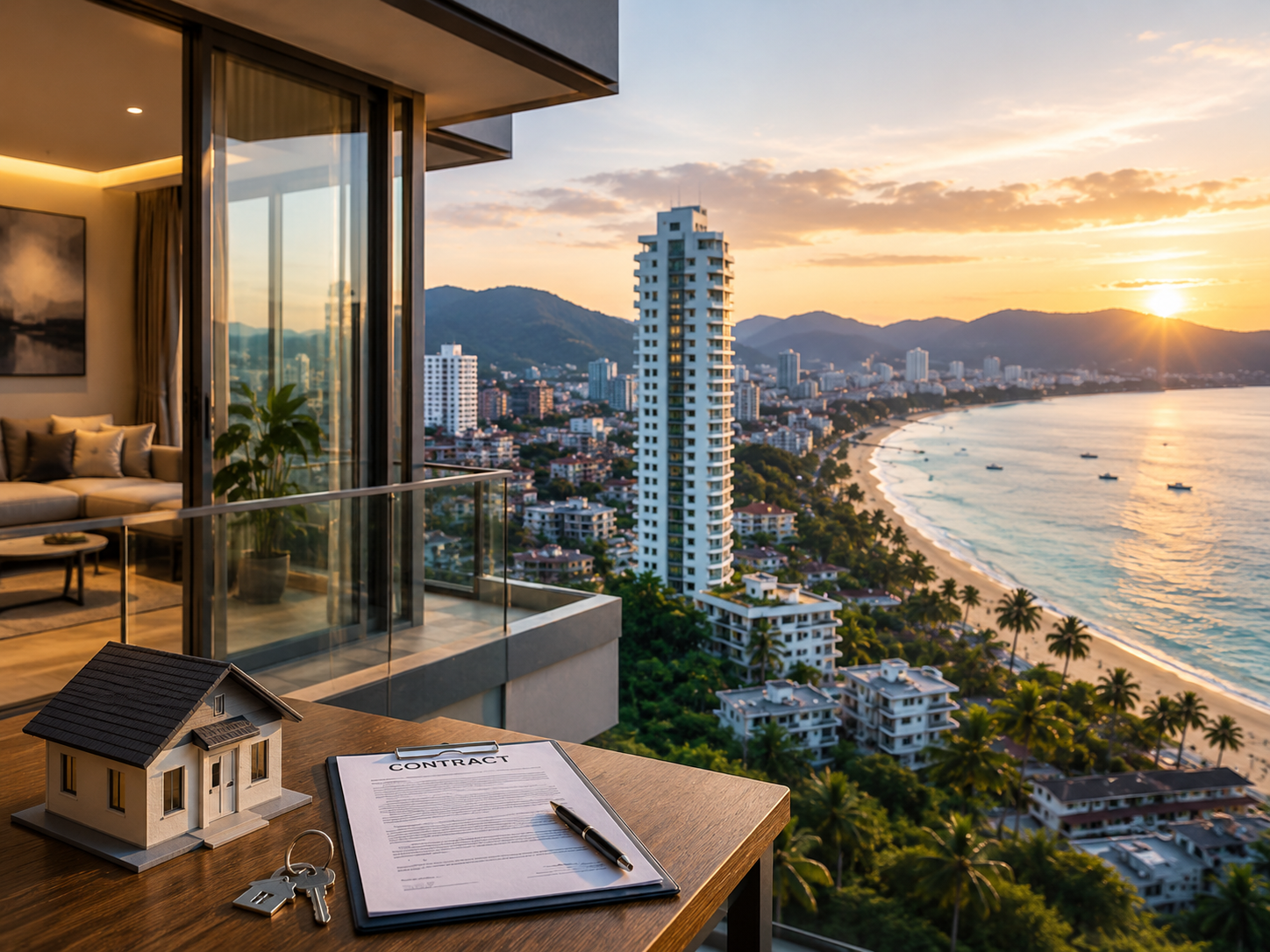
Foreigners can legally buy property in Thailand, but the form of ownership matters more than the price. A foreigner may own a condominium unit outright (freehold), as long as foreign buyers hold no more than 49% of a building's total unit area. Land — and therefore a standalone house or villa on it — cannot be owned freehold by a foreigner; it is normally taken on a long lease (leasehold, usually 30 years) or held through carefully structured arrangements. The purchase itself is registered at the local Land Department, funds for a condo must generally be transferred in from abroad, and every serious buyer should retain an independent Thai lawyer before paying anything.
Why foreigners buy property in Thailand
Thailand pairs a tropical lifestyle with property prices that still look modest against Europe, Australia or North America, which is why beach condos and pool villas keep drawing international buyers. Demand concentrates in a handful of areas: Phuket for beachfront and rental yield, Bangkok for city apartments and long-term capital growth, Pattaya and Hua Hin for value, and Koh Samui for island living. Purchases split into two motivations — a home to live in or overwinter, and an investment let out for rental income. The two goals point to different products, locations and legal structures, so it pays to decide which one drives your search before you fall for a sea view.
Ownership forms for foreigners
The single most important thing to understand is that Thai law treats land and buildings differently, and treats foreigners differently from Thai nationals. There are three practical routes a foreigner uses, each with a distinct legal basis and risk profile.
Freehold (full ownership)
Freehold is genuine, permanent ownership in your own name — but for foreigners it applies almost exclusively to condominium units. Under the Condominium Act, foreigners may collectively own up to 49% of the total saleable floor area in a registered condominium building; the remaining 51% must stay in Thai hands. If a project's foreign quota is already full, a unit that looks freehold can only be sold to you as leasehold. Always confirm in writing that the specific unit you want is available within the foreign freehold quota before paying a deposit.
Freehold land is a different story. As a rule, foreigners cannot own land outright in Thailand. There is a narrow investment exception (a substantial qualifying investment can, in theory, allow a small residential land plot under Board of Investment rules), but it is rarely used in practice and comes with strict conditions. For everyday buyers, "buy a house on its own land, freehold, in my name" is simply not available.
Leasehold (long-term lease)
Leasehold is the standard way foreigners secure a villa, townhouse or land plot. You register a lease of the land (and often the building) for a maximum of 30 years at the Land Department. Contracts frequently promise one or two further 30-year renewals — marketed as "30+30+30" — but Thai courts do not automatically enforce those future renewals against a new landowner, so treat renewal clauses as a contractual promise, not a guarantee. A well-drafted lease can add protections (right to sell or sublease, first refusal to buy, a nominal buy-out), which is exactly where a good lawyer earns their fee.
Buying through a Thai company
Some buyers hold a villa through a Thai limited company that owns the land, with the foreigner as a minority shareholder and director. Done for genuine business reasons this is lawful, but using a company purely as a front so a foreigner effectively controls land — with Thai shareholders acting as nominees — is illegal under Thai law and has been prosecuted. Penalties can include forced sale of the property and, in serious cases, criminal liability. If a developer casually suggests a "nominee company" to get around the land rules, treat it as a red flag and take independent advice.
Types of property you can buy
Condominiums and apartments
Condominiums are the most straightforward purchase because they are the one asset a foreigner can own freehold. A registered "condominium" has a licence under the Condominium Act, a legal common area and a juristic person managing it; an "apartment" building without that licence cannot sell freehold units to foreigners at all. Condos suit investors chasing rental yield: well-located units in Phuket or Bangkok can target gross returns in the region of 5%–8% a year, though realistic net figures after management, vacancy and fees are lower. Off-plan units in a good scheme can appreciate before completion, but they also carry construction and developer risk.
Villas and townhouses
Pool villas are the classic Phuket dream, but remember you are buying the building freehold at best and leasing the land beneath it. Common structures include a registered 30-year land lease with freehold ownership of the house, or a company holding. Resort-branded villas — sold within a hotel or managed estate — often come with a rental programme that handles guests and splits income, trading some yield for convenience. Locations such as Bang Tao and the Laguna area on Phuket concentrate premium villa stock with private pools.
Land plots
Buying raw land is the hardest route for a foreigner because freehold land ownership is off the table. In practice that means a long lease, a company structure, or buying in the name of a Thai spouse (which raises its own protections and risks). Anyone drawn to a land plot should also check the title type: a full Chanote (Nor Sor 4 Jor) title is surveyed and clearly bounded, while weaker documents such as Nor Sor 3 or Sor Kor 1 carry more uncertainty about boundaries and rights.
The purchase procedure, step by step
- 1Choose the propertyDefine the goal first
For a home, weigh location, layout, noise, flood history and the walk to the beach or shops. For investment, prioritise rental demand, management quality, and the difference between gross and realistic net yield. Confirm the ownership form (freehold quota vs leasehold) at this stage, not after you've fallen in love with it.
- 2Due diligenceWhere a lawyer is essential
Your lawyer verifies the title deed at the Land Department, checks for mortgages or encumbrances, confirms the developer's licence and land ownership, reviews the condo's foreign quota, and reads the juristic person's rules and any outstanding common-area debts. Do not skip this to save a few thousand baht.
- 3Reservation agreementThe first money
You sign a reservation and pay a booking deposit (often ฿100,000–200,000, or a set percentage) to take the unit off the market. Make sure the agreement states the price, what the deposit secures, and the conditions under which it is refundable if due diligence fails.
- 4Payment and transferring fundsBring money from abroad
For a condo freehold, the purchase money should be transferred into Thailand in foreign currency and converted to baht, so the bank can issue a Foreign Exchange Transaction (FET) certificate — the document the Land Department requires to prove the funds came from overseas. Off-plan sales are usually paid in construction-linked instalments.
- 5Register the saleAt the Land Office
Both parties (or their appointed agents) attend the provincial or district Land Office, where transfer taxes and fees are paid and ownership is registered. For a condo, you receive the unit title and your name on the register; for a lease, the lease is registered on the land title.
Money, prices and taxes
As a rough 2026 guide, studio and one-bedroom condos start around ฿3–6 million (roughly US$85,000–170,000) in popular Phuket and Pattaya areas, with premium sea-view units and branded villas running well into the tens of millions of baht. Prices swing with location, sea view, developer reputation and whether you buy off-plan or on the resale (secondary) market. Bangkok city condos and beachfront Phuket sit at the top of the range; inland or older resale stock is cheaper.
Who pays what is negotiable and stated in the contract, so factor total transfer costs — commonly in the region of a few percent of the price — into your budget. Thailand has no annual "property tax" of the Western kind, but the Land and Building Tax applies at low rates, and condo owners pay a monthly common-area maintenance fee (often ฿30–70 per square metre) plus a one-off sinking-fund contribution at handover. Mortgages for foreigners are limited: most local banks lend little or nothing to non-residents for Thai property, so plan to buy largely in cash or arrange finance abroad; some developers offer their own instalment plans instead.
Buying remotely
It is possible to complete a purchase without flying in, and many condo deals close this way. The mechanism is a power of attorney: you sign a notarised, sometimes embassy-legalised POA authorising your Thai lawyer to act at the Land Office on your behalf. The risks are the obvious ones — you cannot inspect the unit, verify the developer's site, or confirm the neighbourhood in person. Mitigate them by using a lawyer you retain directly (not the seller's), insisting on video walkthroughs, holding funds in a way that only releases on registration, and treating any pressure to skip due diligence as a warning sign.
Life after the purchase
Owning is only the start. Budget for ongoing costs — the monthly maintenance fee, utilities, insurance, and management or letting fees if you rent the place out. In a managed condo or resort estate the juristic person or management company handles the common areas, security and pool; read their rules on short-term letting, as some buildings restrict daily rentals under hotel-licensing law. Ownership of property does not by itself grant a visa, but it can support certain long-stay routes: a substantial qualifying investment feeds into the Long-Term Resident (LTR) visa administered by the Board of Investment, and property is one component of the Thailand Privilege programme. Confirm current thresholds with the relevant authority, as they change.
Common mistakes and how to avoid them
- Assuming you can own land: you cannot hold land freehold as a foreigner, so verify whether a "villa" deal is leasehold or a company structure before you commit.
- Skipping independent legal due diligence to save money, then discovering an encumbrance, a full foreign quota, or an unlicensed developer after paying.
- Trusting a "nominee" Thai company to hold land — an arrangement that is illegal and can lead to forced sale.
- Ignoring the source-of-funds paperwork: without a Foreign Exchange Transaction (FET) certificate, a foreigner can struggle to register a condo freehold or later repatriate the sale proceeds.
- Believing marketing renewal promises on a 30-year lease as if they were guaranteed rights.
- Underestimating running costs — maintenance fees, sinking fund and taxes eat into headline rental yields.
Sources: Thai Immigration Bureau (immigration.go.th); Board of Investment / LTR visa (boi.go.th); Tourism Authority of Thailand (tourismthailand.org). Ownership, tax and quota rules are set by Thai authorities and change over time — verify current specifics with a licensed Thai lawyer before you buy.