What Is a Condominium in Thailand: Buyer's Guide
How the condo freehold quota works and why it matters for foreign buyers.
Updated 2026-08-05
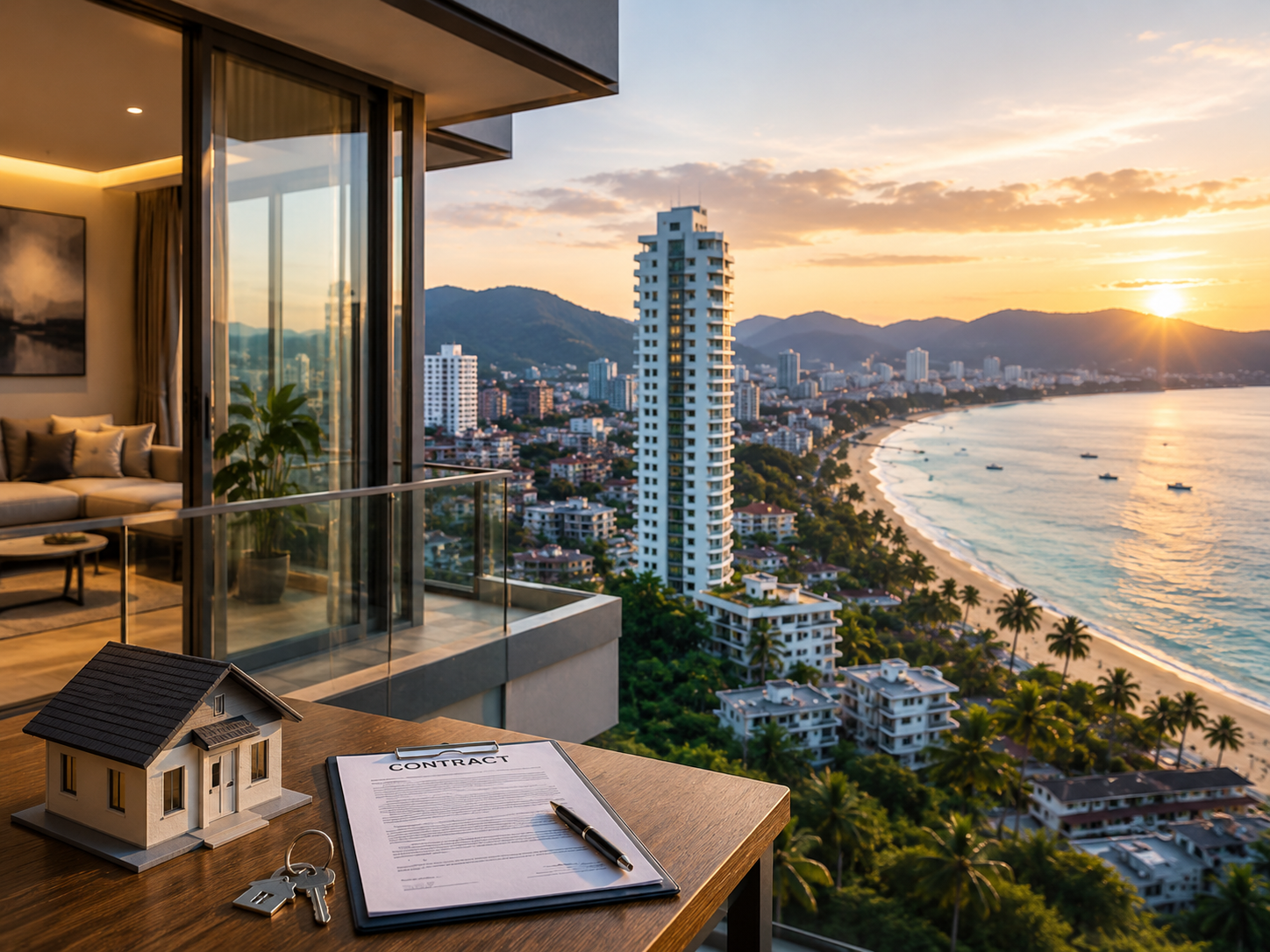
A condominium in Thailand is a building legally registered under the Condominium Act, where you own your individual unit outright and share ownership of the common areas — lobby, pool, gym, gardens — with the other owners. It is the one type of Thai real estate a foreigner can own freehold in their own name, subject to the rule that foreign buyers may hold no more than 49% of a building's total unit floor area. That legal status, plus professional management by a registered juristic person, is what separates a true condominium from an ordinary apartment block, a serviced residence or a villa estate.
What a condominium in Thailand is
The word gets used loosely, but in Thailand "condominium" has a precise legal meaning. A condominium is a building or complex registered under the Condominium Act, which divides the property into individually owned units and jointly owned common areas. When you buy, you receive a unit title deed for your apartment and, attached to it, a proportional share of everything shared — the land, structure, lift, pool and gardens. That share is expressed as a percentage and it drives two things: your vote in owner meetings and your slice of the maintenance bill.
Personal ownership: your unit
Everything inside your unit's boundaries is yours to hold, sell, rent, mortgage or leave to your heirs. This is real freehold title, evidenced by an official condominium unit deed issued by the Land Department — not a lease and not a share certificate. It is the reason condos dominate the foreign-buyer market: no other mainstream Thai property lets a non-Thai own permanently in their own name.
Joint ownership: the common areas
The lobby, corridors, lifts, pool, gym, car park and land underneath are common property, owned collectively by all unit holders through the condominium's registered juristic person. You cannot sell your share of the pool separately — it moves automatically with your unit. Owners fund the upkeep of these areas through a monthly common-area maintenance (CAM) fee and a one-off sinking fund contribution, and they collectively set the rules through the juristic person's committee and annual general meeting.
How condominiums differ from other property
Versus apartments and hotels
The critical distinction is the licence. An "apartment" building is owned by a single landlord who rents out rooms; it is not registered under the Condominium Act, has no individual unit deeds, and cannot sell freehold to a foreigner. A serviced residence or condotel adds hotel-style services but may be sold on a leasehold basis or run as a hotel. If a marketing brochure says "apartment for sale" but cannot show you a condominium licence and a unit title deed, you are not looking at freehold condo ownership.
Versus houses and villas
A standalone house or villa sits on land, and foreigners cannot own land freehold. So while a condo unit is yours, a villa is usually secured through a 30-year registered lease or a Thai company — a fundamentally different and riskier legal structure. This is the single biggest reason first-time foreign buyers gravitate to condos.
Versus housing estates and townhouses
Townhouses and villas in a gated "moobaan" estate share roads and facilities but each has its own land title, and the shared areas are managed differently from a condominium's juristic person. Again, the land component blocks foreign freehold. Condominiums are the only vertical, licensed form where the shared-ownership model and foreign freehold quota apply.
Who can buy a condo unit in Thailand
The Condominium Act sets out specific categories of foreigner who may own a unit. In practice most international buyers qualify under the last of these — transferring money into Thailand from abroad.
- Foreigners holding permanent residence in Thailand.
- Foreigners admitted under investment-promotion schemes (for example, Board of Investment programmes).
- Foreign juristic persons (companies) that meet the Act's conditions.
- Foreigners who bring the full purchase price into Thailand in foreign currency from abroad — the route almost every private buyer uses.
The 49% foreign quota
This rule shapes every condo purchase. In any registered condominium, foreigners may own no more than 49% of the total floor area of all units combined; the remaining 51% must be held by Thai nationals or Thai companies. When a building's foreign quota is full, remaining units can still be sold to foreigners — but only on a leasehold basis, not freehold. Because the quota is measured by area, a popular sea-view tower can sell out its foreign freehold allocation quickly, so always ask the developer or juristic person to confirm, in writing, that your specific unit is available within the foreign freehold quota before you pay a deposit.
Freehold versus leasehold in a condo
Within the same building you may see identical units offered as freehold or leasehold depending on quota. Freehold is preferable — permanent, resaleable and inheritable in your name. Leasehold in a condo means a registered lease (typically up to 30 years) rather than ownership; the resale market for leasehold units is thinner and the value tends to decline as the lease shortens, so weigh any price discount carefully.
Types and classes of condominium
Condos vary widely, and matching the class to your goal — a home, a rental machine or a resale play — matters more than the glossiest show unit.
- Budget condos: compact studios and one-beds in mid-market projects, the entry point for many investors chasing yield.
- Mid-range condos: better locations, fuller facilities and stronger management, balancing cost and quality.
- Luxury condos: beachfront or branded residences with concierge services, premium finishes and higher fees.
- New-build versus resale: off-plan can appreciate before completion but carries construction and developer risk, while resale lets you see the finished product and the real state of the building.
- Boutique versus large-scale: a small low-rise gives privacy and lower density; a big development spreads facility costs and usually has more professional management.
Paying for a condo: the money rules
For a foreigner to register freehold, the purchase money must generally be brought into Thailand from overseas in foreign currency and converted to Thai baht inside the country. The receiving bank then issues a Foreign Exchange Transaction (FET) certificate — the document the Land Department requires as proof the funds originated abroad. Keep it safe: you will also need evidence of the inbound transfer if you ever sell and want to send the proceeds back out. Payment is usually by bank transfer; off-plan units are paid in construction-linked instalments. Permanent residents and certain other categories can be exempt from the remit-from-abroad requirement.
Documents you'll need
- A valid passport (and copies of every used page for some offices).
- The Foreign Exchange Transaction certificate from your Thai bank.
- The sale and purchase agreement and reservation receipts.
- A letter from the juristic person confirming the building's foreign quota is not exceeded.
Taxes and fees at purchase
Beyond the transfer, budget for the ongoing costs: the monthly common-area maintenance fee (commonly ฿30–70 per square metre, so a 40 m² studio might run ฿1,500–2,800 a month) and a one-off sinking-fund contribution paid at handover. Thailand's Land and Building Tax applies to condo owners at low residential rates.
Legal steps and the Chanote
- 1Confirm freehold statusBefore anything
Have your lawyer confirm the unit is freehold within the foreign quota, and check for any mortgage or outstanding fees on the unit.
- 2Reserve and contractDeposit stage
Sign a reservation with a refundable-on-failed-due-diligence clause, then the sale and purchase agreement setting price, dates and who pays which taxes.
- 3Transfer fundsFrom abroad
Remit the price in foreign currency and obtain the FET certificate from your Thai bank.
- 4Register ownershipAt the Land Office
Attend the Land Department (or send your lawyer with a power of attorney), pay the transfer taxes, and register the unit in your name.
- 5Receive the title deedChanote
You are issued the condominium unit title deed — the official proof of your freehold ownership — and your name is entered on the register.
Investment potential
Condos are the workhorse of Thai property investment. Well-located units can target gross rental yields in the region of 5%–8% a year, though realistic net returns after management fees, vacancy and the CAM fee are lower. Long-term lets give steady income; short-term tourist rentals can earn more per night but are restricted — renting a unit for under 30 days can breach hotel-licensing law unless the building is specifically licensed, so check the juristic person's rules and Thai law before advertising on nightly booking sites. Capital growth in strong locations and reputable buildings has historically been positive, but off-plan resale timing and building quality matter enormously. Some developers offer guaranteed rental programmes; read the fine print, as the "guarantee" is only as solid as the company behind it.
Best locations and choosing a unit
Pattaya has volume and value; Phuket combines beach lifestyle with the country's strongest holiday-rental demand; Bangkok delivers city yield and long-term capital growth, especially near mass-transit lines. When picking the actual unit, the floor and the view drive both livability and resale — a higher floor with a sea or lake view commands a premium and rents faster. Weigh the facilities and, crucially, the management: a well-run juristic person keeps the building — and your investment — in good shape for decades.
Visa perks and inheritance
Owning a condo does not by itself grant a visa, but a substantial qualifying property investment feeds into long-stay options such as the Long-Term Resident (LTR) visa administered by the Board of Investment. On inheritance, a foreigner can leave a condo unit to their heirs, but a foreign heir must still qualify to own under the Condominium Act (typically by bringing the requisite funds in from abroad); otherwise the law may require the unit to be sold within a set period. This is exactly the kind of detail worth confirming with a Thai lawyer when you buy, not when your family needs it.
Sources: Thai Immigration Bureau (immigration.go.th); Board of Investment / LTR visa (boi.go.th); Tourism Authority of Thailand (tourismthailand.org). The Condominium Act, quota rules and tax rates are set by Thai authorities and change over time — confirm current details with a licensed Thai lawyer before purchase.