Dangerous Insects in Thailand: How to Stay Safe
Mosquitoes, centipedes and the bites worth knowing — and how to prevent them.
Updated 2026-08-04
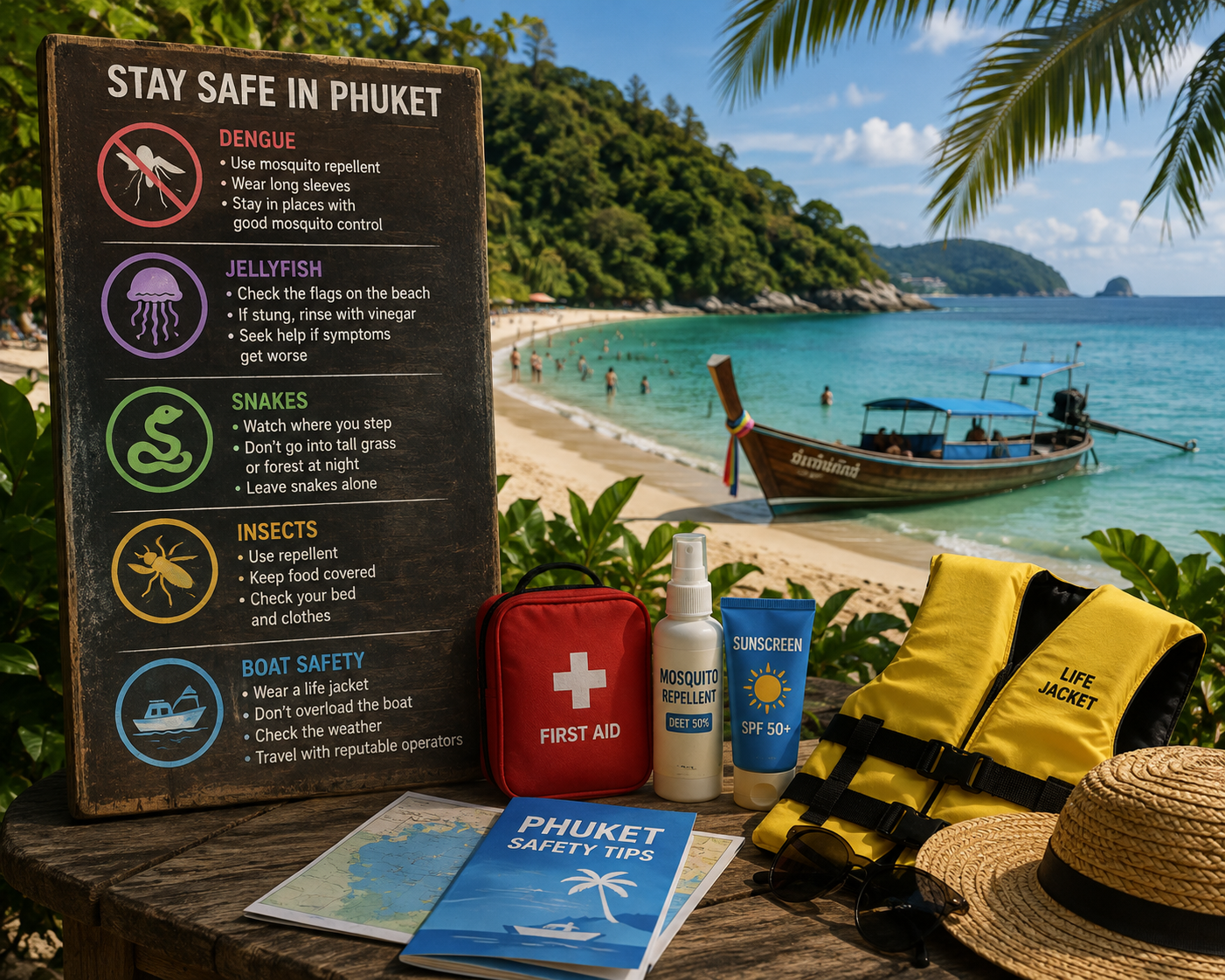
Thailand's tropical climate has a handful of insects and small creatures worth knowing about, but for the average traveller they are a manageable nuisance rather than a real threat. Mosquitoes are the most important because they can carry dengue and, in some rural areas, other diseases; centipedes, certain ants, scorpions and sandflies can deliver painful bites or stings but are rarely dangerous to healthy adults. Simple precautions — good repellent, sensible clothing, shaking out shoes and watching where you put your hands — prevent almost every problem.
Mosquitoes in Thailand
If you ask which insect in Thailand matters most for your health, it is the mosquito. Thailand has several biting mosquito species, and a small proportion carry disease. The most relevant for travellers is dengue fever, spread by day-biting Aedes mosquitoes and present across the country, including Phuket and other beach destinations. Malaria risk is low and mainly confined to forested border regions, not the main tourist islands and cities. Other mosquito-borne illnesses — chikungunya, Zika and, in rural areas, Japanese encephalitis — exist but are uncommon for typical holidaymakers.
How to tell the risky mosquitoes apart
The dengue-carrying Aedes mosquito is small and dark with distinctive white bands on its legs and body, and — crucially — it bites in daylight, especially in the early morning and late afternoon. That surprises many visitors who assume dusk-to-dawn cover is enough. Aedes mosquitoes breed in small pools of clean standing water: plant saucers, buckets, discarded cups and air-conditioner drip trays. The malaria-carrying Anopheles mosquito, by contrast, bites at night and lives mainly in forested rural zones.
How to protect yourself
- Use a repellent containing DEET (20–30%), picaridin or oil of lemon eucalyptus on exposed skin, reapplying after swimming or heavy sweating.
- Because Aedes mosquitoes bite by day, apply repellent around the clock, not only in the evening.
- Wear loose, light long sleeves and trousers near gardens, greenery and standing water.
- Sleep in air-conditioned or well-screened rooms, and use a plug-in vaporiser or bed net if windows are open.
- Tip out or cover any standing water on your balcony or in the garden to remove breeding sites.
Centipedes (Scolopendra)
The large tropical centipede, Scolopendra, is the creature that most often gives travellers a nasty surprise. These fast, reddish-brown or black arthropods can reach 15–20 cm and deliver a bite through a pair of modified front claws that inject venom.
Where they live and how to spot them
Centipedes like cool, damp, dark places: under rocks, leaf litter and garden pots, and sometimes indoors in bathrooms, under doormats or inside shoes left outside. They are most active at night and after rain, so the wet season raises the odds of an encounter. Around villas and ground-floor rooms with gardens, they are more common than in high-rise hotels.
How dangerous is the bite
A Scolopendra bite is painful — often described as far worse than a wasp sting — with intense local pain, redness and swelling that can last hours to a couple of days. For a healthy adult it is rarely dangerous, but take it seriously. As with any venomous bite, a small number of people can have an allergic reaction, and children and older adults may react more strongly.
First aid and prevention
- Wash the bite with soap and water, then apply a cold pack to reduce pain and swelling.
- Immersing the area in comfortably hot water can help ease the pain of many venomous bites; take paracetamol if needed.
- Keep the limb still and slightly raised, and watch for spreading swelling, difficulty breathing or faintness — signs of a rare allergic reaction that need emergency care (1669).
- Prevent bites by shaking out shoes, clothing and towels before use, not walking barefoot at night, and keeping beds away from walls in ground-floor rooms.
Ants
Thailand has a huge variety of ants, and while most are harmless, a few can bite or sting hard enough to ruin a picnic. The two you are most likely to notice are weaver ants (red ants that nest in trees and defend their territory aggressively) and fire ants, whose sting produces a burning pain and small itchy blisters.
What their bites feel like
Weaver ant bites are sharp and can come in numbers if you brush against their nest, but they clear quickly. Fire ant stings burn and then itch for days, sometimes leaving little pus-topped spots — irritating but not dangerous for most people. As with any insect, a small minority can have a serious allergic reaction to stings, which is a medical emergency.
How to keep ants away
- Keep food sealed and wipe up crumbs and sugary spills quickly, especially in ground-floor and garden accommodation.
- Check the ground and tree trunks before sitting down at picnics or on the grass.
- For bites, wash the area, apply a cold pack, and use an antihistamine cream or tablet to calm itching; try not to scratch fire-ant blisters, which can become infected.
Other creatures to know about
Scorpions
Thailand's scorpions look alarming but are far less dangerous than their reputation. The common large black forest scorpion delivers a sting roughly comparable to a bad bee sting — painful and swollen, but not life-threatening for a healthy adult. They shelter in the same damp, dark spots as centipedes, so the same habits protect you: shake out shoes and clothing, avoid reaching blindly into crevices, and wear footwear at night. Wash a sting, apply a cold pack, take painkillers, and seek help only if a severe or allergic reaction develops.
Sandflies (biting midges)
On some beaches, particularly quieter or seaweed-strewn stretches at dawn and dusk, tiny biting sandflies (no-see-ums) can leave intensely itchy red spots that last longer than mosquito bites. They are not a serious disease risk in Thailand's main resort areas, but the itching is memorable. Repellent helps, and many travellers find that lying on a raised sunbed rather than directly on the sand, and avoiding the beach right at dusk, cuts the bites dramatically. A dab of coconut or baby oil on the skin is a popular local trick that makes it harder for them to land.
Sources: Thailand Ministry of Public Health and Department of Disease Control (ddc.moph.go.th); Tourism Authority of Thailand (tourismthailand.org); Thai emergency medical services (1669).