Jellyfish in Phuket: Season & Dangerous Species
When jellyfish appear, which species matter and what to do if you're stung.
Updated 2026-08-04
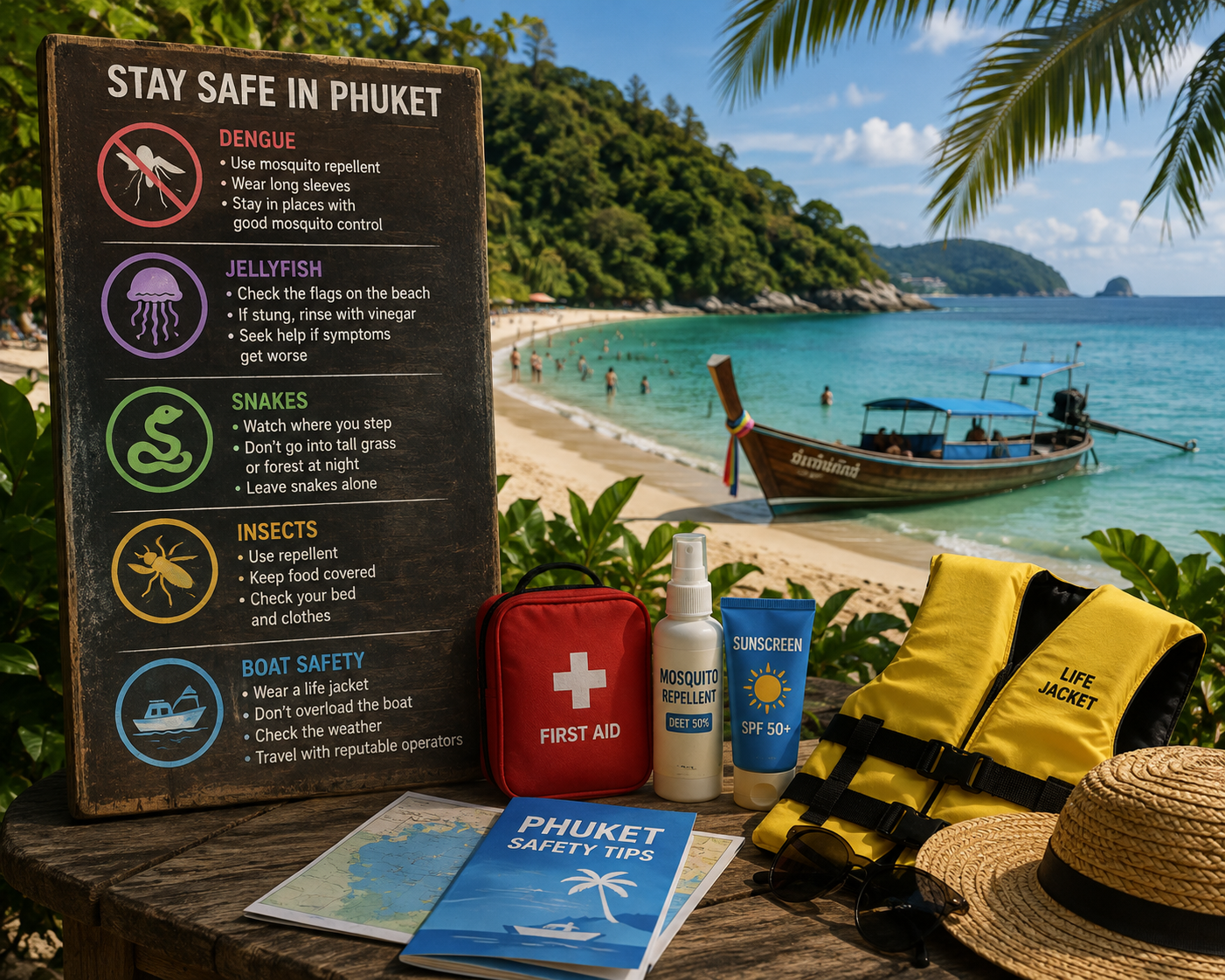
Jellyfish are a normal, seasonal part of the Andaman Sea around Phuket, and most encounters are minor — a mild sting from a small drifting species rather than anything life-threatening. Numbers rise mainly during the southwest monsoon (roughly May–October), when onshore winds and currents push jellyfish toward the beaches. Dangerous box jellyfish do exist in Thai waters and can, in rare cases, cause serious stings, so it pays to know the warning flags, the safe first-aid steps, and a few simple habits that make swimming here low-risk.
When and why jellyfish appear on Phuket
Jellyfish are not a sign that something is wrong with the sea — they are part of the natural rhythm of the Andaman Sea. Their numbers near Phuket's beaches rise and fall with the seasons, driven by water temperature, plankton blooms and, above all, the wind and currents. During the southwest monsoon, roughly May to October, onshore winds and choppier water tend to sweep more jellyfish toward the west-coast shoreline, so this is when you are most likely to see them. In the dry high season (November–April) sightings are usually fewer, though jellyfish can drift in at any time of year.
Are jellyfish on Phuket dangerous?
For the vast majority of swimmers, the answer is no — most jellyfish around Phuket cause only a mild, nettle-like sting that fades within hours. The species you are most likely to meet are small, translucent drifting jellyfish and the larval stage of thimble jellyfish, often called 'sea lice', which can cause an itchy rash under swimwear. Occasionally the Portuguese man o' war (bluebottle) drifts in; its sting is more painful and its long blue tentacles should not be touched, but it is not the deadly hazard it is sometimes made out to be.
The practical takeaway is proportion: serious stings are uncommon, but they are not impossible, so a little awareness replaces a lot of anxiety. Many Thai beaches known for box jellyfish now post warning signs and keep bottles of vinegar on hand, which tells you both that authorities take the risk seriously and that the tools to handle it are simple and effective.
What to do if a jellyfish stings you
Get out of the water calmly and treat the sting on the beach. The goal of first aid is to stop tentacles releasing more venom, ease the pain, and watch for any serious reaction. In Thailand, where dangerous box jellyfish are possible, vinegar (household acetic acid) is the recommended first rinse because it neutralises the stinging cells of tropical box jellyfish.
- 1Leave the water and stay calm
Move away from the jellyfish and sit or lie down. Panic and thrashing spread the problem.
- 2Rinse with seawater or vinegarNot fresh water
Flood the area with vinegar for at least 30 seconds if it is available (many Andaman box-jellyfish beaches keep it on hand); otherwise rinse gently with seawater. Fresh water can trigger unfired stinging cells to release more venom.
- 3Remove tentacles carefully
Lift off any visible tentacles with tweezers, a card edge or a gloved hand — do not rub with bare fingers, a towel or sand.
- 4Relieve the pain
For most common Andaman stings, immersing the area in hot water (around 45°C, as hot as is comfortable without scalding) for 20 minutes helps ease pain. A cold pack can also help. Simple painkillers such as paracetamol are fine.
- 5Watch the person
Monitor for spreading symptoms over the next hour: widespread pain, nausea, cramps, breathing trouble or faintness mean you need medical help fast.
How to lower the chance of a sting
A few simple habits make jellyfish a non-issue on almost every Phuket beach day. Think of them as easy routines rather than reasons to worry.
- Check the beach flags and any warning signs, and ask lifeguards or beach staff whether jellyfish have been seen that day.
- Favour calmer conditions and swim in the morning, and be a little more cautious in the monsoon months when onshore winds push jellyfish in.
- Wear a rash guard or full swim leggings on snorkelling trips — light protective clothing blocks most contact with drifting tentacles.
- Avoid touching anything that looks like a blob or a blue balloon on the sand; beached jellyfish and detached tentacles can still sting.
- On beaches that post vinegar stations, note where they are before you get in, so you know exactly where to go if needed.
Sources: Tourism Authority of Thailand (tourismthailand.org); Thailand Ministry of Public Health and Department of Disease Control (ddc.moph.go.th); Thai emergency medical services (1669).