How Safe Are Boat Trips in Phuket
The real risks of sea excursions and how to pick a safe operator.
Updated 2026-08-04
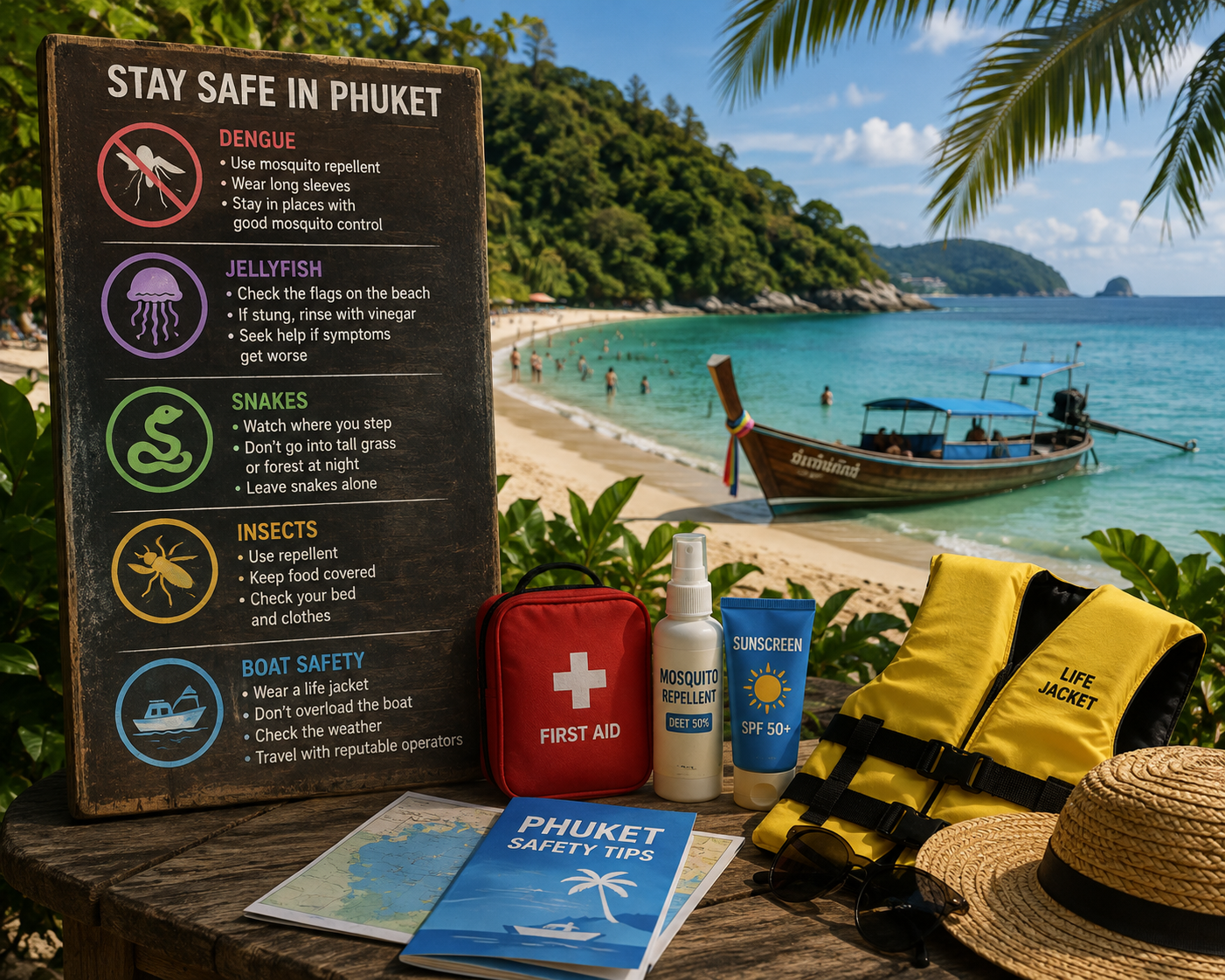
Millions of visitors take sea trips from Phuket safely every year — island-hopping speedboats, catamarans and longtail excursions — and serious accidents are rare relative to the number of departures. The main risks are weather-related: rough seas during the southwest monsoon, overloaded or speeding boats, and travellers underestimating the water. Thailand's Marine Department regulates operators and requires life jackets, and after any notable incident the authorities tighten inspections. Choosing a reputable operator, wearing your life jacket, and respecting weather warnings keeps a boat day low-risk.
The current safety picture for Phuket sea trips
Phuket is one of Southeast Asia's busiest marine-tourism hubs, with hundreds of boats leaving daily for the Phi Phi Islands, Phang Nga Bay, the Similan and Surin Islands, Coral Island and Racha. Against that volume, the overall accident rate is low — but incidents do happen, and when they do they make headlines. Thailand's Marine Department is the authority responsible for boat registration, safety standards and inspections, and Phuket's provincial administration steps up checks on operators, life-jacket provision and weather compliance, particularly at the start of and during the monsoon season.
Recent incidents and what causes them
Most serious incidents involving tourists trace back to a small set of causes rather than random bad luck. Speedboats carry the greatest exposure because they travel fast and are more affected by big swell; collisions, capsizes and passengers thrown about in rough water are the recurring patterns. The common threads are boats going out in marginal weather, overcrowding, and travellers not wearing the life jackets provided. Periodic accidents — including ones affecting foreign tourists — have prompted the Marine Department and Phuket authorities to suspend operators and re-inspect fleets.
How the authorities respond
After a significant accident, the Marine Department and the Phuket governor's office typically order safety sweeps: checking vessel registration, engine and hull condition, passenger limits, life-jacket counts and captains' licences, and grounding boats that fail. During heavy weather the harbour master can close piers and ban small-boat departures outright, which is the single most effective safeguard.
How to make your sea trip safer
You control more of the risk than you might think. The choices you make when booking and boarding matter more than the specific island on the itinerary.
- Choose an established, licensed operator with visibly maintained boats, and be wary of the cheapest deals with overloaded vessels.
- Put your life jacket on and keep it on — it is legally required and is the single biggest factor in surviving a capsize.
- Check the season and forecast: the southwest monsoon (roughly May–October) brings rougher seas, and some islands like the Similans close for part of the year.
- Listen to the pre-departure safety briefing, and note where life jackets, exits and flotation are stored.
- Do not board a clearly overcrowded boat, and skip the trip if the captain is going out against a weather warning.
- Hold on in rough water, keep children close, and carry travel insurance that covers boat excursions and medical evacuation.
Sources: Thailand Marine Department (md.go.th); Tourism Authority of Thailand (tourismthailand.org); Thai emergency services (1669 medical, 191 police, 1155 Tourist Police).