Thailand Taxi: Apps & Typical Fares
How taxis and apps work across Thailand and what a fair price looks like.
Updated 2026-08-04
Taxis in Thailand come in many forms — metered city taxis, tuk-tuks, motorbike taxis, songthaews and even water taxis — but the easiest way to get a fair, transparent fare is a ride-hailing app such as Grab or Bolt, which shows the price up front. In Bangkok, insist on the meter (fares start at about ฿35); on Phuket and Samui, where meters are rarely used, apps or agreed flat fares protect you from overcharging. Costs vary widely by region, so knowing the local norm — and the official DLT rules — is the best defence against scams.
Taxis in Thailand: the basics
Getting around Thailand by taxi is cheap once you know the system, but the word 'taxi' covers everything from an air-conditioned metered car to an open-sided pickup. The most useful habit for a visitor is to fix the price before you travel — use the meter, agree a flat fare, or book through an app that sets the fare in advance. That one rule prevents most taxi problems in the country.
Why travellers rely on taxis
Public transport is excellent in Bangkok but limited elsewhere, so taxis fill the gap for door-to-door travel, late nights, heavy bags and trips the bus or train does not serve. In beach destinations especially, a taxi or app car is often the only practical way to move between your hotel, the beach and dinner.
Main advantages and drawbacks
- Advantage: door-to-door convenience with air conditioning and comfort in metered cars.
- Advantage: apps remove haggling and language friction by fixing the fare first.
- Drawback: in tourist areas some drivers refuse the meter and quote inflated flat fares.
- Drawback: availability and price vary sharply between Bangkok and the islands.
Types of taxi and alternative transport
Metered taxis
Standard metered taxis are common in Bangkok and easy to spot in bright colours — pink, green-and-yellow, orange, blue. The meter starts at roughly ฿35 and rises with distance and waiting time. Always ask the driver to start the meter; if they refuse and insist on a flat fare, it is usually cheaper to wave them on and take the next one or book an app car.
Tuk-tuk
The three-wheeled tuk-tuk has no meter, so agree the price before you climb in. It is often more expensive than a metered car for the same distance, so treat it as an experience rather than a budget option.
Motorbike taxis
Motorbike taxis, whose drivers wear numbered vests, are the fastest way through heavy city traffic and the cheapest for short trips. Fares are fixed by distance and usually posted at the driver stands. Wear the offered helmet, and skip them if you are carrying a lot or feel unsure in traffic.
Songthaew
A songthaew is a converted pickup with two bench seats in the back, running fixed routes for a small flat fare — effectively a shared taxi-bus. They are common on Phuket, Chiang Mai and elsewhere, and are the cheapest local option if the route suits you. You pay when you get off.
Water taxis and ferries
In Bangkok, express boats and canal water taxis on the Chao Phraya River and khlongs can be faster than road transport for riverside destinations. On the coast and islands, scheduled ferries and longtail boats are the local 'taxis' between piers.
Taxi prices in different regions
Bangkok
Bangkok has the most metered taxis and the fairest baseline: the meter starts around ฿35 and a typical cross-town ride runs a few hundred baht, plus any expressway tolls. This is the one city where insisting on the meter reliably gets you a fair price.
Pattaya
Pattaya runs largely on songthaews (locally called baht buses) for short flat-fare hops along the main routes, with app cars and private taxis for longer trips. Confirm the fare or use an app, as metered taxis are less common than in Bangkok.
Phuket and Samui
On Phuket and Samui, metered taxis are rare in practice and fares are typically negotiated or app-based, which is why prices here are higher than in Bangkok. Ride-hailing apps or a pre-agreed flat fare are the safest ways to avoid overcharging on the islands.
Chiang Mai and the north
Chiang Mai relies heavily on red songthaews for cheap shared rides around the old city, alongside tuk-tuks and app cars. It is one of the easiest places to get around inexpensively once you understand the shared-ride system.
Apps for calling a taxi
Grab — the market leader
Grab is the most widely used ride-hailing app in Thailand, with strong coverage in cities and tourist areas, an English interface and upfront fares payable by card or cash. It is the default choice for most visitors.
Bolt — the budget alternative
Bolt competes closely with Grab and is frequently a little cheaper for the same route. Coverage is good in busy areas, so it pays to compare both before booking.
Local and regional services
Other apps and local operators fill specific niches — inDrive lets you propose a fare, Maxim quotes budget prices, and various island-specific services exist. Installing two apps and comparing is the practical approach.
The official DLT Check In app
Thailand's Department of Land Transport offers an official taxi app, DLT Check In, which records your trip and driver details for legal, metered taxis — a useful safety tool if you want an official record of a ride.
Transfers and VIP transport
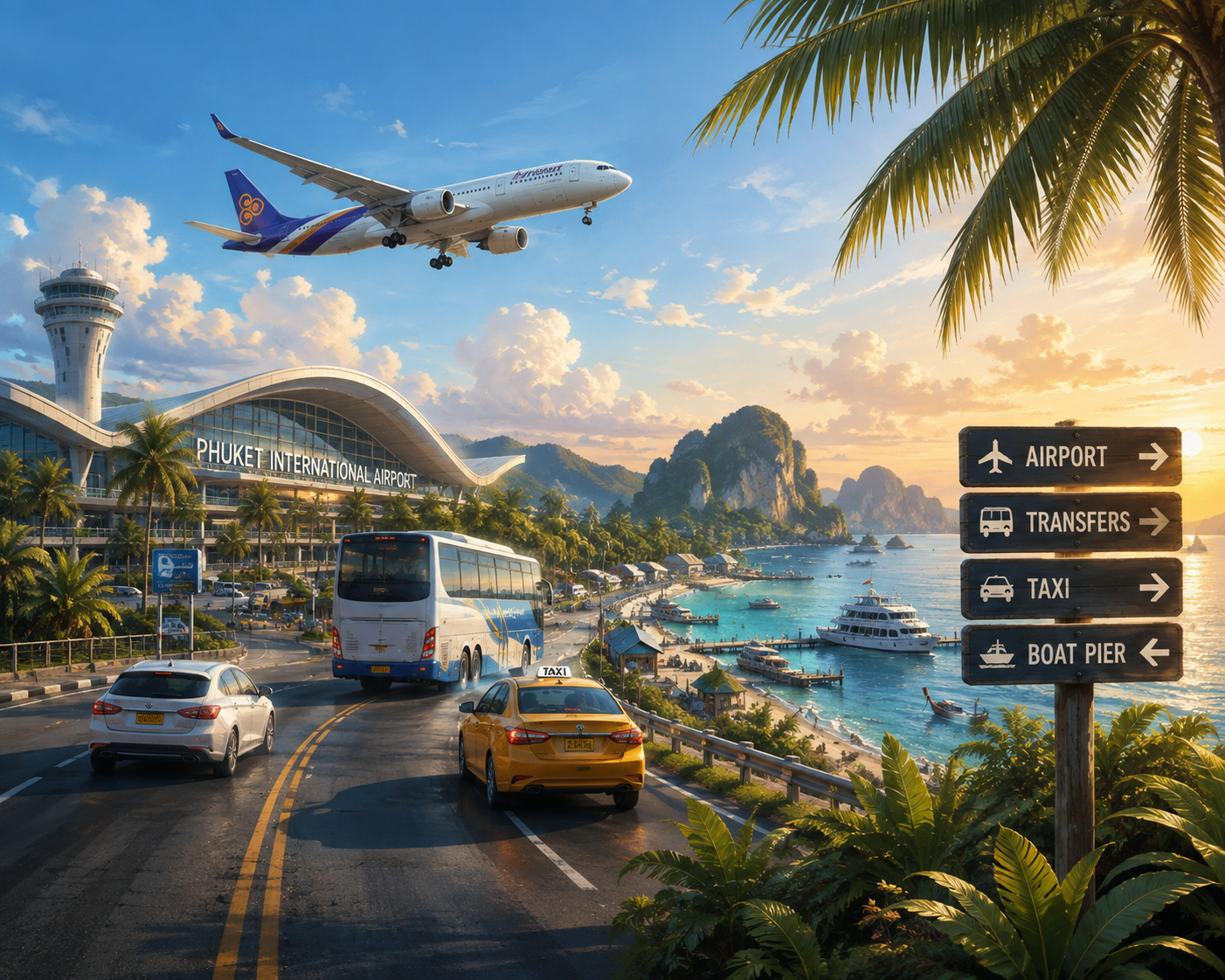
For airport pickups, long intercity trips or travel with lots of luggage, a pre-booked transfer or VIP car is often better value and less stressful than hailing a taxi on the spot. Online transfer platforms let you fix the price and have a driver waiting on arrival, and hotels can usually arrange a private car. This is especially worthwhile late at night or when arriving somewhere unfamiliar.
Safety and common problems
How to spot a legitimate taxi
Legal taxis display a licence and driver ID on the dashboard and, for metered cars, a working meter. Booking through an app adds a layer of accountability because the driver and vehicle are recorded.
Overcharging and the fixed-fare trap
The most common issue is a driver refusing the meter and quoting a high flat fare, particularly near tourist hotspots, airports and nightlife areas. The fix is simple: insist on the meter, agree a fair price in advance, or book an app car instead.
The language barrier
Many drivers speak limited English, so show your destination on a map or in Thai script, or use an app that pins it automatically. In-app chat translation helps for anything you need to add.
Practical tips for travellers
- Always start with the meter or an app fare; agree any flat price before departure.
- Keep small banknotes, as drivers often lack change for large notes.
- Save your destination in Thai or as a map pin to bridge the language gap.
- Tipping is not expected in taxis; rounding up is a common, optional courtesy.
- At night or in the rain, expect higher demand and surge prices, and book a little earlier.
Sources: Department of Land Transport of Thailand (dlt.go.th); Tourism Authority of Thailand (tourismthailand.org).